Showing posts sorted by relevance for query kuwai. Sort by date Show all posts

4/29/2009

SPRING VEGETABLES

[ . BACK to WORLDKIGO TOP . ]

::::::::::::::::::::::::::::::::::::::::::::::::::::::::::::::::::::::::::::::::::::::::::::::::::::

The Japanese Vegetable Saijiki

野菜歳時記  

:::::::::::::::::::::::::::::::::::::::::::::::::::::::::::::::::::::::::::::::::::::::::::::::::::::

Please use your browser to find a word!

:::::::::::::::::::::::::::::::::::::::::::::::::::::::::::::::::::::::::::::::::::::::::::::::::::::

Vegetables of Spring ... haru no yasai 春の野菜

***** Location: Japan
***** Season: Spring
***** Category: Plants


*****************************
Explanation

The Haiku SPRING starts on February 4, according to the Asian lunar calendar.

Spring is the time when a lot of sprouts and buds appear on the table or are made into preserves and pickles. I made an extra page with the pickles of spring, 春の漬物.
Tsukemono (Pickles)


CLICK for original LINK and more

:::::::::::::::::::::::::::::::::::::::::::::::::::::::::::::::::::::::::::::::::::::::::::::::::::::

Early Spring


arrowhead 慈姑 (くわい) kuwai
shiro kuwai 白慈姑(しろぐわい)white arrowhead
ao kuwai 青慈姑(あおぐわい)green arrowhead
kuwai no me 慈姑の芽(くわいのめ) arrowhead buds
Sagittaria trifolia var. edulis
Its leaves look like a howe KUWA, hence the name. Since it is like a potato, it was first called kuwai imo 慈姑芋 ... kuwai.
Since its buds sprout quite visible, it is an auspicious food for "me ga deru", to have good luch (eyes coming out). It can be cut with six corners to resemble a little bell.
. . . CLICK here for Photos !
Pfeilkraut

digging for arrowhead 慈姑掘る (くわいほる) kuwai horu
kigo for all spring

Suita kuwai 吹田くわい arrowhead from Suita town, Osaka

kuroguwai 烏芋 (くろぐわい) "black kuwai"
goi ごい、egu imo えぐいも、kuwaizuru くわいずる


leafy "february leaf" 如月菜 (きさらぎな) kisaragi na
..... kisaragina 二月菜(きさらぎな), タアサイ

Mibu-leaf 壬生菜 (みぶな) mibuna
..... itona 糸菜(いとな) "thread leaf"
. . . CLICK here for Photos !


potato seedlings 種芋 (たねいも) tane-imo
tane imo 種薯(たねいも)、imo tane 芋種(いもたね)
imo no me 芋の芽(いものめ)potato sprouts
imonae 藷苗(いもなえ) potato seedlings


potherb mustard 水菜 (みずな) mizuna
uwabamisoo 蟒草 (うわばみそう) "large snake plant"
..... kyoona 京菜(きょうな) "Kyoto leaf"
. . . CLICK here for Photos !
Mizuna-Wildnessel
Xiu Cai, Kyona, Japanese Mustard, Japanese Greens, California Peppergrass, Spider Mustard
The taste of mizuna has been described as a "piquant, mild peppery flavor...slightly spicy, but less so than arugula."Mizuna makes an excellent salad green, and is frequently found in mesclun.It is also used in stir-frys, soups, and nabemono.
© More in the WIKIPEDIA !
Wildnesselart: Elatostema umbellatum.


spinach
spinach 菠薐草 (ほうれんそう, ほうれん草) hoorensoo, horenso
Spinat


:::::::::::::::::::::::::::::::::::::::::::::::::::::::::::::::::::::::::::::::::::::::::::::::::::::

Mid-Spring


Aralia 五加飯 (うこぎ) ukogi
Fatsia japonica blossoms (yatsude no hana) Japanese Aralia


Chinese leek, garlic chives 韮 (にら)
kamira かみら、mira みら、futamoji ふたもじ
. . . CLICK here for Photos !


chives 胡葱 (あさつき) asatsuki
itonegi 糸葱(いとねぎ)、senbon wakegi 千本分葱(せんぼんわけぎ)
senbuki せんぶき


garlic 蒜 (にんにく) ninniku
葫(にんにく)、hiru ひる、
big garlic 大蒜(おおにんにく) oo ninniku
Ninniku Garlic


"Horsetail" horsetail 土筆和(つくし) tsukushi

mountain pepper bark 山椒の皮 (さんしょうのかわ) Sanshoo no kawa
bark of the mountain pepper

rape-like "nightingale leaf" 鶯菜 (うぐいすな ) uguisuna
also like komatsuna


radish in spring 春大根 (はるだいこん) haru daikon
sangatsu daikon 三月大根(さんがつだいこん)
nawashiro daikon 苗代大根(なわしろだいこん)
shitagsu daikon 四月大根(しがつだいこん)


Starwort 嫁菜 (よめな)Yomena

Wolfberry 枸杞 (くこ) kuko

:::::::::::::::::::::::::::::::::::::::::::::::::::::::::::::::::::::::::::::::::::::::::::::::::::::

Late Spring


asparagus アスパラガス asuparagasu, asupara
matsuba udo 松葉独活(まつばうど), matsuba udo 石刀柏(まつばうど), seiyoo udo 西洋独活(せいよううど), oranda kiji kakushi オランダ雉隠し(おらんだきじかくし)
Spargel


beans blossoms 豆の花 (まめのはな) mame no hana
..... soramame no hana 蚕豆の花(そらまめのはな) broad beans blossoms
..... endoo no hana 豌豆の花 (えんどうのはな) blossoms of shell peas
Pisum sativum


leek blossoms 葱坊主 (ねぎぼうず) negi boozu
..... negi no hana 葱の花(ねぎのはな)
..... negi no gibo 葱の擬宝(ねぎのぎぼ)
Leek (naganegi) green onions, scallion, porree Japan


"march leaf" 三月菜 (さんがつな) sangatsuna

Mugwort よもぎ (艾蓬, 蓬 ヨモギ) yomogi

myooga stems 茗荷竹 (みょうがたけ) myoogatake
Myoga Ginger (myooga) 茗荷 (みょうが). Zingi-Ingwer


suiitopii スイートピー sweet pea, Wicke
kakoo rensoo 麝香連理草(じゃこうれんりそう)
jakoo endoo 、麝香豌豆(じゃこうえんどう)
nioi endoo におい豌豆(においえんどう)fragrant endo
Lathyrus odoratus


radish blossoms 大根の花 (だいこんのはな) daikon no hana
..... hana daikon 花大根(はなだいこ)
Radish (daikon) Japan.


Rapeseed blossoms (na no hana) Japan

Spikenard, Japanese spikenard 独活(うど) udo
. . . moyashi udo もやし独活(もやしうど)sprouts of spikenard and more moyashi


sprouting vegetables 茎立 (くくたち) kukitachi
..... kukidachi くきだち
..... kukitachina 茎立菜 (くきたちな)
..... くくたち菜(くくたちな), okuna 晩菜(おくな)


Wasabi, Japanese horseradish わさび、山葵.
Wasabia japonica

warabi 蕨汁(わらび)bracken

zenmai ぜんまい飯(ぜんまい) zenmai fern


:::::::::::::::::::::::::::::::::::::::::::::::::::::::::::::::::::::::::::::::::::::::::::::::::::::

All Spring


brown mustard 芥菜 (からしな) karashina
..... 芥子菜(からしな), nagarashi ながらし
aokarashi 青芥(あおがらし)
karashina 芥菜(からしな)、菜芥(ながらし)
Brassica juncea Czern. et Coss
From China, introduced in the Heian period. Different types in various regions.
It has a strong hot taste.
. . . CLICK here for Photos !
Senf


garland chrysanthemum 春菊 shungiku "spring chrysanthemum"
Chrysanthemum coronarium
Mutterkraut


honewort, mitsuba honewort 三葉芹 (みつばぜり) mitsuba seri
mitsuba みつば
Cryptotaenia japonica. Added to many soups and salads.
. . . CLICK here for Photos !
Dreiblätterkraut


lettuce 萵苣 (ちしゃ) chisha
chisa ちさ、kakijisha 掻ぢしゃ(かきぢしゃ), tamajisha 玉ぢしゃ(たまぢしゃ), retasu レタス、saradana, sarada-na サラダ菜(さらだな)
The use of lettuce for salad became popular in Japan after 1970. There are more than 200 different types of lettuce grown.
The Japanese word CHISHA goes back to the stem of the lettuce, when cut, some whitish liquor is coming out, "plant producing milk" 乳草 chi gusa .. chisha.
CLICK for more photos koogen retasu 高原レタス lettuce from the highlands, best in July and August
Kawakami village 川上村 in Nagano produces the most lettuce in Japan. They are grown on white multisheets and harvesting starts at 4 in the morning, to bring them to the markets in town via truckloads.

hanimuun sarada ハニムーンサラダ
"honeymoon salad"
made only of salad leaves.
... Lettuce only ... let us only ...
Salat, Salatkopf


leafy spring vegetables 春菜 (はるな) haruna


:::::::::::::::::::::::::::::::::::::::::::::::::::::::::::::::::::::::::::::::::::::::::::::::::::::


Japanese parcelyseri, dropwort

Oenanthe javanica
. . . CLICK here for Photos !
Brunnenkresse, Rebendolde, Japanisches Petersilie
seri tsumi 芹摘(せりつみ)picking Japanese parcely
serita 芹田(せりた)field with J. parcely
seri no mizu 芹の水(せりのみず)water flowing through a J.parcely field
taseri 田芹(たぜり)J. Parcely from a field (farmed types)
... hataseri 畑芹(はたぜり)
nezeri 根芹(ねぜり)root of the J. parcely
mizuzeri 水芹(みずぜり)water dropwort
shirozeri 白芹(しろぜり)white J. parcely
dokuseri 毒芹(どくぜり)poisonous J. parcely

oozeri 大芹(おおぜり)large j.parcely

ekisaizeri 益斎芹(えきさいぜり)
Apodicarpum ikenoi Makino

sawazeri 沢芹(さわぜり)J. parcely in a swamp
... numazeri 沼芹(ぬまぜり)
nejirogusa 根白草(ねじろぐさ)plant with white roots
tsumimashigusa つみまし草(つみましぐさ)

Haru no Nanakusa 春の七草 Seven Herbs of Spring
Japanese parsley or dropwort (seri せり),
Shepherd's purse, (nazuna 薺),
cottonweed (gogyo 御行, 五形、御形),
chickweed (hakobera はこべら),
Buddha's Seat(hotoke no za 仏の座) Lapsana apogonoides,
Japanese Turnip (suzuna すずな),
Long Radish (daikon))suzushiro すずしろ.

seri is well loved in many hodgepodge dishes in winter too. It is grown in houses (for example in the area for Miseki seri 三関セリ) in Northern Japan. It is harvested with its roots, which are long and white and also eaten after removing all the earth.

CLICK for more photos There is an old story about a poor girl picking dropwort in winter, because her mother was ill and she could not afford better medicine. Prince Shotoku saw her, fell in love with her and made her his princess, hence the "dropwort picking princess" , Seritsumi Hime 芹摘姫. / Kashiwate Hime 膳夫姫.
膳臣傾子(かしわでのおみかたぶこ)
Story from the temple Kashiwate dera 膳夫寺 (かしわてでら), Nara.


Matsuo Basho in the year Genroku 6, when he was 50 years old.
When he visited some pupils and they treated him to this dish:
(The Seri is used to cover the meat taste of the duck meat. It was picked at the nearby irrigation pond of the foothills, which was still covered with thin ice.)


芹焼や裾輪の田井の初氷
seriyaki ya susowa no ta-i no hatsu goori / seri yaki

parsley baked duck -
first ice around the irrigation pond
at the mountain's foot


Written in 元禄6年, Basho age 50
He had been treated to some of this food by his pupils around Shokushi 濁子.

. . . . .


悲しまんや墨子芹焼を見ても猶
kanashiman ya Bokushi seriyaki o mite mo nao

does he grieve
the poet when he sees parsley
grow dark with cooking

Tr. Reichhold

Reichhold's comment:
"'Seri' is the 'water dropwort' or 'Japanese parsley' ('Oenanthe javanica'). It was baked with duck or pheasant in a soy sauce and vinegar marinade. The dish of cooked parsley and meat looked like the first ice on an irrigation pond."


seri no meshi 芹の飯 rice with dropwort
- Basho Haiku about Food 松尾芭蕉 -


seri no hana 芹の花 (せりのはな) dropwort flowers
kigo for mid-summer


. dropwort in winter 冬芹(ふゆぜり) fuyuzeri
kanzeri 寒芹 (かんぜり) dropwort in the cold


. Fern (shida) and seri .


*****************************
Things found on the way


*****************************
HAIKU


ぜんまいののの字ばかりの寂光土
zenmai no no no ji bakari no jakkoodo

the zenmai fern
is all round and round (like the character   ) -
Jakko Paradise


Kawabata Boosha 川端茅舎 Kawabata Bosha

Jakko Jodo 寂光浄土 (jakkoo joodo) "Pure Land of Tranquil Light" is one of the Buddhist paradises, the highest one of the four paradises of the Tendai sect.
The roundness of the new fern is compared to the promised paradise.


***** . Roundness and Spirituality .

:::::::::::::::::::::::::::::::::::::::::::::::::::::::::::::::::::::::::::::::::::::::::::::::::::::

WKD : Haiku about Spinach


*****************************
Related words

***** The Asian Lunar Calendar. Reference


***** Rice, with many Japanese words
Rice plant (ine 稲, sanae 早苗 )
Rice grains are called "kome, mai 米".
On the table and cooked, it is called
"Gohan" ご飯 or "meshi" 飯 めし.


***** Planting, harvesting and preparing food in SPRING kigo


NEXT
*********** SUMMER VEGETABLES

BACK TO
*********** WINTER VEGETABLES

:::::::::::::::::::::::::::::::::::::::::::::::::::::::::::::::::::::::::::::::::::::::::::::::::::::::

- quote
On drinking, May and battling the blues
... As for spring food, for the sakanazuki (魚好き, pescaterians), there’s the hatsugatsuo (初鰹, new bonito) that the Tokyoite has valued for centuries. During the Edo Period (1603-1867), nyōbō wo shichini iretemo hatsugatsuo (女房を質に入れても初鰹, a man will pawn his wife if it means he can eat the new bonito) was a popular phrase — an interesting indicator of the Japanese male mindset.

On the veggie front, there’s the soramame (空豆, broad beans), and the medicinal haruno gosanke (春の御三家, spring triumvirate) of myōga, (茗荷, ginger), wakegi (分葱, scallion) and shiso (紫蘇, perilla) all treasured since the days of Japan’s oldest anthology of poems “The Manyōshyū” (万葉集) for their restorative effects.
- source : Japan Times, May 2014


:::::::::::::::::::::::::::::::::::::::::::::::::::::::::::::::::::::::::::::::::::::::::::::::::::::::

[ . BACK to DARUMA MUSEUM TOP . ]
[ . BACK to WORLDKIGO . TOP . ]

:::::::::::::::::::::::::::::::::::::::::::::::::::::::::::::::::::::::::::::::::::::::::::::::::::::::

5/15/2008

Osaka Naniwa

[ . BACK to WORLDKIGO TOP . ]
::::::::::::::::::::::::::::::::::::::::::::::::::::::::::::::::::::::::::::::::::::::::::::::::::::

Osaka 大阪 

Osaka is a city in Japan, located at the mouth of the Yodo River on Osaka Bay, in the Kansai region of the main island of Honshū.
Osaka has traditionally been referred to as the "nation's kitchen" (天下の台所, tenka no daidokoro), or the mecca of gourmet food.
© More in the WIKIPEDIA !


Dootonbori, Dotombori, Dotonbori
Dōtonbori (道頓堀) is one of the principal tourist destinations in Osaka, Japan. It is a single street, running alongside the Dōtonbori canal between the Dōtonboribashi Bridge and the Nipponbashi Bridge in the Namba ward of Osaka. A former pleasure district ...
© More in the WIKIPEDIA !
. . . CLICK here for Photos !


::::::::::::::::::::::::::::::::::::::::::::::::::::::::::::::::::::::::::::::::::::::::::::::::::::


Osaka no kui-daore

***** Location: Japan, Osaka
***** Season: Topic
***** Category: Humanity


*****************************
Explanation

くいだおれ kuidaore

There is an old saying, Osaka no kui-daore — literally, Osaka people want good food even if they have to go broke for it.

Osaka, Shinsekai 大阪・新世界
Kushikatsu Restaurant


CLICK for more photos
The famous kuidaore doll .. くいだおれ人形
The restaurant had to close in 2008.

:::::::::::::::::::::::::::::::::::::::::::::::::::::::::::::::::::::::::::::::::::::::::::::::::::::


Landmark Osaka eatery set to close

A landmark Osaka eatery known for its giant, drum-beating minstrel doll out front said that after nearly 60 years, it is closing.

Osaka Meibutsu Kuidaore (Osaka Famous Kuidaore) restaurant, founded in 1949, faxed the media Tuesday to announce it will shut down July 8 due to difficulties in continuing the family business, as well as the aging of its building and facilities.

The eight-story restaurant serves a wide variety of food, from Japanese to Western.

The minstrel, named Kuidaore Taro, is modeled after bunraku puppets. It has delighted visitors and passersby for decades, serving as a symbol of not only the restaurant but also of Osaka's Dotonbori district.

"Just like the Statue of Liberty, the doll should be placed in a prominent location where people can admire (it) after the close of the restaurant," said a 70-year-old man who came from Nara.
source :  Japan Times April 10, 2008


. Kuidaore Taro with special sunglasses .
kinkan nisshoku 金環日食 golden ring eclipse
May 21, 2012 in Japan


:::::::::::::::::::::::::::::::::::::::::::::::::::::::::::::::::::::::::::::::::::::::::::::::::::::


Historic Kansai: Gourmet-town 'kuidaore'
By Junzo Tanaka

Every Japanese knows the phrases 'kidaore' Kyoto and 'kuidaore' Osaka, meaning that the people of Kyoto and Osaka indulge respectively in sartorial and gastronomical pleasures till they go bankrupt. Whatever they may be, hobbies or pleasures, when they are pursued to the extremes, can eat up one's fortunes. The above-mentioned phrases sum up the characteristics of the two major cities in the Kansai region. Kyoto has been the center of luxury kimono production and consumption for centuries, while Osaka has fully taken advantage of its geographical location and developed itself into an important distribution center.

Osaka has always been known for its good foods. Many businesspersons posted in Osaka or visitors to the city just on business trip find Osaka's foods good and inexpensive. If you ask someone which part of Osaka is most kuidaore-like, I am sure that the answer would be 'Minami.' Minami is not the name of a place but a word that simply means 'south.' There is a wide area to the south of the old city of Osaka where entertainment districts, such as Dotonbori, Sennichimae, Namba, and Shinsaibashisuji, are concentrated and the whole area is called 'Minami.' There are hundreds of entertainment facilities, restaurants and eateries and the place is bustling with people day and night.

It is said that the phrase 'Osaka no kuidaore' was probably born in the middle of Edo period (1603 - 1867), when kabuki theaters and show tents began to crop up in this area. Minami has been thriving ever since and continues to prosper in the 21st century.

However, there have been new developments this year that are attracting attention that perhaps Minami will lose its monopoly on 'kuidaore' culture. These developments are the birth in May of 'Senri China Town' in Senri New Town, a suburb to the north of Osaka City and the birth in October of 'Izumigaoka Ramen Noodle Theater' in a suburb to the south of Osaka City-Senboku New Town. These new towns are mammoth residential complexes far from the center of the city, similar to Tama New Town in a suburb of Tokyo. The former is a town, comprising a total of 26 establishments, including stores selling Chinese grocery or interior items in addition to 18 Chinese restaurants, while the latter is a small town of eight Ramen noodle shops and one octopus cake shop. Business is booming at both places. There are some establishments where you have to wait in long queues for nearly an hour to get in. These places are not serving Kansai's traditional light-flavored Japanese food or traditional noodles. The fact makes the new developments even more interesting.

Given today's business condition in Japan, it is not unreasonable for some people to worry that perhaps this is the beginning of the hollowing out of the traditional town of 'kuidaore.' After all, this is the era of rapid and radical social changes. Stores in inner city shopping centers are being shut down because of the opening of large supermarkets in the suburbs, while there is a hollowing out of industries due to the transplanting of manufacturing plants to China or Southeast Asia. There are concerns that the new developments may be the harbingers of a major migration of the 'culinary industry.'

One day this autumn, I visited the two locations. Both are easily accessible and boast large parking spaces. Many of the cars there bore license plates of neighboring prefectures and cities, such as Kyoto, Kobe, Nara and Wakayama. Senri China Town is located on an upper floor of a shopping building with a beautiful view and laid out as China Town in Kobe or Yokohama. Izumigaoka Ramen Noodle Theater recreates the scene of Dotonbori in the Edo period, and when you enter the building you see Ramen noodle shops, each with a colorful flag resembling that of a kabuki theater. Visitors browse around to see which theater (noodle shop) to enter. Both Senri China Town and Izumigaoka Ramen Noodle Theater had people on hand to direct the traffic to different shops.

When I talked to a middle-aged couple in the queue in front of a Ramen shop, they said, 'We've already had two bowls each. We want to try another one.' They were noodle-shop hopping. I was worried that they might end up eating too much. There were also a lot of young people. They all said that they also frequent Ramen shops in Minami. It is not that they stopped frequenting Minami because of the new shops. They also said, 'For eating out, Minami is the tops. You can choose any food from any place in the world.'

This is to say that Minami is still the king of 'kuidaore' Osaka. It would be safe to assume that hollowing out of 'kuidaore' is not likely to happen in the near future. If so, what do the phenomena in Senri and Izumigaoka signify? I would rather interpret the phenomena that the 'kuidaore' energy of Osaka has boiled over and spilled out to outside of the city. In any event, they mean that Osaka has gained more attractions. It is a good thing.
source : www.kippo.or.jp / Junzo Tanaka


July 20, 2009
and now it is BACK


Kuidaore Taro, symbol of Osaka, returns to Dotonbori
Monday 20th July


Mechanical drum-playing doll Kuidaore Taro, one of the symbols of Osaka, returned to the city’s Dotonbori area Sunday, ending its one-year Odyssey following the closure of the restaurant in front of which it used to stand. The life-size doll was installed in front of a commercial complex that opened the same day near the former Cui-daore restaurant in Dotonbori.

At an opening ceremony held at the complex, Osaka Gov Toru Hashimoto said, ‘‘Dotonbori has restored its popularity thanks to Taro. I’d like to boost this momentum together with you.’’ Kuidaore Taro was originally installed in front of the restaurant in 1950 as its mascot, becoming one of the landmarks of Osaka, known as the city of ‘‘kuidaore,’’ a Japanese word meaning ‘‘to ruin oneself by eating and drinking to excess.’’
Since the restaurant was closed in July 2008, Kuidaore Taro had been loaned out for various events across the nation.
source : Japan Today

CLICK for more photos


::::::::::::::::::::::::::::::::::::::::::::::::::::::::::::::::::::::::::::::::::::::::::::::::::::


Kuromon ichiba 黒門市場(くろもんいちば)
he Market of Osaka at Kuromon / Kuromon Shopping Mall

Until the end of the Meiji Era, the Kuromon Ichiba was called "Emmeiji Market", because there was once a large temple called Enmeiji 延命寺 nearby. Since there used to be a black gate northeast of this temple, the marketplace later came to be called”Kuromon Ichiba Market”(Black Gate Market).
The area is about 600 meters long and has more than 170 shops with fresh vegetables and meat.
. . . CLICK here for Photos !

.......................................................................

Zakoba ichiba 雑喉場 Zakoba fish market


「雑喉場魚市場史 大阪の生魚流通」
The History of Zakoba Fish Market


- quote -
6 Markets in Osaka
The reasons for the development of Osaka's economy are that Osaka was a castle town under the direct supervision of the shogunate, and that its good location for waterway traffic such that it was called the "city of water, " with the Seto Inland Sea in front as well as the Yodo River that connects with Kyoto and the Yamato River that connects with Yamato inland. In addition to these, around the Kanbun era (1661-1673), they opened a westward shipping passage that passes into the Sea of Japan, through the Shimonoseki strait, and then goes through the Seto Inland Sea toward Osaka. The development of marine transport between Osaka and Edo also contributed to the development of Osaka, giving Osaka the pivotal position of the national markets.
The center of commodity distribution in Osaka had been the Dojima Rice Market, the Tenma Vegetable Market, and the Zakoba Fish Market.

The Rice Market in Dojima (堂島)

The Vegetable Market in Tenma
With the increase of the market popularity, there were several movements to build other markets in addition to Tenma, in places such as Dotonbori, Dojima, Horie, and Sonezaki.
- Osaka Municipal Central Wholesale Market

The Fish Market in Zakoba
- 'Ko (喉)' of 'Zakoba' is an ancient suffix to count fish that originated in the fact they carried fish with vine or straw, by sticking it through the fish's gill.

- reference source : ndl.go.jp/scenery/e/column/kansai -


::::::::::::::::::::::::::::::::::::::::::::::::::::::::::::::::::::::::::::::::::::::::::::::::::::


Other OSAKA DISHES


dashimaki teishoku 出汁巻き定食 set meal with omelett
For one omelett, five eggs are used !
. . . CLICK here for Photos !


gatchoo ガッチョウ Gatchoo
local name for kochi コチ(鯒、牛尾魚)in the southern province of Senshu せんしゅう【泉州】.
It is eaten in many ways, kara-age, sashimi or others.


herekatsu ヘレカツ filet cotelette
a combination of the usual pronounciation for Filet HIRE. In Osaka, I is often pronounced as E.


hotto doggu ホットドッグ hot dog
saussage served with finely cut cabbage and curry flavor sauce, even as a breakfast dish in fast food restaurants.


kasu udon カスウドン / かすうどん
made with aburakasu 油粕 leftovers from pressing oil
. . . CLICK here for Photos !
mit Ölkuchen


Maple leaves tempura (momiji tenpura もみじ天ぷら/ 紅葉の天ぷら)
A sweet speciality of the town of Mino 箕面 near Osaka.


maronii マロニー thin noodles made of corn starch
and denpun starch from potatoes
They are used for any hodgepodge like shirataki noodles.
. . . CLICK here for Photos !


Naniwa yasai なにわ野菜 vegetables from Naniwa (Osaka area)
CLICK here for PHOTOS !
for example
Baba nasu (eggplant), Torigai nasu (eggplant), Tennoji kabura (turnip), Kema kyuri (cucumber), Kotsuma nankin (pumpkin), Matsunami kyabetsu 松浪 キャベツ (cabbage、best for Okonomiyaki), Suita kuwai (arrowhead), Senshu tamanegi (onion), Tanabe daikon (radish), Tamatsukuri Kuromon Shirouri (white melons)
Traditional varieties of vegetables are attracting more attention today in the wake of the recent slow food movement. Branding local agricultural products has also become a nationwide trend.
http://www.osaka-brand.jp/en/kaleidoscope/shoku/index2.html


onigiri senbei おにぎりせんべい
Sembei in the form of Onigiri rice balls

they are triangular, with some shreds of seaweed on the outside, which is dipped in soy sauce when baking.
. . . CLICK here for Photos ! 


pooru uinna ポールウィンナー Wienna saussages "like a stick"
"Pole Wiener"
They are everywhere on the table, standing in a glass, ready to eat for a snack. They are sold in Kansai, made by Ito Ham since 1934.
. . . CLICK here for Photos !
..... tako uinna たこウインア / たこウイーナ wiener saussage cut like an octopus


:::::::::::::::::::::::::::::::::::::::::::::::::::::::::::::::::::::::::::::::::::::::::::::::::::::


CLICK for more photos

Suita kuwai 吹田くわい arrowhead from Suita town
This type is a bit smaller than the normal root, but much sweeter. It is used in the New Year soup, because it has a lucky omen, since its "eyes come out", me ga deru, as a sign of good luck.
It is grown in fields with a lot of fresh flowing water and without any chemicals, this all has to be done by hand. There are now eight farmers in Suita who produce this vegetable. The whole village is trying to promote it as a local product. There is even a maskot, Suitan すいたん, in this form.
CLICK here for PHOTOS of Suitan !

It is eaten simply fried in oil with a bit of salt, to enhance the sweet taste of it.
Experiments with a kind of shochu liquor, or in manju or baked in bread (kuwai pan). Even a Western Style sweet, the Montblanc, with a kuwai at the top is made.

Sagittaria trifolia. Pfeilkraut
New Year Food

WKD : arrowhead 慈姑 (くわい) kuwai
kigo for early spring


:::::::::::::::::::::::::::::::::::::::::::::::::::::::::::::::::::::::::::::::::::::::::::::::::::::

sofuto men ソフト麺 . ソフトめん "soft noodles"
They come in two kinds, like spagetti and like udon.
They were served in school lunches and have not been well known in Osaka.
. . . CLICK here for Photos !


tamago sando, tamagosando たまごさんど sandwich with egg
In Osaka, a fried egg is sandwiched. In other parts of Japan, a boiled egg is cut to small pieces, some mayonaise is added and then sandwiches.
たまごサンド
. . . CLICK here for Photos !

. . . . . . . . . .

takoyaki  たこやき たこ焼き octopus balls
a popular ball-shaped Japanese dumpling or more like a savory pancake made of batter and cooked in a special takoyaki pan. It is typically filled with diced octopus, tempura scraps (tenkasu), pickled ginger, and green onion.
Nowadays, it is commonly brushed with takoyaki sauce and mayonnaise, and topped with green laver (aonori) and katsuobushi (shavings of dried bonito). There are many variations to the takoyaki recipe. For example, ponzu i.e. soy sauce with dashi and citrus vinegar, goma-dare i.e. sesame-and-vinegar sauce or vinegared dashi.
The dish became popular after WWII.
- Wikipedia -

quote
Choboyaki was a prototype that later evolved into what we now refer to as takoyaki. This dish was named back during the Taisho period for the drop-by-drop ("chobo-chobo") way in which flour-based batter was grilled on a cast-iron griddle resembling the ones used today to prepare takoyaki balls. The batter, made by dissolving flour (usually used to make noodles) in water, was poured to form a particular shape (onto a metal grill featuring rows of semicircular molds). Konnyaku (yam paste), red pickled ginger, green peas, and soy sauce would be added as the batter continued to cook.
Radio-yaki was a prototype that later evolved into what we now refer to as takoyaki. Radio-yaki was slightly larger than choboyaki, and its name can apparently be traced to the most popular mechanical invention of its day. After innovators came to add such ingredients as sinewy meat, the dish came to be known as radio-yaki. Named after the radio, which was an expensive piece of equipment back then, radio-yaki was a hit snack food among children.
In around 1935, a visitor from Akashi (Hyogo) to Osaka came upon a street stall selling radio-yaki and explained that "they use octopus in Akashi." . . . .
- www.hotland.co.j -


. . . . . . . . . .

Tanabe daikon 田辺大根 たなべだいこん radish from Tanabe
special variety, shorter but tasty.
In Koreatown they prepare kimche from it.
CLICK here for PHOTOS !


*****************************
Worldwide use


*****************************
Things found on the way


芭蕉堂 Bashoodoo sweets studio

Sosaku Wagashi Kobo Bashodo : famous warabimochi 笑来美餅
mochi with bracken powder


“ishiusu taiken (stone milling experience),” where customers can grind top-quality black beans from the Tamba region

"hohoemi mo bimi tazuzaete kitarikeri"
"have a happy smile with nice sweets"


hiyashi ame, senbei, kinako powder, black beans, sugar syrup and many more
source : www.bashoudo.com


warabi ... Adlerfarn. Pteridium aquilinum.


:::::::::::::::::::::::::::::::::::::::::::::::::::::::::::::::::::::::::::::::::::::::::::::::::::::

Coffee Shops
Fast Food
Tachi-nomi ... drink while standing
Hakozushi
Kitsune Udon
Kushi-katsu
Me-oto Zenzai
Okonomi-yaki
Shabu Shabu
Tako-yaki
Tecchiri / tetchiri nabe
Udon-tsuki / udon suki
http://www.osaka-info.jp/en/culture/2007may/07.html


Janjan Yokocho Alley
Naniwa Gyoza Stadium
Naniwa Kuishinbo yokocho
Osaka Takoyaki Museum
source : www.osaka-info.jp Osaka Gourmet INFO


:::::::::::::::::::::::::::::::::::::::::::::::::::::::::::::::::::::::::::::::::::::::::::::::::::::


Osaka Blowfish Station Lunchbox
"大阪特選ふぐづくし"


Osaka Fugu Hakubutsukan ふぐ博物館 Osaka Blowfish Museum
Kishiwada 大阪府岸和田市北町10番2号


*****************************
HAIKU - WAKA


難波潟みじかき芦のふしのまも
あはでこの世を過ぐしてよとや


Naniwa gata Mijikaki ashi no Fushi no ma mo
Awade kono yo o Sugushite yo to ya

Even for a time
Short as a piece of the reeds
In Naniwa's marsh,
We must never meet again:
Is this what you are asking me?


Lady Ise 伊勢

source : etext.lib.virginia.edu


. Ogura Hyakunin Isshu Poems 小倉百人一首 .

Naniwagata, Naniwa-e 難波江 Bay of Naniwa, Bay of Osaka, Marsh of Naniwa, Naniwa Lagoon
a place full of reeds in the old times.


:::::::::::::::::::::::::::::::::::::::::::::::::::::::::::::::::::::::::::::::::::::::::::::::::::::::


MORE Naniwa haiku by


. Matsuo Basho 松尾芭蕉 - Archives of the WKD .

菊に出て奈良と難波は宵月夜 
kiku ni dete / Nara to Naniwa wa / yoi zukiyo

難波津や田螺の蓋も冬ごもり
Naniwa zu ya / tanishi no futa mo / fuyu-gomori


明日は粽難波の枯葉夢なれや
. asu wa chimaki Naniwa no kareha yume nare ya .


*****************************
Related words

***** WASHOKU : Regional Japanese Dishes


. Oosaka Kaidoo 大坂街道 Osaka Kaido Road .

::::::::::::::::::::::::::::::::::::::::::::::::::::::::::::::::::::::::::::::::::::::::::::::::::::: 

[ . BACK to DARUMA MUSEUM TOP . ]
[ . BACK to WORLDKIGO . TOP . ]

:::::::::::::::::::::::::::::::::::::::::::::::::::::::::::::::::::::::::::::::::::::::::::::::::::::

12/30/2012

Additions 2009

[ . BACK to WORLDKIGO TOP . ]

::::::::::::::::::::::::::::::::::::::::::::::::::::::::::::::::::::::::::::::::::::::::::::::::::::

Additions 2009


Chopsticks (hashi, ohashi, o-hashi お箸) waribashi

somurie ソムリエ sommelier for wine, fruits, vegetables and other food
fuudo somurie フードソムリエ - food sommelier

kattobashi カットバシ / カット箸 / かっとばし
chopsticks made from broken baseball clubs


Chopping board (manaita まな板 / 俎板)

mimiudon, mimi-udon 耳うどん "Udon noodles like ears" Sano town, Tochigi

iwashi no kezuribushi 蒲原いわし削りぶし shredded dried sardines
from Kanbara, Shizuoka

Presents during all seasons

Dorayaki (どら焼き, どらやき, 銅鑼焼き, ドラ焼き) bean-jam pancake

Sukiyaki (鋤焼 / すき焼き meat hot pot "Japanese steamboat"

yudeboshi daikon ゆで干し大根 cooked, dried radish stripes from Nagasaki prefecture

shin yasai, shinyasai 新野菜 new types of vegetables
Not native to Japan. a long LIST

dentoo yasai 伝統野菜 traditional vegetables
heritage vegetables. a LIST

Restaurants and Menues

Tsukimi dango 月見団子 Dumplings for Moon Viewing and other kinds of DANGO

gyoojana 行者菜 Gyojana, "green chives for mountain ascetics" Yamagata

Milk and milk products LIST
Butter, Cheese, Sweets, Yoghurt
Pudding (purin プリン)
Ice cream (aisu アイス) Eiscreme
Chocolate チョコレート chocoreeto

Sho-Chiku-Bai shoochikubai 松竹梅  and the Menu ranking Pine Bamboo Plum

piiman ピーマン green sweet pepper, pimiento, pimento bell pepper. Paprika

okura オクラ Okra Abelmoschus esculentus. Gombofrucht

Aloe vera (aroe アロエベラ)

aisukuriimu アイスクリーム ice cream aisu: soft cream, ice candy, soft ice. Speiseeis, Eis

Cha 茶 O-Cha. tea, chai Tee

Imodango 芋だんごdumplings with sweet potatoes as base

Kagoshima local dishes


Naniwa yasai なにわ野菜 local vegetables from Naniwa (Osaka area) 浪花野菜

Suita kuwai 吹田くわい arrowhead from Suita town, Osaka

chanpuru チャンプル Champuru "mixed ingredients" and other dishes from Okinawa

Umeboshi 梅干 dried pickled salty plums
Salzpflaumen

Nara Prefecture 奈良県
Asukanabe 飛鳥鍋 hodgepodge from Asuka, with milk
so 蘇(そ)酥 / 蘇 milk products of old、Asuka no So 飛鳥の蘇
Miwa soomen 三輪そうめん somen from Miwa
kuzu ryoori 葛料理 dishes made from arrowroot starch
chagayu 大和の茶がゆ rice gruel cooked with tea


Karashi 芥子 mustard, the plant and the condiment

Himiko, Yamataikoku and Yoshinogari 卑弥呼 / 邪馬台国 / 吉野ヶ里 in Saga, Kyushu
Himiko senbei 卑弥呼せんべい
Himiko manju 卑弥呼饅頭
Yamataikoku manjuu 邪馬台国饅頭
noodles the old style 吉野ヶ里古代麺
Sablee from Yoshinogari 吉野ヶ里 サブレー and more

Saga prefecture 佐賀県 Local specialities

Watarikaki 渡利牡蠣(わたりかき)Oysters from Mie prefecture

Mukimono むきもの Vegetables cut to artistic figures

Sesame street セサミストリート cookies and lunchboxes

Akagai 赤貝 "red clam", arc clam
Edo wazurai 江戸患い "the Illness of Edo", and Kagurazaka 神楽坂

Bernd Siefert ベアンド ・ ジーフェルトPatisserie, Von Michelstadt nach Japan

Yufuin Hot Spring 湯布院 Specialities Oita, Kyushu.

Ariakekai 有明海 Ariake Sea Kyushu. Ariake Dishes 有明料理

Daikotaki 大根焚きDaikotaki Cooking Radishes for Saint Nichiren
and Yuzumeshi, yuzu gohan ゆず御飯

Kokerazushi こけら寿司 / 柿寿司 / こけら鮨 layered sushi from Okayama

Shusseuo, shusse uo 出世魚 "career fish"

Kyoto obanzai 京のおばんざい home-cooking from Kyoto (omawari おまわり, お雑用 ozayoo). obansai

Maguro 鮪 (まぐろ) tuna, tunafish, Thunfisch

Matsuura zuke, Matsuurazuke 松浦漬け whale pickles from Matsuura

Kintaro 金太郎 .. a sardine and a candy

mozuku もずく(水雲/海蘊) seaweed, Nemacystis decipiens

mokuzugani 藻屑蟹 / モクズガニ Japanese mitten crab

Food safety in Japan

Kabocha 南瓜 (かぼちゃ) pumpkin, squash

Unzen yusenpei ゆせんぺい senbei from hot sprint water Nagasaki, Mount Unzen

Gion doofu 祇園豆腐 Gion Tofu From Niken Chaya 二軒茶屋, Kyoto

Kanda Daruma 神田のたい焼き屋 達磨 with Daruma Taiyaki waffles in the form of a sea bream and Fudo yaki 不動焼き from the temple Sayama Fudoji 狭山不動寺.

Hatoyama apples 鳩山 リンゴ
and
政権交代紅白まんじゅう seiken kootai koohaku manjuu

yakiboshi 焼き干し "grilled and dried" small sardines

Hyogo Prefecture Dishes

horumon udon ホルモンうどん udon noodles with innards Tsuyama town, Okayama

Saitama Prefecture Dishes

Tochigi Santaka 栃木三鷹
"three hawk talons" from Tochigi
chilli peppers

kachidokimeshi (かちどき飯)"rice to win the battle" in memory of Uesugi Kenshin

unagi manjuu うなぎ饅頭 bun with eel filling Mishima, Shizuoka.

Kurashiki specialities, Okayama prefecture Kurashiki Sushi.

shagiri manjuu しゃぎり饅頭 buns in the form of cart wheels Murakami, Niigata

Yokai nabe 妖怪鍋 Monster Soup and other monster dishes

Kiru 切る cutting food

Komaijiru 氷下魚汁(こまいじる)soup with saffron cod
hoshi komai 乾氷下魚(ほしこまい)dried saffron cod

niken chaya mochi 二軒茶屋餅(にけんちゃやもち) from Ise, Kakuya 角屋

Izushi 飯寿司 and hatahata ハタハタ dishes from Akita shottsuru しょっつる【塩汁】

Buri 鰤 (ぶり) yellowtail, Gelbschwanz Seriola quinqueradiata

mashumaro マシュマロ marshmallow and Guimauve, gimoobu ギモーブ.

Chinowagayu, chinowa-gayu 茅の輪粥 rice porridge
chi no wa kayu, served on the last day of the sixth month.

Yahataimo, Yahata-imo やはたいも taro from Yahata Yamanashi prefecture

Mamori, omamori, o-mamori お守り Talismans, amuletts and food

Akagai and Matsuo Basho at the Temple Kanman-Ji, Kisakata

Japanese Table Manner 和食作法 Ishimura Kanae 石邨可奈江, Okayama Grace Finishing School グレースフィニッシングスクール. Table manners

bubuzuke ぶぶづけ/ ぶぶ漬け ochazuke from Kyoto お茶漬け and furikake 振り掛け

Kanpyoo 干瓢calabash . Lagenaria siceraria var. hispida. Kampyo, Kanpyo.

Shishigatani kabocha 鹿ヶ谷かぼちゃ pumpkin from Shishigatani, Kyoto

Kyuusu teapot 急須 (kyusu) for green tea

Kokubun-ji Daifuku 国分寺大福 Kokubunji-Dumpling From Temple Kokubun-Ji, Shizuoka

mentaiko 明太子 marinated roe of pollock and
Banana Fair in Mojiko Retro 門司港レトロ / バナナフェア. Fukuoka dishes. Yanagibashi Coop Market 柳橋市場

ikijime (活き締め) ikejime (いけじめ / 活けじめ) fast killing of a fish

Akita, Ugo Town and pretty girl sketches advertisements 秋田県羽後町 Aoi Nishimata 西又葵, rice Akita Komachi あきたこまち

Polititians and Food
Hatoyama Yukio Bisquits 鳩山民衆サブレー / 鳩山サブレー Hatoyama Sabure 鳩山由紀夫
Aso Taro 麻生太郎、Fujikawa Yuri 藤川ゆり, Ozawa Ichiro 小沢一郎 : Manju
Obama Manju

McDonald’s “Nippon All-Stars” series and Mr. James Mr.ジェームスの食べある記. 日本マクドナルド

Hooroku 焙烙 / 炮烙 / ホーロク / ほうろくearhten roasting pot and Hooroku Jizo ほうろく地蔵 and a kyogen play, 炮烙割り "smashing pots"

yudebishi 茹菱(ゆでびし)boiled water chestnuts hishi . water chestnut and related kigo

Shabushabu しゃぶしゃぶ, sukiyaki 鋤焼 (すきやき) and other beef dishes wagyuu, wagyu 和牛 Japanese beef

Japanisches Essen im Laufe der Geschichte
Ein historischer Abriss


Dishes from Tochigo Prefecture 栃木県
gyooza 餃子, Utsunomiya gyooza
shimotsukare しもつかれ Shimotsuke Family Dish
suiton すいとん(法度汁)dumpling soup
yuba ryoori 湯波料理 dishes with yuba soymilk skin and many mroe

ninjin shirishiri 人参しりしり chopped carrots from Okinawa

Sweets from Western Japan

arare ochazuke あられお茶漬 arare senbei with green tea from Mie prefecture 三重県

Sake no Hosomichi 酒のほそ道 "The Narrow Road of Ricewine"
Manga about food, with haiku, by ラズウェル細木 Rozwell Hosoki, Roswell Hosoki

Shibazuke しば漬け / 柴漬け Perilla pickles with eggplant Kyoto. and more tsukemono pickles.

menjitsuyu 綿実油 cotton seed oil

Kurofune monaka 黒船最中 Black Ship wafers

Cup Noodles with Gundam ガンダム カップヌードル GUNPLA CUP NOODLES

Daruma pan だるまパン Daruma bread

Monaka 最中  もなかwafers, waffles
Daruma monaka だるまもなか Daruma wafers

Shiro 城 Castle Burgen. and related food items

Bunraku and Joruri 文楽.浄瑠璃 and wasabi

kenkoo shokuhin 健康食品 health food

Orio Kashiwameshi 折尾駅  かしわめし Kitakyushu

Danshi Gohan 男子ごはん, 太一×ケンタロウ men are cooking !
. . . bentoo danshi 弁当男子 lunchbox men

mizunasu, mizu nasu 水なす "water-eggplant" from Southern Osaka

karee カレー curry and many curry dishes

tenpura てんぷら . 天婦羅 . 天麩羅 . 天ぷら Tenpura, Tempura


WASHOKU : KYOTO SWEETS  


WASHOKU :
YASAI . Vegetable Saijiki


WASHOKU : EKIBEN 駅弁
Train station lunch boxes ... ABC


NEXT
Addidions in 2008

:::::::::::::::::::::::::::::::::::::::::::::::::::::::::::::::::::::::::::::::::::::::::::::::::::

1/15/2008

NEW YEAR FOOD

[ . BACK to WORLDKIGO TOP . ]

::::::::::::::::::::::::::::::::::::::::::::::::::::::::::::::::::::::::::::::::::::::::::::::::::::

The Japanese Food Saijiki

和食歳時記  

:::::::::::::::::::::::::::::::::::::::::::::::::::::::::::::::::::::::::::::::::::::::::::::::::::::

New Year Food, Neujahrsessen

***** Location: Japan
***** Season: New Year
***** Category: Humanity


*****************************
Explanation

There are many food specialities for the New YEAR in Japan.
In Alphabetical order of the Japanese.
Use your browser to find a word, please !

:::::::::::::::::::::::::::::::::::::::::::::::::::::::::::::::::::::::::::::::::::::::::::::::::::::

Food of the New Year Season, O-Setchi Ryori
(osetchi ryoori おせち料理, 御節料理 )


CLICK for more photos The Japanese New Year lasts for three days, when the housewife is not supposed to do any cooking, except for the New Year Soup. So all is prepared in beautiful boxes (jubako 重箱) and served to the family and to the many seasonal visitors. Sharing the food with visitors was the custom called kuitsumi 食摘み, くいつみ during the Edo period.

There are usually three layers of the boxes, the first contains the entree and hors d'oeuvre, the second has the fish and the lowest one the boiled vegetables. Sometimes there is a fourth box with more side dishes.

Most dishes are choosen because they are "engi ga yoi", auspicious of some kind, with a pun.
Japanese are very fond of engimono of all kinds.

. Engimono 縁起物 little things for good luck .

::::::::::::::::::::::::::::::::::::::::::::::::::::::::::::::::::::::

CLICK for more photos

Collectively known as osechi ryori, these dishes are served generally on the first three days of January, usually at breakfast, when the whole family is together. Tradition has it that they will bring good health to all throughout the year. This cuisine is beautifully arranged in tiered lacquered boxes called jubako.

The name of each osechi food has a fortuitous meaning, either through a play of words or the resemblance of the food with an auspicious item.
For example:

Kazunoko (herring roe) symbolizes prosperity for one's descendents because this delicacy consists of many eggs.
Kuromame (black boiled beans) symbolizes being hardworking or industrious.
Gomame (small dried sardines) symbolizes a bumper crop or rich harvest.
Kobumaki (rolled seaweed) symbolizes pleasure or delight.
Ebi (prawn) symbolizes a wish for long life.

Another New Year's favorite is ozoni, a soup containing sticky rice dumplings (Omochi). Every area has its own recipe. People from the Kanto district, for example, like the soup seasoned with soy and square rice dumplings, while people from the Kansai district prefer soup made with miso (fermented bean soy paste) and round rice dumplings.
http://www.ajinomoto.com/traditions/winter_02.html


Sechi burumai 節振舞 (せちぶるまい)
treating visitors to New Year Food

sechi ae 節餐(せちあえ), toshi no ae 年の餐(としのあえ)
day for eating sechi food, sechi no hi 節の日(せちのひ)

"rice in a bowl", ooban 椀飯(おうばん)
entertaining visitors, ooban burumai 椀飯振舞(おうばんぶるまい)

New Year's Food, sechi ryoori 節料理(せちりょうり)
visitor for the New Year's Food,
sechi kyaku 節客(せちきゃく)
special guest room for this occasion,
sechi zashiki 節座敷(せちざしき)


163 osechi osetchi plastic food


::::::::::::::::::::::::::::::::::::::::::::::::::::::::::::::::::::::::::::::::::::::::::::::::::::::
:::::::::::::::::::::::::::::::::::::::::::::::::::::::::::::::::::::::::::::::::::::::::::::::::::


Acharazuke 阿茶羅漬 (あちゃらづけ, 阿茶羅漬け)
sliced turnips in vinegar dressing


CLICK for more photos A typical dish of Kyoto and the Kansai area. Radishes and turnips are used most often and some cut kombu seaweed and carrots are added. A special vinegar brew with soy sauce, sugar and sweet ricewine is added (sanbaizu 三杯酢).
It is often eaten at the end of a course.

:::::::::::::::::::::::::::::::::::::::::::::::::::::::::::::::::::::::::::::::::::::::::::::::::::::


Bai no mi 海蠃の身 (ばいのみ) flesh of the bai conch
Babylonia japonica (貝、蛽、海蠃、海螄, バイ)
CLICK for photo !

The shell has the form of half a circle, with some black spots. It ressembles the tanishi shells of the rice paddies, but is a bit longer. It lives in the sandy beaches of many bays.
The white flesh is boiled in sweetened soy sauce. The shells are used by children as spinning tops.

Since poor farmers in the Edo period could not afford expensive food, they also used the normal tanishi conches as food. These were called
nishizakana 螺肴 (にしざかな) , conch snacks.


::::::::::::::::::::::::::::::::::::::::::::::::::::::::::::::::::::::::::::::::::::::::::::::::::::


chokudaigashi 勅題菓子 (ちょくだいがし)
sweets served for the New Year Imperial Poetry Contest
shokudaika 勅題菓(ちょくだいか)gyodaigashi御題菓子(ぎょだいがし)
. . . CLICK here for Photos !


Chorogi 草石蚕 (ちょろぎ) knotroot , Knollenziest
甘露子, 滴露, 丁呂喜,、長老木


CLICK for more photosStachys sieboldii(Stachys affinis).
The roots are colored with red shiso perilla juice to make an auspicious color. They are often served together with black beans. This plant has been introduced from China during the Edo period. It is alse a medicinal plant and now available during the whole year.


:::::::::::::::::::::::::::::::::::::::::::::::::::::::::::::::::::::::::::::::::::::::::::::::::::::


Daikon iwau 大根祝う (だいこんいわう)
"celebrating with radish"
decorating radish, daikon kazaru
大根飾る(だいこんかざる)


It is often placed above the kagami mochi.
This decoration was used for the ceremony of . . . "strengthening the teeth", hagatame . 歯固.
The radish can also be put into zoni soup later.
Radish is a typical vegetable of winter, good for digestion and has been the subject of Japanese poetry since olden times.

Radish (daikon) Pickled radish, takuan.


:::::::::::::::::::::::::::::::::::::::::::::::::::::::::::::::::::::::::::::::::::::::::::::::::::::


Fukucha ... 福茶 "Good Luck Tea"
..... oobuku, oofuku 大服
..... oofukucha, oobukucha 大福茶 , 皇服茶
..... ofukucha 御福茶


:::::::::::::::::::::::::::::::::::::::::::::::::::::::::::::::::::::::::::::::::::::::::::::::::::::


Ganjitsu no Sechi-E 元日節会
Audience and Reception of Politicians

Introduced after the Meiji Reformation. The Emperor meets with the politicians for a first audience and exchanges a glass of ricewine.

Hare no Gozen 晴の御膳 Official Lunch Reception
Hare no Omono 晴御膳 はれのおもの
..... Gozen no gi 御膳の儀
In the Phoenix Hall of the Imperial Palace. Now it can be held on any of the first three days of the new year.

The menu was composed first in the Heian period and is still served today.

vinegar, ricewine, salt and soy sauce, the four condiments

plum branches, baishi 梅枝(ばいし)
Rice flouer was kneaded into the shape of plum branches. They were fried in oil before serving.

peach branches, tooshi 桃枝(とうし)
The same as the plum branches, but in a different form.

"scorpion snack", kakko かっこ 餲餬, □餬
Snacks kneaded with wheat flour, in the shape of a scorpion (蝎 すくもむし sukumomushi). They were either fried or steamed. Also called kappei かっぺい. pei ぺいwas another word for mochi 餅.

dumplings with cinnamon, keishin けいしん 桂心
Wheat or glutinous rice flour and medical cinnamon where kneaded into a form of a three-cornered priest hat. Fried in oil.

round dumplings, tsuishi ついし 鎚子
made from flower, rolled round like "bullets", or round "like satoimo potatoes", then fried or boiled.

"navel cakes" densei, tensei てんせい 黏臍/ (でんせい)
dumplings with a shape of the human navel. Made from flower, then fried.

crackers, hitsura, hichira, hira ひつら,ひちら 饆饠
Made from rice flour mixed with foxtail millet (awa) and millet (kibi). Round and flat types of bisquits, almost like our rice senbei these days.
Others are made of wheat flour and inside is anko sweet bean paste. hira ひら
Also a kind of mochigome 糯米 is used.

dumplings, danki だんき 団喜, kankidan 歓喜団
Made from wheat flour and flour of green beans (edamame), with some poppy seeds (keshi) and dried lotus. Fried in sesame oil. Today they are still used as offerings in Buddhist rituals.
Also called danki 団喜(だんき).
Modern seijoo kankidan 清浄歓喜団 have the ingredients wrapped in the dough like a pouch.
. . . CLICK here for Photos !


Others (altogether there are 14 differenr types
14種の果餅(かへい)kahei

dumplings, konton こんとん 昆飩 餛飩
round dumplings with minced meat and vegetables, served with broth

noodles, sakubei さくべい 索餅
The oldest form of the noodles, sakubei, produced by adding rice powder to flour, was introduced from China in the eighth century. Now we have udon and soomen nodles.

crackers, senbei 煎餅
Wheat flour and rice flour are mixed, rolled round and fried in oil. The beginning of our senbei.

dumplings, hakutaku 餺飥(はくたく)
Wheat flour is kneaded and rolled flat until they are all of the same size. Tooshi Chooja of the Fujiwara clan ate them always at the shrine Kasuga Taisha.
Now they are called Hootoo ほうとう, a kind of udon, a speciality of Yamanashi pref.
Yamanashi : Hootoo noodles


The above types of snacks were also introduced from China in the Heian period. There are eight famous snack from China (hasshuu no karagashi, yakusa no kara kudamono 八種の唐菓子, 八種唐菓子). This custom of serving them shows the strong influence of the Chinese culture on the aristocracy during the Heian period. The lists do differ in including various snacks.

They are mostly made of rice or wheat flour, kneaded into auspicious shapes, filled with minced meat or vegetables and fried for consumption. They were also called "fruit" kudamono 果物.
KU meand KI, tree, "ki no mono" like nuts. These snacks were made from the fruits of trees also.
Another old meaning of KUDAMONO is "fish snacks to be eaten with ricewine".

Snack from the Heian Period

http://evagenji.hp.infoseek.co.jp/kudamono1.htm

http://www.meikatanbou.com/chi_/chi_w/w_s055.htm
http://www2u.biglobe.ne.jp/~heian/kenkyu/gourme/okasi.htm


and

Hagatame, O-Hagatame (teeth strenghtening)
tooth hardening, teeth hardening
hagatame 歯固 歯がため はがため

rice cakes for strengthening the teeth
..... hagatame no mochi 歯固の餅 はがためのもち
Diamond Petal Rice Cakes
..... hishi hanabira mochi, 菱葩餅 ひしはなびらもち

ooooooooooooooooooooooooooooooooooooooooooooo

quote
Tang confectionery
Japan sent envoys to the Sui and Tang Dynasty from the Asuka period to the beginning of the Heian period. They brought back eight Tang confectioneries (唐菓子 ,Tō-gashi or kara-kudamono) and 14 grain flour-based confectioneries (果餅) and the recipes. The Tang confectioneries were kneaded wheat flour and rice flour, and fried in oil. These were more advanced than the confectionery technology of Japan in those days. They were served at the Imperial Court and offered to Shintoist and Buddhist deities.
According to one view, a dark brown sugar was also brought back from China by Jianzhen who came to Japan from the Tang in this period. However, since sugar-refining technology was not introduced to Japan at this point, the sugar was very rare and was treasured like a medicine. Generally, the syrup that resulted from boiling the sap of Grape ivy down (甘葛煎 ,amazura-sen) was used as a sweetener at this time.

During this period, many diaries and tales were written among upper class and aristocrats. The Tale of Genji, The Pillow Book and The Diary of Izumi Shikibu have some episodes about confectionery. Moreover, the records manifesting a life situation also increased with improvement of a government institution. They are how we know confectionery culture of those days.

Tang confectioneries
Major eights: Baishi, Danki, Hichira, Kakko, Keishin, Tensei, Tōshi and Tsuishi.
Others: Buto, Fuzuku, Heidan, Hōtō (According to one theory, it is an archetype of Hōtō hootoo), Kakunawa, Konton, Magari, Mugikata and Sakuhei (sakubei).
Aozashi: It is made of parched green wheat flour and twisted like a thread.
Kezurihi: Shaved ice flavored with amazura-sen syrup. It is called kakigori today.
..... Some mochi-based confectioneries. For example:
Tsubaki mochii: A mochi flavored with amazura-sen syrup.
Inoko mochii: A mochi shaped as a wild boar piglet.
© More in the WIKIPEDIA !


. WASHOKU
Neujahrsessen bei Hofe


:::::::::::::::::::::::::::::::::::::::::::::::::::::::::::::::::::::::::::::::::::::::::::::::::::::


Gomame ごまめ , 五万米(ごまめ)
"preparing the fields", tatsukuri 田作(たづくり) )
kotono bara 小殿原(ことのばら)
CLICK for more photos Small dried sardines, broiled in sweetened soy sauce. They are also served on other felicitous occasions. During the Edo period, farmers prepared fertilizer for the fields from small sardines and ash from the hearth.
These fish are eaten with the wish for a bountiful harvest.


:::::::::::::::::::::::::::::::::::::::::::::::::::::::::::::::::::::::::::::::::::::::::::::::::::::


hatsutawara 初俵(はつたわら)"first bundle of rice"
first namako Holothurie (Seewalze, Seegurke)
tawarago 俵子 たわらご , 俵魚(たわらご)
kinko 金海鼠(きんこ), iriko 煎海鼠(いりこ)


Haze 葩煎 (はぜ) "popped" rice
"rice flower", komebana 米花(こめばな)
vendor of haze, haze uri 葩煎売(はぜうり)
bag to sell haze, hasebukuro 葩煎袋(はぜぶくろ)
Prepared from roasted glutinous rice (mochigome). The result looks like a white "flower" of the rice. It was often served to visitors.
It was often placed on a special decoration shelf (hoorai dai 蓬莱台) which symbolized the Buddhist mountain Horai in China, where people would live forever.
This custom has died out, but even nowadays some of this popped rice is sold at the festival of some temples and shrines in Osaka.
komebanatoo 米花糖 sugar like "rice flowers"
in the colors green, yellow, red, pink and white, which looks gaudy.


:::::::::::::::::::::::::::::::::::::::::::::::::::::::::::::::::::::::::::::::::::::::::::::::::::::


Hirakimame 開豆 (ひらきまめ) "open" boiled soybeans
Some beans open a bit when boiled. They are picked out especially and added on an extra dish. This is a word play with "opening the good luck", kai-un 開運.


Hiraki goboo 開牛蒡 (ひらきごぼう) "open" burdock
"divining sticks" burdock, sangi goboo 算木牛蒡(さんぎごぼう),
"crushed" burdock tataki goboo 叩牛蒡(たたきごぼう)
The long burdock roots are inscised various times and boiled long as they are. They resemble the divining sticks of temples and shrines. Sometimes the burdock is crushed. Sesame is added for flavor.
Wish to become as strong as the burdock root in the coming year.
In Kansai, it is used instead of kuromame black beans for the three side dishes (mitsuzakana).


:::::::::::::::::::::::::::::::::::::::::::::::::::::::::::::::::::::::::::::::::::::::::::::::::::::


Imogashira 芋頭 (いもがしら) tubercle of taro potatoe
imo no kami 芋の頭(いものかみ), kashira imo 頭芋(かしらいも)
celebrating with taro, imo no kami iwau
芋の頭祝う(いものかみいわう)
imogashira iwau 芋頭祝う(いもがしらいわう)

This is a pun with the word "kashira", being the head of a group, and is therefore considered auspicious food.
It is either put into the zoni soup or prepared boiled as a side dish.

CLICK For original link ... www.kashiwashobo.co.jp
Scened of Edo
Vendor of things for the new year, including the taro potatoes


:::::::::::::::::::::::::::::::::::::::::::::::::::::::::::::::::::::::::::::::::::::::::::::::::::::


Kagami mochi ... 鏡餅  ... Decoration Rice cakes for the New Year
Their decorations are full of auspiciuos symbols.

:::::::::::::::::::::::::::::::::::::::::::::::::::::::::::::::::::::::::::::::::::::::::::::::::::::


Kazu no ko 数の子 (かずのこ) , 鰊鯑(かずのこ)
kado no ko かどのこ

shio kazunoko 塩数の子(しおかずのこ)
CLICK for more photos
Herring roe. Herring is also called "kado" in the language of the Ainu. The name derived from kado-no-ko "children of kado fish". it comes dried or salted and is a MUST for the New Year. Because there are millions of eggs in a herring ovary, it symbolizes good luck with many children and generations of the family.


:::::::::::::::::::::::::::::::::::::::::::::::::::::::::::::::::::::::::::::::::::::::::::::::::::::


Kirizanshoo 切山椒 (きりざんしょう) desert dish
lit. "cut mountain pepper"

A kind of sweet made from rice flour, sugar and mountain pepper. It can be cut and served over a bowl of rice for a quick snack. It is usually served steamed, which enhances the fragrance of the pepper. It is supposed to brick luck with money affairs.
A prepacked cake of this kind is also sold at the New Year Fair "Tori no ichi" at Asakusa, Tokyo.


:::::::::::::::::::::::::::::::::::::::::::::::::::::::::::::::::::::::::::::::::::::::::::::::::::::


Kobumaki, konbumaki, kombumaki 昆布巻き (こぶまき)
CLICK for more photos
A roll of tang containing dried fish simmered in sweetened soy sauce.
A play of words with yorokobu, to have pleasure, to enjoy something.
Some saijiki do not list this as a kigo.


::::::::::::::::::::::::::::::::::::::::::::::::::::::::::::::::::::::::::::::::::::::::::::::::::::


Kohada no awazuke 小鰭の粟漬 (こはだのあわづけ)
Spotted shad pickled in foxtail millet

Typical New Year Food of the Kanto area. Fish of medium and small size are placed in a foxtail millet pickles mixture. This preparation can stand for many days and is therefore suitable for the cold food of this season. To get rid of all the small bones the fish is cut into three slices and salt added to the pickles mixture. When take out of the mixture, it is simmered in sweetened vinegar.


:::::::::::::::::::::::::::::::::::::::::::::::::::::::::::::::::::::::::::::::::::::::::::::::::::::


Kuitsumi 喰積 (くいつみ)
juuzume 重詰(じゅうづめ), juuzume ryoori 重詰料理(じゅうづめりょうり)
kumijuu 組重(くみじゅう), kuitsugi 食継ぎ(くいつぎ)
o-tegake お手掛(おてかけ)
o-torizome お取初め(おとりぞめ)

Rice and food to be shared with visitors. Includes chestnuts, dried persimmons, soure oranges, konbu seaweed, popped rice and dried abalone. All this food represented auspicious symbols for the new year.


. . . Haiku with KUITSUMI


喰つみも子隅の春と成にけり
kuitsumi mo ko sumi no haru to nari ni keri

stockpiling rice
for Little New Year's...
little nook of spring


Kobayashi Issa
Tr. David Lanoue


:::::::::::::::::::::::::::::::::::::::::::::::::::::::::::::::::::::::::::::::::::::::::::::::::::::


Kuromame 黒豆 (くろまめ)black beans

CLICK for more photos
mame also means diligent hardworking and healthy, so the beans are eaten with the wish to stay healthy and not experience any disaster in the coming year.

:::::::::::::::::::::::::::::::::::::::::::::::::::::::::::::::::::::::::::::::::::::::::::::::::::::


Musubi konbu 結昆布 (むすびこんぶ)
finely cut kombu seaweed

musubi kobu 結びこぶ(むすびこぶ)
mutsumi konbu 睦み昆布(むつみこんぶ)
It is placed in the "Lucky Tea" and the zoni soup.
A play of words with yorokobu, to have pleasure.


:::::::::::::::::::::::::::::::::::::::::::::::::::::::::::::::::::::::::::::::::::::::::::::::::::::


Noshi 熨斗 (のし) abalone decoration
long noshi, naganoshi 長熨斗(ながのし)
abalone noshi, noshi awabi 熨斗鮑(のしあわび)
打熨斗(うちのし)、
thin abalone, usu awabi 薄鮑(うすあわび)

A thin strip of dried abalone wrapped in folded red and white paper or served on a piece of green bamboo. It used to be eaten, but since the Edo period became a piece of decoration. Because the meat of the abalone tends to strech long, it is a symbol of the long and good human relations. Now even paper imitations of a noshi can be used.

Noshibukuro, envelop for presenting money


:::::::::::::::::::::::::::::::::::::::::::::::::::::::::::::::::::::::::::::::::::::::::::::::::::::


Oobuku, oofuku ... 大服
New Year's Tea, Good Luck Tea (fukucha)


:::::::::::::::::::::::::::::::::::::::::::::::::::::::::::::::::::::::::::::::::::::::::::::::::::::


Oshi ayu 押鮎 (おしあゆ) pressed sweetfish
The fish is salted and kept in a pot with a heavy stone on the lid for pressing.
This food was used for the ceremony of . . . "strengthening the teeth", hagatame . 歯固.
Because of its fast growth during just one year it is auspicious to eat it during the New Year days. It is a speciality of the Tosa area of Shikoku, but now eaten all over Japan.
It is also called "fish of one year", nengyo 年魚.
It is now the prefectural fish of Gunma.


押鮎や日に日に十句たまりゆく
oshi ayu ya hi ni hi ni tooku tamariyuku

pressed sweetfish -
every day, every day
10 more new haiku

Ozawa Katsumi 小澤克己

source :  鮎 ..62句
Tr. Gabi Greve


:::::::::::::::::::::::::::::::::::::::::::::::::::::::::::::::::::::::::::::::::::::::::::::::::::


Ryoo no mono 料の物 (りょうのもの) two side dishes
..... 両の物(りょうのもの)
Beside the main tray with New Year food, there are two small dishes, one on each side, which contain some beans or other vegetables. This is an old custom of decoration from Kyoto.
Sometimes they are also placed on both sides of the zoni soup container.
Open soybeans, open burdock and fern are used most often for these dishes.


:::::::::::::::::::::::::::::::::::::::::::::::::::::::::::::::::::::::::::::::::::::::::::::::::::::


Sainichi 斎日, さいにち Fasting day, sixteenth day

During the season of the New Year and O-Bon, on the sixteenth day,the memorial day of Enma, King of Hell, everyone took a day off and fasted. Servants and monks and sometimes even the prostitutes were sent home for a general holiday (yabu iri, yabu-iri 薮入), so the stores closed early and most people stayed at home with the family. Holidays like this for the servants were not common during the Edo period, where they had to work seven days a week the whole year.

. The First Lunar Month 一月 ichigatsu - in Edo .


けふこそは地獄の衆もお正月
kyoo koso wa jigoku no shuu mo o-shoogatsu

today even the
hordes of hell celebrate
the new year


Issa, 1820 (Tr. David Lanoue)

Haiga by Nakamura Sakuo

Sakuo san translates "jigoku no shuu" not as the demons, but the humans that had fallen to hell after death and are usually maybe eaten by the demons. These poor sould had a day off, since the demons and all else were on a fast.

xxxxxxxxxxxxxxxxxxxxxxxxxxxxx


薮入の大輿の通りけり
yabuiri no oomikoshi no toori keri

Servants' Holiday--
the great festival shrine
passes by


Kobayashi Issa
(Tr. David Lanoue)

Read more
Emma (Enma ten, Enma Oo) 閻魔天、閻魔王)
The King of Hell and Haiku


.............................................................................


やぶ入やきのふ過たる山神楽
yabuiri ya kinoo sugitaru yama-kagura

home for a day --
the Hachiman shamans
danced yesterday


This hokku was written in Edo on 1/22 in 1804, so Issa is imagining, probably based on a memory or on something he has heard, a scene near Kyoto on 1/16. The 16th is the day when servants are allowed to return to their parents' houses to celebrate New Year's and when wives who live some distance from their natal homes return home for a day. Before Japan imported its lunar calendar from China, the day of the first full moon of the year, 1/15, may have been more important than 1/1, when the lunar year begins on the Chinese lunar calendar. By Issa's time, however, marriage had become patriarchal under warrior-class rule, and 1/1 was called Big New Year's and 1/15 was called Small New Year's. The latter was also called Women's New Year's, onago no shougatsu, and in rural areas women generally became a year older on 1/15, while men became a year older on 1/1. Both 1/15 and 7/15 were times when ceremonies were held to welcome back the spirits of the dead, and the return of wives and servants was originally for the purpose of greeting the spirits of their ancestors together with their families. On the other day of returning home, 7/16, people who went home were able to join in the ceremonies to greet their ancestors, since the large O-Bon Festival of Returning Souls was held from 7/14 to 7/16, but probably because there were two New Year's Days in the first month, Big and Small, those who returned to their hometowns on 1/16 were too late to join in the ceremonies for ancestors on 1/15. This is the situation Issa's hokku assumes.

Women from the villages around Kyoto were in great demand in the city, where they were hired as servants and maids and given lessons in "high" culture by aristocratic and merchant families, and the majority of returnees from Kyoto to the countryside around it were women, so I'll refer to the servant or wife who returns in Issa's hokku as "she." The woman's parents live a few miles south of Kyoto near Mount Otoko, literally Male Mountain. On that mountain was a very large and famous Shinto shrine and Buddhist temple complex (in Issa's time Shinto shrines and Buddhist temples were usually located next to each other and shared the power of the place), with the shrine being dedicated to Hachiman, the god-bodhisattva of shamanic flags, bows and arrows, and rice paddy fertility.

The shrine is called the Iwashimizu Hachiman Shrine, and the woman's family probably made a pilgrimage up the mountain the day before and watched sacred kagura dancing by the shrine's female shamans, whose dance was believed to welcome back the returning souls of ancestors on 1/15. The woman's parents may also have prayed at a large bonfire on the night of 1/15 in which all the implements and decorations used at Big and Small New Year's were burned and thereby sent back to the other world. By the time the woman returns to her home on the 16th, the ceremonies and festivities have finished, and she is unable to greet her own ancestors' souls directly, when they descended to the shrine. All she can do is pray from a distance, after their souls have returned to the other world. She must be very glad to see her family, but she also feels a day late and a bit empty. If she is a returning wife, then on 1/15 she probably had to go with her husband to pray to her husband's ancestors, so the sense of returning late must make her return bittersweet.

Tr. and comment by Chris Drake
Translating Haiku Forum


. Kagura Dance - Sato Kagura 里神楽 of Shinto Shrines .


. Iwashimizu Hachimangu 石清水八幡宮.


:::::::::::::::::::::::::::::::::::::::::::::::::::::::::::::::::::::::::::::::::::::::::::::::::::::


Shida ... 歯朶 しだ  ... Fern 
Fern and the Seven Herbs of Spring

:::::::::::::::::::::::::::::::::::::::::::::::::::::::::::::::::::::::::::::::::::::::::::::::::::::


suwaridai, suwari dai 据り鯛 (すわりだい) "seated sea bream"座り鯛/据わり鯛
Four grilled sea breams are put on a plate with the heads and tails up.
This kind of decoration is also used for other celebrations.


:::::::::::::::::::::::::::::::::::::::::::::::::::::::::::::::::::::::::::::::::::::::::::::::::::::


CLICK for more photos

Toso iwau 屠蘇祝う(とそいわう)
celebrating with spiced ricewine

spiced ricewine tosozake 屠蘇酒(とそざけ)
bag to prepare this, tosobukuro 屠蘇袋(とそぶくろ)
spices for toso, toso san 屠蘇散(とそさん)、
life-prolonging spices for toso, toso enmeisan
屠蘇延命散(とそえんめいさん)
nenshu, ricewine of the year 年酒
... toshizake としざけ
nenshi zake 年始酒(ねんしざけ)
nenshu iwau 年酒祝う(ねんしゅいわう)


A sip of this mulled wine will bring long life!
It contains the extract of various spices and herbs.
The toso spices mixture originated as a prescription of the famous Chinese physician Hua Tuo in the period of the Three Kingdoms.
It contains Japanese pepper, rhubarb, Chinese bellflower, Radix asiasari, Apiaceae or Umbelliferae, cinnamon powder, dried ginger, Atractylodes Japonica and a few others.


:::::::::::::::::::::::::::::::::::::::::::::::::::::::::::::::::::::::::::::::::::::::::::::::::::::


Zoni... 雑煮 (ぞうに) New Year Soup
Mixed vegetable soup for the new year is eaten on January first in the morning, usually after the first shrine visit and prepared with the first well water (wakamizu, see below) .
In Western Japan, it is the custom to add a lot of yellowtail (buri) to the broth of vegetables. The soup is seasoned with white miso and the mochi are round.
In Kanto the soup is prepared with soy sauce and the mochi are square.

People greet each other on the first of January:
What did you eat in your zooni?
After that, no hot food was eaten until January 4, to give the housewive and the kitchen and hearth deities a short holiday.

Every family has its own recipe of how to prepare it, handed down from mother to daughter as the "taste of mother".

zooni iwau ... 雑煮祝う To celebrate with zoni New Year Soup
and more ZONI KIGO.


First Water, "young water" (wakamizu) Japan.
Including more kigo of this water-drawing ceremony.


mochinashi zooni 餅なし雑煮
new year zoni soup without mochi

from the Iya valley, Tokushima. With ishidoofu 石豆腐 "stone tofu".


gomadare zooni 雑煮 胡麻ダレ zonimochi with walnut sauce
from Iwate, where the mochi are dipped in a thick sauce of ground walnuts and miso paste.


insutanto zooni インスタント雑煮 ready-made zoni soup
from various regions of Japan, you only have to poor some hot water on the mix in the plastic pot.
The perfect treat for a lonely-living person in our modern world.
. . . CLICK here for Photos !


:::::::::::::::::::::::::::::::::::::::::::::::::::::::::::::::::::::::::::::::::::::::::::::::::::::
::::::::::::::::::::::::::::::::::::::::::::::::::::::::::::::::::::::::::::::::::::::::::::::::::::


otoso Seasoned rice wine, kind of herbal medicine


Other dishes not KIGO

baigai バイガイ, ばい貝, 梅貝 small water snails
. . . CLICK here for Photos !
A play of words with BAI, to come back to you manifold. 福が倍にくる
a speciality of the Noto peninsula and Sea of Japan coast. They are prepared as sashimi, sushi or tsukudani broiled in soy sauce. They taste rather sweet.
Children used the empty shells to play with.
Die ostasiatische Meeresschnecke (baigai) ist in gesüßter Sojasauce gekocht eine besondere Delikatesse. Die armen Bauern der Edo-Zeit verwendeten stattdessen Teichschnecken aus den Reisfeldern. Die Schneckenhäuser dienten den Kindern als Kreisel für die Neujahrsspiele.


Chikuzen-ni 筑前煮 "boiled vegetables from Chikuzen area.
Gameni mixed vegetables and chicken. Fukuoka


datemaki 伊達巻 (だてまき) sweet rolled omelette
It reminds us of the daimyo Date Masamune, who always wore a gaudy outfit. So we can wear it at least once a year. and MAKI is maku, rolling in new culture and education for the future, also becoming more intelligent in aquiring such education.


hinode ebi, hinodeebi,hinode-ebi 日の出海老
"prawns for the first sunrise" boiled


kachiguri 搗ち栗/勝ち栗 dried chestnuts
A pun on the word katsu 勝, to win. These dishes were also served when a samurai returned home victoriously.


kurikinton, kuri kinton くりきんとん 栗きんとん, 栗金団 sweet potatoes and chestnuts mashed
Brings wealth for the coming year. The yellow color reminds us of golden pieces of money (koban).
KURI can change bad luck into good one. (hikkuri-kaesu)
KIN 金 implies money.


kuwai 慈姑 (くわい) arrowhead
Sagittaria trifolia. Pfeilkraut
CLICK for more photos Since its buds sprout quite visible, it is an auspicious food for "me ga deru", to have good luch (eyes coming out). It can be cut with six corners to resemble a little bell.
arrowhead, kigo for early spring
Suita kuwai 吹田くわい arrowhead from Suita town, OsakaKuwai Zooni くわい雑煮


namasu なます vinegared vegetable dish
to keep for many days
usually koohaku namasu 紅白なます in the auspicious colors red and white.
made from radish and carrots
. . . CLICK here for Photos !


.................................................................................
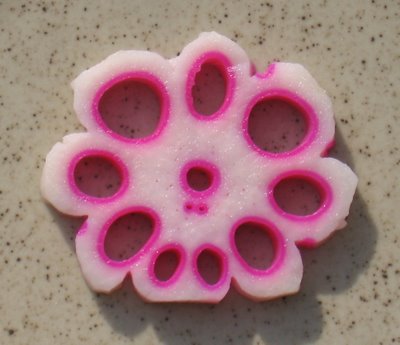


red and white auspicious renkon dish

renkon 蓮根 レンコン lotus roots
. . . CLICK here for Photos !
Lotoswurzeln
It is an auspicious food,since you can see through the holes of the root "into the future", saki ga mitooseru 先が見通せる, mitooshi ga kiku 見通しがきく, which is lucky. Therefore lotus dishes are always prepared for auspicious situations, festivals and the New Year food.
Lotus roots as food


.................................................................................


tazukuri たずくり young dried sardines (gomame) with seasoning
Wish for a good harvest.
Seasoned with sake, mirin and white sesame seeds.


uchiawabi, uchi awabi 打ち鮑 flattened abalone
auspicious pun about striking an enemy down (utsu 打つ).
These dishes were also served when a samurai returned home victoriously.


.................................................................................


yanagibashi やなぎばし chopsticks made from willowtree wood
The middle part is thickest. To use them for eating brings good fortune to the kids and grandkids and more descendants.
. Chopsticks as KIGO for the New Year  


yatsugashira ヤツガシラ / 八つ頭 "eight eight heads"
satoimo サトイ モ Taro as kigo
Just as this parent potato has many child potatoes (sprouts), we eat it with the wish for many children and further generations.
. . . CLICK here for Photos !


*****************************
Worldwide use

China

Chinese New Year's rice cake (Chinese: Nian gao 年糕)
is a special kind of cake made of stick rice. Eating nian gao symbolizes elevating oneself higher in each coming year.

. . . CLICK here for Photos !


passing Chinatown...
the scent of nian gao wafts
my way home


Chen-ou Liu, Canada


*****************************
Things found on the way


*****************************
HAIKU


皺面にとそぬり付るわらひ哉
shiwazura ni toso nuritsukeru warai kana

he smears New Year's sake
all over his wrinkled face ...
what a laugh


Kobayashi Issa, 1821


*****************************
Related words


***** Pounding Rice (mochi tsuki) for the New Year Mochi


***** The New Year and its Kigo (shin nen)
essen zum Neuen Jahr


SAIJIKI of Buddhist, Shinto and other Ceremonies and Events of Japan


BACK TO
*********** SPRING FOOD

BACK TO
*********** WINTER FOOD


. WASHOKU
New Year Food and Decorations


MORE DISHES

WASHOKU :
YASAI . Vegetable SAIJIKI


WASHOKU :
FISH and SEAFOOD SAIJIKI


WKD : SAIJIKI New Year  


:::::::::::::::::::::::::::::::::::::::::::::::::::::::::::::::::::::::::::::::::::::::::::::::::::