[ . BACK to WORLDKIGO TOP . ]
::::::::::::::::::::::::::::::::::::::::::::::::::::::::::::::::::::::::::::::::::::::::::::::::::::
Die Esskultur von Edo
Edo no shokubunka
江戸の食文化
source : www.kabuki-za.com
External LINKS
Copyright(C) 2002 松竹株式会社
株式会社歌舞伎座 歌舞伎座事業株式会社
VOL.1 “芝居と食べ物”
NO.20
“芝居と食べ物”の連載を振り返って
NO.19
芝居茶屋の食事-安永3年2月3日-
NO.18
伊達家正月料理
NO.17
芝居茶屋の料理-安永4年8月16日-
NO.16
芝居茶屋の料理-餅-
NO.15
芝居茶屋の料理-菓子(2)-
NO.14
芝居茶屋の料理-菓子(1)-
NO.13
芝居茶屋の料理-そば屋-
NO.12
芝居茶屋の料理-安永2年11月26日-
NO.11
芝居茶屋の料理-食材の肉とは?-
NO.10
芝居茶屋の料理-主食-
NO.9
柳沢信鴻の芝居見物と食事
NO.8
観劇記録の「宴遊日記別録」
NO.7
楽屋のあたり振舞 gakuya
NO.6
歌舞伎座での“かべす”の再現 kasube
NO.5
芝居見物の食べ物
NO.4
芝居見物の楽しさ
NO.3
芝居茶屋
NO.2
江戸の芝居小屋と木挽町
NO.1
中村座の観客席 Nakamuraza
:::::::::::::::::::::::::::::::::::::::::::::::::::::::::::::::::::::::::::::::::::::::::::::::::::
VOL.2 “江戸の美味探訪”
NO.173 Yokohama port opening
開港当時の横浜
NO.172 Iseebi lobsters
伊勢海老
NO.171 Chuushingura and Fugu
忠臣蔵とフグ
NO.170 Meat in Edo
江戸の肉食
NO.169 Kagurazaka
神楽坂の今昔
NO.168
楽屋の酒宴
NO.167
不忍池と蓮飯 shinobazu no ike, lotus rice
NO.166
魚仙と生作
NO.165
雑司ヶ谷の茗荷屋
NO.164
多摩川の鮎
NO.163 kurimochi chestnut mochi
粟餅
NO.162
花火と役者と刺身 hanabi and sashimi
NO.161 Kasamori no O-Sen
笠森おせんと水茶屋
NO.160
秋田の大ふき
NO.159 ukai cormorants and ayu fish
鵜飼(うかい)と鮎
NO.158 Mizuame sweets
水あめ
NO.157 Tsukudani
鉄砲洲と佃島の佃煮
NO.156 hatsugatsuo first bonito
江戸の初鰹人気
NO.155
日暮里の景観と谷中しょうが
NO.154
浅草寺奥山と雷おこし
NO.153 Hanami box lunch
花見の重箱
NO.152 Carp dishes
鯉の料理
NO.151 Doll Festival dishes
雛の料理
NO.150
梅屋敷の沿革と梅干の効用
NO.149 Kanrobai plums
甘露梅(かんろばい)
NO.148 New Year in Edo
江戸の正月
NO.147 Asakusa Kannon and Asakusa mochi
浅草観音と浅草餅
NO.146
塗箸と割箸 nuribashi hashi
NO.145
酉のまちの土産物 Nishi no machi
NO.144
顔見世月の芝居茶屋
NO.143 kyoka and food
狂句と八百善
NO.142 kikumi chrysanthemum viewing
菊見と菊の花のさしみ
NO.141
重陽の節句の食べ物 chooyoo chrysanthemum
NO.140 Tsukimi and sashimi
月見と刺身
NO.139
鱸と紫蘇と金目鯛 kinmedai
NO.138
鯖と蟹と朝顔
NO.137 mountain ascetics and nigirimeshi !
江戸の山岳信仰と握り飯
NO.136 Ryogoku
両国の涼み船
NO.135 Tanabata offerings
七夕の供え物
NO.134 kujira whale
鯨
NO.133
日本橋魚市の魚介類
NO.132
粽と柏餅
NO.131 sakura and seaweed
桜と海苔
NO.130 sakuramochi
桜餅
NO.129
吉原の桜と台の物
NO.128
江戸の雛人形と雛道具
NO.127 buri and fugu
鰤と河豚
NO.126 umemi and dishes for plum viewing
梅見と梅の料理
NO.125 koi, carp
二十四孝と鯉
NO.124 Nihonbashi new year
日本橋の正月
NO.123
三井越後屋と棒手振
NO.122 sweets or fruit
菓子か果物か
NO.121
台の物と鯛
NO.120 shibai chaya no shokuji
芝居茶屋の食事
NO.119
旅籠の食事
NO.117
笹折と散蓮華
NO.116
上戸(じょうご)と下戸(げこ)
NO.115 Water ... mizu no mono
水の物
NO.113 otsumami
屋根船での酒肴
NO.112 hanashoobu
落雁と花菖蒲
NO.111 ajisai and tokoroten
紫陽花とところてん
NO.110 mi no koku tsukemono
巳の刻の漬物売り
NO.109
辰の刻のご飯炊き tatsu no koku gohan
NO.108
潮干狩のいまとむかし shiogari
NO.107 education of children and food
飲食のしつけ
NO.106
祝儀と鰹節
NO.105
式三献と熨斗鮑
NO.104 Inari and inarizushi
稲荷と稲荷ずし
NO.103
芝居茶屋の料理
NO.102 yukimizake, for snow viewing
雪見酒
NO.101
屠蘇と繭玉
NO.100
曽我物と巻狩 soga monogatari
NO.99
日本橋魚市場と『魚鑑』
NO.98 suzuharai and food
煤払いの食べ物
NO.97
頭の竿と黄金餅
NO.96 Chitose ame
千歳飴など
NO.95 nakamise
「顔見せ」の桟敷の食べ物
NO.94 kakesoba
風聞きゝと「かけそば」
NO.93
草津のうばが餅
NO.92 Tsukimi Meeting
月見の宴
NO.91
賀の祝と鰹節
NO.90
干瓢の名産地
NO.89 nijuuroku ya
二十六夜待の料理
NO.88 Tanabata good
江戸の七夕
NO.87
麦湯
NO.85 hamaguri
焼蛤と時雨蛤
NO.84
江戸の評判娘と刺身
NO.83 Zoojooji temple and fish sellers
増上寺と魚売り
NO.82 shiogari
潮干狩とあさり
NO.81 white fish
白魚
NO.80 Hinamatsuri food for doll festival
雛祭の料理
NO.79 white sake
白酒
NO.78
摘み草
NO.77 terakoya at new year
寺子屋の正月
NO.76 Shoogatsu new year
江戸の正月のおせち
NO.75 Mochitsuki
江戸の餅搗き
NO.74
棟上の撒餅
NO.73 momijigari maple leaves and tea
紅葉狩と茶
NO.72 nihachi soba
「二八そば」と「二六そば」
NO.71 tororojiru soup
とろろ汁
NO.70 Konpeitoo sweets
金花糖
NO.69 tsukimi and hamaguri
月見と蛤
NO.68
菓子の外郎
NO.67 awabi
鮑の美味
NO.66 Ryogoku
江戸両国の納涼花火
NO.65 nooryoo ... food to feel cool in the hot season - Ryogoku
江戸両国の納涼
NO.64 kaiseki
納涼と会席
NO.63 River Fish
川魚料理と床、生簀
NO.62
梅屋敷と梅干
NO.61 seeweed in Edo
江戸の海苔
NO.60 Kashiwamochi
江戸の柏餅
NO.59
御殿山の花見と花見弁当
NO.58 Hanami Bento
東叡山の花見と花見弁当
NO.57 sweets and sake
菓子と酒の戦い
NO.56
野菜と魚の合戦
NO.55 Vegetables in Edo
江戸の野菜
NO.54 Fish markets in Edo
日本橋の魚市場
NO.53 Rice in Edo
江戸の米食
NO.52
江戸三座の正月
NO.51 mochitsuki
江戸の餅搗き
NO.50
料理と酒器
NO.49
鍋料理と酒器
NO.48
江戸の鍋料理
NO.47 Nabe hodgepodge eintopf
鍋料理
NO.46 Dengaku and oden
田楽とおでん
NO.45
八百善と『料理通』
NO.44 Tsukimi dango
月見と団子
NO.43
書画会と河内屋 Kawachiya
NO.42
百川と卓袱料理
NO.41 Sumo and Tai fish
相撲と鯛の焼物
NO.40
朝顔煎餅
NO.39 noodles for Tanabata
七夕の素麺
NO.38 selling cold water
冷水売り
NO.37 rakugan
落雁
NO.36
練羊羹と船橋屋
NO.35 kashiwamochi
柏餅
NO.34
江戸の菓子屋
NO.33 Sumidagawa no Sakuramochi
隅田川の桜餅
NO.32 shiogari
潮干狩
NO.31 hinamatsuri doll festival
ひなまつり
NO.30 shiruko
汁粉
NO.29
吉原の弾き初めと名物 yoshiwara
NO.28
七福神と吉原の料理
NO.27 yakiimo sweet potatoes
焼芋
NO.26 Dango
江戸の菓子 -団子-
NO.25
江戸の菓子 -飴と飴売り-
NO.24 Sweets, Manjuu
江戸の菓子 -まんじゅう-
NO.23 Sushi
すし-すし屋の案内-
NO.22
すし-押しずし-
NO.21 nigirizushi
すし-握りずし-
NO.20 Sushi
すし-すしの移り変わり-
NO.19
てんぷら屋
NO.18 tenpura
てんぷら
NO.17
役者に見立てた瓜の評判
NO.16 gourds and melons
西瓜
NO.15
鮎料理
NO.14 Sashimi
刺身と刺身屋
NO.13 katsuobushi and dashi
鰹節のだし
NO.12
江戸の初鰹
NO.11 Edo Time egg dishes
江戸時代の卵料理
NO.10
扇屋と卵焼
NO.9
飛鳥山と花見弁当
NO.8 Tofu Dengaku
豆腐田楽
NO.7 dengaku
甲子屋と田楽
NO.6
鯛は魚の第一位
NO.5 ushiojiru
“平清”と潮汁
NO.4 shoojin ryoori vegetarian dishes
蓬莱屋と精進料理
NO.3 wakamochi
黄金の若餅
*****************************
Related words
***** WASHOKU : General Information
. - - - Welcome to Edo 江戸 ! - - - .
. Thirty-six Fashionable Restaurants of the Eastern Capital .
(Tôto ryûkô san-jû-rokkaiseki, 東都流行三十六會席 / 東都流行三十六会席 )
Utagawa Kuniyoshi
:::::::::::::::::::::::::::::::::::::::::::::::::::::::::::::::::::::::::::::::::::::::::::::::::::
Showing posts sorted by relevance for query kujira. Sort by date Show all posts
Showing posts sorted by relevance for query kujira. Sort by date Show all posts
4/05/2008
5/23/2009
GLOSSARY JJJ - KKKK
[ . BACK to WORLDKIGO TOP . ]
::::::::::::::::::::::::::::::::::::::::::::::::::::::::::::::::::::::::::::::::::::::::::::::::::::
Use my search function for this blog
. . . SEARCH THIS BLOG ONLY
or
. . . . . Find your Keyword hereMY complete DARUMAPEDIA SEARCH
::::::::::::::::::::::::::::::::::::::::::::::::::::::::::::::::::::::::::::::::::::::::::::::::::::
.......... JJJ
jagaimo, jaga-imo ... Kartoffel (Danshaku und May Queen) Solanum tuberosum
jajamen ... Jajamen. Nudelgericht aus Morioka.
janjanyaki ... Braten von Lachs auf der heißen Eiesnplatte
jibachiyaki ... gegrillte Larven der Erdwespe
jibuni冶部煮... Jibuni. Wildente mit Gemüse gekocht, aus Kanazawa
jidai ... xzy-Zeit !
jidori ... lokale Hühnerarten
jigoku mushi ... „Dämpfen in der Hölle“. Für Hühner und andere Zutaten aus Oita
jigokumushi gama ...Dampfgarer
jingisukaan nabe, Genghis Khan nabe, ... Dschingis Khan-Grillgericht, Eintopf mit Hammelfleisch
jizaikagi ... Kesselhaken
Joomon jidai ... Jomon-Zeit. ?Jungsteinzeit
... joomon 縄文 Schnurmuster; Strohschnurmuster #Schnurabdruckdekor
jooyanabe ... „Eintopf für jeden Abend“ "hodgepodge for each evening"
joshinko ... Mehl aus Uruchi-Reis 上新粉
junmaishu ... Reiner Reiswein, ohne Zusatz von Alkohol oder Zucker
junmaisu ... Reiner Reisessig, pure rice vinegar
jure ジュレ ... jelly . from the French: gelee
................................................ KKKK
..... KAKAKA
kaa カー ... spice from south-east asia. sold raw, dry or frozen.
kabayaki かばやき【蒲焼き】 ... grilled or broiled eel. gebratener Aal
kabocha ... Kürbis. Gartenkürbis. Cucurbita moschata
kabocha taikai ... „Fest der großen Kürbise“ auf Shoodoshima
kabosu ... Kabosu-Zitrusfrucht. Citrus sphaerocarpa.
kabu ... Mairübchen §Rüben, scheint das gleiche wie kabura zu sein.
kabura ... Rübe, Brassica campestris var. rapa
kaburazushi ... Fermentierte Rüben und Gelbschwanz
kaerichirimen, kaeri-chirimen かえりちりめん ... kind of small, dried fish (shirasu boshi)
kaeshi, okaeshi … Gegengeschenk
kagamimochi … „Neujahrs-Mochi“. rundes Mochi. „Spiegel-Mochi“. kazarimochi ... Dekorations-Mochi. Neujahrsdekoration.
kagen jooyu, kagenzu 加減醤油 加減酢 ... tpye of mixes soy sauce / vinegar. can be mixed with ricewine or dashi.
kaibashira かいばしら【貝柱】 ... adductor muscle in a shellfish. Muschelband (der Jakobsmuschel). sold dry or in cans.
kaienupeppe カイエヌペッパ ... cayenne pepper
kaiseki ryoori ... Kleine Mahlzeit vor der Teezeremonie懐石
kaiseki ryoori ... Kaiseki-Cuisine. Festliche Mahlzeit. 会席料理
kaisendonburi, kaisen donburi ... Schale Reis mit gemischten Meeresfrüchten 海鮮どんぶり
kaishiki かいしき ... white paper to place food on. in olden times, sasa leaves were used.
kaisho 会所 ... place to come for eating a formal kaiseki meal (example: Golden Pavillion)
kaisoo ... Seegras. 海草 seaweed
kaitoo 解凍 ... thaw, defrost. auftauen
kaitooge ... Eier des Kraken海藤花(かいとうげ)
kaiware daikon ... Rettichsprossen (vom weißen Rettich), see kaiwari.
kaiwarena ... Samensprossen
kaiwari 貝割り ... tool to open shells
kaiwarina 貝割り菜 (kaiwarena) ... frisch gesprossenes Gemüse, radish or beans. also kaiware.
kaiyaki … Muscheln in der Schale gegrillt
kajika ... Kaulkopf (Spinnenfisch). Cottus kazika
kajikibashi ... Essstäbchen für Wildfleisch
kaki, magaki ... Fam. Pazifische Felsenaustern (Meresfrüchte). Fam. Crassostrea – gemeine Pazifische Felsenauster : magaki, Crassostrea gigas ist Pacific cupped oyster, pacific giant oyster (Pazifische Riesen-Felsenauster, iwagaki,Crassostrea nippona. Oysters)
kaki, kaki no ki ... Persimone (Früchte), Sharonfrucht. Diospyros kaki. Persimmon, Sharon Fruit (bitter kaki variety prepared for eating)
kakiage, kaki age ... Kakiage. geschnitzeltes Tenpura mit geschnittenen Muscheln, Krabben und Gemüse.
kakigoori ... Raspeleis §Geraspeltes Eis. ?Kratzeis
kaki no dotenabe ... Austern-Dotenabe-Eintopf
kaki no tane ... Arare in der Form von Persimonen-Samen
kakitamajiru かきたまじる / 掻き卵汁 ... soup with beaten egg
kakko ... „Skorpion-Snack“. Konfekt aus China. 餲餬
kakuni 角煮 ... das Kakuni, in Würfel geschnittenes x. diced pork.
kakushiaji かくしあじ【隠し味】 ... Geschmacksverfeinerung
kakuterusoosu カクテルソース ... cocktail sauce
kama ... Breitblättriger Rohrkolben. Typha latifolia.
kamaboko ... Fischpastete. (Fischkuchen)
kamameshi ... Reis und Beilagen im gleichen Topf gekocht
kamasu 梭魚 (かます) ... Roter Barrakuda §Edelhecht . Sphyraena pinguis . yamato kamasu : Sphyraena japonica … red barracuda
kaminariika, kaminari ika ... „Donner-Tintenfisch“. mongo-ika für Sushi. Sepia lycidas. kobu-ika
kanagushi 金ぐし ... metal skewer
kanappe カナッペ ... cannape. Kanapee, Cocktailhappen
kanbaikoo 寒梅粉 ... mochigome-Klebreismehl, in der Zeit gemacht, wenn die „Pflaumen im Kalten“ blühen. kanbai
kanbiiru ... Bier in Dosen, Büchsenbier
kanbutsu ... getrocknete Lebensmittel
kancha ... „Tee aus der kalten Jahreszeit“, Tokushima
kaneroni カネロニ ... cannelloni
kani ... Krebs. ?Krabbe. Fam. Brachyura ... siehe Untergruppen mit Eigennamen
kanikama / kanifuumi kamaboko かに風味かまぼこ... Kamaboko aus Krabbenfleisch
kanikurokke ... Krabben-Kroketten
kanimiso ... Paste aus Krabbeneingeweiden
kanitama ... Omlett mit Krabbenfleisch, chinesische Art
kanizoosui ... Angedickte Reissuppe mit Krabbenfleisch. rice porridge
kankidan, danki ... „Freuden-Kräcker“. Neujahrskonfekt.
kankoro ... Mehl aus Süßkartoffeln. Shoodoshima
kankoro soba ... Kankoro-Nudeln.
kanpachi ... Gelbschwanzstachelmakrele §Bastard-Makrele (Ersatz: Meeräsche oder Knurrhahn) Seriola dumerili. greater amberjack
kanpo ... chinesische Medizin
kanpyoo ... getrocknete Kürbisstreifen. von Lagenaria siceraria var. hispida
kanraku ... Käse. 乾酪
kanroni ... in angesüßter Soyasauce gekochtes
kansaba 寒サバ ... „Makrele im Kalten“
kansui ... alkalische Lösung, für die Ramen-Nudelherstellung
kantamago ... im Winter gelegte Hühnereier
kanten ... Agar-Agar. aus Tengusa. Gelidium amansii
kanzoo甘草 ... Süßholz, Lakrize. Glycyrrhiza uralensis und G.glabra
kanzoo萱草 ... Taglilie. Hemerocallis fulva
kaoyaapin カオヤーピン / 烤鴨餅... chinese food, kind of crepe, to wrap pecking duck and others.
kappamaki ... „Gurken-Rolle für einen Wasserkobold“ Sushiart
kappoo 割烹(かっぽう) ... "Geschnittenes und Gekochtes" . Lebensmittel zubereiten. kappyo ryoori Traditionelles Japanisches Essen.
kara-age, karaage ... ohne marinieren Frittiertes, nur in katakuriko oder Mehl gewendet . Tatsuta.age, tatsutaage mariniert in Sojasauce und Mirin, dann nur katakuriko.
karashi ... Japanischer Senf. scharf
karashi mentaiko ... Alaska-Seelachsrogen, scharf
karashina ... Senfkraut. Brassica juncea
karasumi ... getrockneter Rogen der Meeräsche
karayaki ... Meeresfrüchte in der Schale gegrillt
karee ... der Curry (als Gewürz), das Curry (als Gericht)
karee pan ... Curry in Brotteig
karei ... Kliesche. Limanda limanda §Seriola dumerili. dab
karei鰈 ... Flunder. Platichtichthys flesus. flounder
karei, magarei ... §Seezunge (Scholle, Plattfisch). Pleuronectes herzensteini
karifurawaa ... Blumenkohl. Brassica oleracea var. botrytis.
karubi … Koreanische Speise. Rinderrippen in Sauce mariniert für yakiniku. Calbie, galbi in Korean.
kasago笠子... Skorpionsfisch-Art. Sebastiscus marmoratus. false kelpfish. sebastinae sind Stachelköpfe
kasairui かさいるい【花菜類】 ... fruits and vegetables. Früchte und Gemüse
kashi no mi ... Eichel. Von der Eiche Quercus glauca.
kashoo 花椒 ... kind of chinese mountain pepper
kashooen 花椒塩 ... salt with Chinese mountain pepper
kashuunatsu カシューナツ / カシューナッツ ... cashew nuts
kasu かす【滓/糟/粕】 ... lees, dregs grounds. Treber, Bodensatz, Rückstand
kasujiru 粕汁 ... soup with sake lees
kassuree カッスレー ... cassoulet
kasuzuke 粕漬け ... pickled with sake lees
kasutaado ... Vanillepudding, Vanillesauce. custard
kasutera ... Castella. Castilian cake. Biskuitkuchen. Spanischer Kastenkuchen. Kastella.
katakuchi iwashi ... Anchovis. Sardelle. Anchovy. Engraulis japonica
katakuriko かたくりこ【片栗粉】 ..... Hundsveilchen-Stärke . #Stärkemehl (aus Hundsveilchen) Erythronium japonicum
kataniku, kataroosu 肩肉 ... Fleisch von der Schulter
katei ryoori ... Hausmannskost
katorari カトラー ... cutlery. Besteck
katoruepisu, katoru episu カトルエピス ... quatre epice, quatre espices. mixed spices
katsu ... Kotelette ?Schnitzel ?Schweineschnitzel / auch "fight to win"
katsuretsu カツレツ ... cutlet. Kotelette
katsudon ... Reis mit Schnitzel
katsukaree, Katsu karē ... Schnitzel mit Currysauce ?Kotelette mit Currysauce
katsuo ... Bonito-Thunfisch. . Echter Bonito ??Bonito / Blaufisch (Thunfischart) . Katsuwonus pelamis. skipjack tuna
katsuobushi ... Katsuobushi.
There are two different things
the hard pieces Katsuobushi ?Katsuobushi-Stücke and
the small light flakes, Katsuobushi-Flocken ? Katsuobushi-Späne 鰹節 (kezurikatsuo ?Bonitospäne ?Bonitoflocken) .
katsuo no tataki ... Bonito-Sushi ?Katsuo-Sushi mit gehackten Frühlingszwiebeln und Knoblauch (scharf angebratener Bonito)
katteeji chiizu カッテージチーズ ... cottage cheese. Hüttenkäse, körniger Schichtkäse
kawaebi, kawa-ebi ... Flußgarnele. Macrobrachium nipponense
kawahagi ... Segelfeilenfisch §Feilenfisch Stephanolepis cirrhifer. thread-sail filefish
kawakani, sawagani ... Flußkrabbe, Flusskrabbe. Geothelphusa dehaani. Japanische Süßwasserkrabbe
kayaki ... weiße Nanbu-Waffeln für die Suppe. nanbu senbei
kayu, o-kayu, okayu ... Reissuppe. Reisgrütze (nicht Reisbrei). shirakayu白粥 . weisse Reissuppe
kazunoko, kazu no ko かずのこ【数の子】 ... herring roe. Heringsrogen. „Unzählbare Kinder“.
.......... KEKEKE
kegani ... Haarkrabbe. Kegani-Krabbe. Haarkrabben (haarige Krabbe). Erimacrus isenbeckii. hairy crab. 大栗蟹 ookurigani, Esskastanienkrabbe
keishin ... Zimtgebäck.
keihan鶏飯(けいはん)... Reis mit Hühnchen
kenboo ... good mother. ryoosai kenboo 良妻賢母 good wife and wise mother
kengyo 献魚 ... Fisch als Opfergabe
kenzakiika, kenzaki ika, kensaki ika ... Schwertspitzen-Kalmar. § Schwertspitzen-Tintenfisch. Loligo edulis
keshoojio ... „Salz-Makeup“ für Grillfische, auf Schwanz und Flossen.
.......... KIKIKI
kibi ... Hirse. Panicum miliaceum.
kibidango, kibi dango … Hirsekloß, Hirseklößchen, Hirsebällchen黍団子 millet dumplings ... mit mochikibi. Mischung aus ca. 60% Mochigome und 40% Hirse
kibimochi ... Mochi aus Hirsemehl.
kibinago黍女子、黍魚子、吉備女子、吉備奈仔... „Blaue Sprotte“. Spratelloides gracilis. Silver-stripe round herring, Slender sprat
kichiji ... Fisch. Sebastolobus macrochir. Art „kasago“.
kihada黄肌、木肌... Gelbflossen-Thunfisch. §Gelbflossen-Thun.. Thunnus albacares. yellowfin tuna
kiji ... Fasan Phasianus colchicus tohkaidi
kijooyu udon ... udon mit Sojasauce生醤油(きじょうゆ)
kikurage ... „Quallen der Bäume“. Holunderschwamm. Auricularia auricula
kikuza きくざ【菊座】 ... "Chrysanthemensitz", japanische Kürbisart. Kikuza Squash. Cucurbita moschata
kimchi ... Kimchi, kimchee, Korean kimchee
kimi ... Eigelb
kimiyaki ... Braten mit einem Eigelb. auch oogonyaki, Gold-Gebratenes.
kin 禽 ... two-legged animals, birds to be eaten
kinako きなこ【黄な粉】 ... soybean flour. Sojabohnenmehl. „Gelbes Mehl“. gedörrtes Sojabohnenmehl
kinkatoo ... „Goldener Blumen-Zucker“, Süßigkeit aus Kanazawa
kinmedai金目鯛... Kinmedai. Centroberyx druzhinini 金目鯛 §Südlicher Kaiserbarsch. §Beryx splendens. - Golden Eye snapper. alfonsino
kinjisoo ... 金時草 … Kinjiso. Blattgemüse aus Kanazawa. Gynura bicolor
kinpira ... Schwarzwurzel gekocht in Sojasauce und Sesamöl
kinoko, ki no ko ... Pilze (allgemeine Bezeichnung)
kinomi, ki no mi ... Nüsse
kintoki mame ... Kintoki-Bohnen. Phaseolus vulgaris. large adzuki beans
kinton ... Kinton-Brei. Aus Süßkartoffeln oder Esskastanien oder Bohnen.
kinugoshidoofu ... Seiden-Tofu #Seidentofu. Durch ein Seidensieb passierter Tofu
kinusaya ... Zuckererbse, Zuckererbsenschote. Fam. Leguminosae
kirimugi ... „geschnittener Weizen“, Name für Nudeln in der Kamakurazeit
kiritanpo ... Gerösteter Reis am Stab . das Kiritampo, ?gegrillter Kiritanpo-Reis, Reisrolle (?Kiritanpo $Fischrolle)
kiru 切る ... cutting food. xxxkiri, xxxgiri ... see extra entry.
kisago ... Strandschnecke. Umbonium costatum
kisaminegi ... fein geschnittener Lauch
kinshi tamago ... „Goldfaden-Ei“. Dünnes Omelett, in feine Streifen geschnitten
kishimen ... Bandnudeln aus Nagoya. Weizennudeln
kisu ... Japanischer Sillago. §Sillago (Sillago japonica §Sillaginidae, Weißlinge) . japanese whiting
kitamaebune ... Schiff der nördlichen Handelsrute
kitsune ... Fuchs. Inari ist die Fuchsgottheit.
kitsune udon, kitsune soba ... mit Abura-Age, der Lieblingsspeise des Fuchses: Udon-Nudelsuppe mit einem Fuchs“ „Buchweizen-Nudelsuppe mit einem Fuchs“
.......... KOKOKO
kobumaki, konbumaki ... Kombu-Rollen
kochi, magochi鯒 ... Indischer Plattkopf §Plattkopf (Fisch) Platycephalus indicus $Platycephalus sp. Bartail flathat
kochi ... Entenschnabel-Plattkopf. Bembrops anatirostris. duckbill flathat
kochi … Indischer Plattkopf, Platycephalus indicus, bartail flathat
kogomi ... Straußenfarn. Matteuccia struthiopteris. oistrich fern
kohada/ shinko ... Gefleckter Pazifikhering §Alse/Maifisch. Konosirus punctatus. dotted gizzard shad
Kojiki ... älteste Geschichtschronik, 8. Jhd.
kokemomo ... Preiselbeere
kokemushi 苔蒸し… moss simmering
kokuminshoku 国民食 ... national dish
kokumotsu ... Getreide
kokusan 国産 ... domesitcally produced food, Japanese food source
komatsuna ..... Senfspinat #Das Komatsuna (Brassica rapa var. perviridis) spinach mustard
kome ... Reis auf dem Feld. Oryza sativa var. japonica, short-grain rice
komesu, yonezu … Reisessig
komochi ... „mit Kindern“ weibliche Fische
komodoofu, komo toofu コモドウフ tofu wrapped in a straw coever
komugi ... Weizen. Triticum aestivum. komugiko ... wheat flour
konbini コンビニ ... Konbini. ?Kombini / convenience store, Selbstbedienungsladen. Conbini
konbu ... Kombu (DAS Kombu). ?Kombu-Seetang ?Konbu. ?Riementang. ?Braunalge.. Laminaria japonica. Laminaria saccharina. Royal or Sweet Kombu. Sea spaghetti (Himanthalia elongata).
konbumaki ... Kombu-Rollen ?Konbu-Rollen
kondate 献立 ... menu, Menü. Zusammenstellung der Speisen für eine Mahlzeit
konebachi ... Knetschale. Für Soba und Udon
konnyakuimo, konnyaku imo ... Konjak. Konjakknolle ?Konnyaku-Knolle. #Konjakwurzel . Amorphophallus konjac. Wunderwurzel Glucomannan. auch Teufelszunge oder Tränenbaum
konnyaku ... Konjak. #?Konnyaku #Konjac – ito-konnyaku ... Faden-Konjak #Faden-Konnyaku. gelatineartige Masse aus Aronstabknollen. Amorphophallus konjac. nama-imo konnyaku, roher Konjak (direkt aus Knollen zubereitet)
konnyaku ko .. 蒟蒻粉.. Konjakmehl. #Konjacmehl. Konjak-Extrakt. Ein Verdickungsmittel
... ita-konnyaku ... Konjak im Block
... shirataki ... Konjak-Glasnudeln
... konnyakudama ... Konjak-Knolle
konomiyaki ... siehe Okonomiyaki
konowata ... gesalzene Eingeweide der Seegurke
konpeitoo ... sugar candy. Konfekt. 金平糖; 金米糖. vom portugiesischen confeito. also aruheitoo 有平糖
konsome karyuu ... Brühe-Granulat §granulierte Brühe
konton ... Teigtaschen mit Fleischbällchen und Gemüse
koogen yasai ... Gemüse der Hochebenen
kooika, koo ika ... Tintenfisch. Sepia esculenta甲烏賊
kooji ... Hefe. Kooji-Pilzkultur. Reis-Kooji, kome kooji, Aspergillus oryzae 米麹. - mugi-kooji Weizen-Kooji. mamekooji, Bohnen-Kooji-Pilzkultur (Aspergillus hatcho)
koon コーン... Mais / Babymaiskolben. (tomorokoshi, corn)
.............................................................................
koonfureeku ... Cornflakes
Autumn sunrise---
the smell of
cornflakes
Fred Masarani
Autumn 2012
.............................................................................
koo no mono 香の物 ... pickles
Koorai ninjin 高麗人参... Koreanischer Ginseng. Panax ginseng
koppepan ... süßes Hefebrötchen
korokke ... Krokette
koshiabura, koshi-abura ... „Koshi-Abura-Sprossen“. Acanthopanax sciadophylloides (Fam. der Aralien)
kowa, okowa, kowameshi ... Mochi-Klebreis mit roten Bohnen
kowaii, kowameshi 強飯 ... hard boiled rice from uruchimai
Kooyadoofu ... Koya-Tofu. getrockneter Tofu vom Bergkloster Koyasan. (166)
.......... KUKUKU
kuchi ... anderer Name für „ishimochi“ ... Adlerfisch. Argyrosomus argentatus.
kuchikiri, kuchi kiri 口切り ... opening the lid of a new tea container
kuchinashi ... Gardenie. Gardenia jasminoides
kuchioto, kuchi oto 口音 ... noises of the mouth when eating
kudamono … Frucht, Obst.
kuitsumi … “Essen gemeinsam herauspicken” zum Neujahrsfest
kujira ... Walfisch
kujira nabe ... Walfleisch-Eintopf
kukkii ... Keks, Gebäck, Plätzchen
kuko no mi ... Frucht vom chinesischen Bocksdorn, Lycium chinense. chinese wolfberry
kuma ... Bär. Fam. Ursidae
kuma nabe, kumanabe ... Bären-Eintopf
kumogani ... „Spinnenkrabbe“. ?Schneekrabbe? Chionoecetes opilio
kuppa ... Koreanische Reissuppe
kuri ... Esskastanie. Castanea crenata.
kuriaji kabocha ... Hokkaidokürbis. Cucurbita maxima convar. akai kabocha roter Hokkaidokürbis aus Kaga (als Ersatz für Nanking-Kürbis)
kurigani ... „Eßkastanien-Krabbe“. Telmessus cheiragonus
kurigohan ... Reis mit Esskastanien
kurikinton 栗金団 ... Mus aus Esskastanien ?Püree aus Esskastanien
kurimeshi ... Reis mit Esskastanien
kuri shiroppu 栗シロップ ... Kastaniensirup
kuritaruto ... Törtchen mit Esskastanienpaste
kuroawabi ... Schwarze Abalone. Haliotis discus
kurodai ... dunkle Meerbrasse. Acanthopagrus schlegeli
kurogoma ... schwarzer Sesam. Sesamum indicum nigrum
kurokawa ... Schwarzer Kürbis . kind of pumpkin
kuromaguro, kuro maguro ... nördlicher Blauflossen-Thunfisch. §nördlicher Blauflossen-Thun („Schwarzer Thunfisch“). Thunnus thynnus. northern bluefin tuna (§Thunnus orientalis)
kuromame ... schwarze Sojabohnen. Fam. Glycine max
kuromamecha ... Tee aus schwarzen Bohnen, Tottori
kuromejio … Salz vermischt mit Kurome-Seetang
kuromugi ... „schwarzer Weizen“, Name für Buchweizennudeln inder Heian-Zeit
Kuroshio 黒潮 ... Kuroshio-Strömung ?Kuroshio-Strom. Nordäquatorialstrom. lit. Strömung
kurosu ... “Schwarzer Reisssig” aus braunem Reis.
kuroyaki 黒焼き ... black grilled, dark baked (refers to animal meat in the Edo period)
kurozatoo ... brauner Zucker, Rohrzucker
kurozukuri … „schwarze Zubereitung“, in eigener Tinte und mit Salz gewürzter Tintenfisch
kuruma ebi, kuruma-ebi ... Geißelgarnele. Penaeus japonicus
kurumi ... Walnuss
kurimi-miso ... Walnuss-Miso ?Walnussmiso ?Walnusspaste
kusaya … “Stinker”
kushi ... Spieß. skewer
kushi-age ... auf Spießen in heißem Fett ausgebackene Speisen
kushi-dango, kushidango ... Klößchen am Spieß. see DANGO #Reisbällchen
kushigaki ... auf Spießen getrocknete Persimonen
kushikatsu ... frittiertes Schweinefleisch am Spieß
kushiyaki ... am Spieß gebratenes, meist gegrillt
kuwai ... Pfeilkraut, #Blattgemüse. Sagittaria trifolia. arrowhead bulb
kuzu くず【葛】 ... kudzu [Japanese arrowroot]. Pfeilwurzel, Knabenkraut, DAS Kuzu. Pueraria thunbergiana, P. lobata. ( マランタ Maranta rundinacea seems to be a different plant in the tropics)
kuzuko 葛粉(くずこ ) kudzu starch, made from the root. Pfeilwurzel-Stärke. #Kuzu-Stärke # Pfeilwurzelmehl, Knabenkrautmehl
kuzuan 葛餡 ... An-Masse auf Pfeilwurzel-Basis
kuzukake 葛掛け ... Gericht mit Pfeilwurzel-Sauce
kuzukiri 葛切り ... Nudeln aus Pfeilwurzel-Stärke
kuzumochi 葛餅 ... Küchlein aus Pfeilwurzel-Stärke
kuzuzakura 葛桜 ... mit rotem Bohnenmus gefülltes, mit einem Kirschblatt bedecktes Manju).
kuzuyu 葛湯 ... Pfeilwurzelmehlsuppe
kuzu ukon, kuzuukon クズウコン (葛鬱金) Pfeilwurz. Maranta arundinacea.
kyabetsu ... Kohl, Weißkohl. Fam. Brassica oleracea var. capitata … me-kyabetsu芽キャベツ, Rosenkohl, Brassia oleracea var. gemmifera. aka-kyabetsu … Rotkohl
..... とんがりキャベツ Spitzkohl, Pointed Cabbage
kyaraben … “Bentoo mit Characterfiguren”
kyooyasai … Gemüse aus Kyoto. Kyoto-vegetables. kyoosai, kyosai
kyuuri ... Gurke. Cucumis sativus. The Japanese cucumber is about 18 – 20 cm long, 2 mm in diameter and weighs about 180 – 200 grams. It is much smaller than a german Salatgurke. Landgurke.
kyuushoku ... Schulessen.Schulspeisung. school lunch
BACK
Top of this Glossary
::::::::::::::::::::::::::::::::::::::::::::::::::::::::::::::::::::::::::::::::::::::::::::::::::::
Use my search function for this blog
. . . SEARCH THIS BLOG ONLY
or
. . . . . Find your Keyword hereMY complete DARUMAPEDIA SEARCH
::::::::::::::::::::::::::::::::::::::::::::::::::::::::::::::::::::::::::::::::::::::::::::::::::::
.......... JJJ
jagaimo, jaga-imo ... Kartoffel (Danshaku und May Queen) Solanum tuberosum
jajamen ... Jajamen. Nudelgericht aus Morioka.
janjanyaki ... Braten von Lachs auf der heißen Eiesnplatte
jibachiyaki ... gegrillte Larven der Erdwespe
jibuni冶部煮... Jibuni. Wildente mit Gemüse gekocht, aus Kanazawa
jidai ... xzy-Zeit !
jidori ... lokale Hühnerarten
jigoku mushi ... „Dämpfen in der Hölle“. Für Hühner und andere Zutaten aus Oita
jigokumushi gama ...Dampfgarer
jingisukaan nabe, Genghis Khan nabe, ... Dschingis Khan-Grillgericht, Eintopf mit Hammelfleisch
jizaikagi ... Kesselhaken
Joomon jidai ... Jomon-Zeit. ?Jungsteinzeit
... joomon 縄文 Schnurmuster; Strohschnurmuster #Schnurabdruckdekor
jooyanabe ... „Eintopf für jeden Abend“ "hodgepodge for each evening"
joshinko ... Mehl aus Uruchi-Reis 上新粉
junmaishu ... Reiner Reiswein, ohne Zusatz von Alkohol oder Zucker
junmaisu ... Reiner Reisessig, pure rice vinegar
jure ジュレ ... jelly . from the French: gelee
................................................ KKKK
..... KAKAKA
kaa カー ... spice from south-east asia. sold raw, dry or frozen.
kabayaki かばやき【蒲焼き】 ... grilled or broiled eel. gebratener Aal
kabocha ... Kürbis. Gartenkürbis. Cucurbita moschata
kabocha taikai ... „Fest der großen Kürbise“ auf Shoodoshima
kabosu ... Kabosu-Zitrusfrucht. Citrus sphaerocarpa.
kabu ... Mairübchen §Rüben, scheint das gleiche wie kabura zu sein.
kabura ... Rübe, Brassica campestris var. rapa
kaburazushi ... Fermentierte Rüben und Gelbschwanz
kaerichirimen, kaeri-chirimen かえりちりめん ... kind of small, dried fish (shirasu boshi)
kaeshi, okaeshi … Gegengeschenk
kagamimochi … „Neujahrs-Mochi“. rundes Mochi. „Spiegel-Mochi“. kazarimochi ... Dekorations-Mochi. Neujahrsdekoration.
kagen jooyu, kagenzu 加減醤油 加減酢 ... tpye of mixes soy sauce / vinegar. can be mixed with ricewine or dashi.
kaibashira かいばしら【貝柱】 ... adductor muscle in a shellfish. Muschelband (der Jakobsmuschel). sold dry or in cans.
kaienupeppe カイエヌペッパ ... cayenne pepper
kaiseki ryoori ... Kleine Mahlzeit vor der Teezeremonie懐石
kaiseki ryoori ... Kaiseki-Cuisine. Festliche Mahlzeit. 会席料理
kaisendonburi, kaisen donburi ... Schale Reis mit gemischten Meeresfrüchten 海鮮どんぶり
kaishiki かいしき ... white paper to place food on. in olden times, sasa leaves were used.
kaisho 会所 ... place to come for eating a formal kaiseki meal (example: Golden Pavillion)
kaisoo ... Seegras. 海草 seaweed
kaitoo 解凍 ... thaw, defrost. auftauen
kaitooge ... Eier des Kraken海藤花(かいとうげ)
kaiware daikon ... Rettichsprossen (vom weißen Rettich), see kaiwari.
kaiwarena ... Samensprossen
kaiwari 貝割り ... tool to open shells
kaiwarina 貝割り菜 (kaiwarena) ... frisch gesprossenes Gemüse, radish or beans. also kaiware.
kaiyaki … Muscheln in der Schale gegrillt
kajika ... Kaulkopf (Spinnenfisch). Cottus kazika
kajikibashi ... Essstäbchen für Wildfleisch
kaki, magaki ... Fam. Pazifische Felsenaustern (Meresfrüchte). Fam. Crassostrea – gemeine Pazifische Felsenauster : magaki, Crassostrea gigas ist Pacific cupped oyster, pacific giant oyster (Pazifische Riesen-Felsenauster, iwagaki,Crassostrea nippona. Oysters)
kaki, kaki no ki ... Persimone (Früchte), Sharonfrucht. Diospyros kaki. Persimmon, Sharon Fruit (bitter kaki variety prepared for eating)
kakiage, kaki age ... Kakiage. geschnitzeltes Tenpura mit geschnittenen Muscheln, Krabben und Gemüse.
kakigoori ... Raspeleis §Geraspeltes Eis. ?Kratzeis
kaki no dotenabe ... Austern-Dotenabe-Eintopf
kaki no tane ... Arare in der Form von Persimonen-Samen
kakitamajiru かきたまじる / 掻き卵汁 ... soup with beaten egg
kakko ... „Skorpion-Snack“. Konfekt aus China. 餲餬
kakuni 角煮 ... das Kakuni, in Würfel geschnittenes x. diced pork.
kakushiaji かくしあじ【隠し味】 ... Geschmacksverfeinerung
kakuterusoosu カクテルソース ... cocktail sauce
kama ... Breitblättriger Rohrkolben. Typha latifolia.
kamaboko ... Fischpastete. (Fischkuchen)
kamameshi ... Reis und Beilagen im gleichen Topf gekocht
kamasu 梭魚 (かます) ... Roter Barrakuda §Edelhecht . Sphyraena pinguis . yamato kamasu : Sphyraena japonica … red barracuda
kaminariika, kaminari ika ... „Donner-Tintenfisch“. mongo-ika für Sushi. Sepia lycidas. kobu-ika
kanagushi 金ぐし ... metal skewer
kanappe カナッペ ... cannape. Kanapee, Cocktailhappen
kanbaikoo 寒梅粉 ... mochigome-Klebreismehl, in der Zeit gemacht, wenn die „Pflaumen im Kalten“ blühen. kanbai
kanbiiru ... Bier in Dosen, Büchsenbier
kanbutsu ... getrocknete Lebensmittel
kancha ... „Tee aus der kalten Jahreszeit“, Tokushima
kaneroni カネロニ ... cannelloni
kani ... Krebs. ?Krabbe. Fam. Brachyura ... siehe Untergruppen mit Eigennamen
kanikama / kanifuumi kamaboko かに風味かまぼこ... Kamaboko aus Krabbenfleisch
kanikurokke ... Krabben-Kroketten
kanimiso ... Paste aus Krabbeneingeweiden
kanitama ... Omlett mit Krabbenfleisch, chinesische Art
kanizoosui ... Angedickte Reissuppe mit Krabbenfleisch. rice porridge
kankidan, danki ... „Freuden-Kräcker“. Neujahrskonfekt.
kankoro ... Mehl aus Süßkartoffeln. Shoodoshima
kankoro soba ... Kankoro-Nudeln.
kanpachi ... Gelbschwanzstachelmakrele §Bastard-Makrele (Ersatz: Meeräsche oder Knurrhahn) Seriola dumerili. greater amberjack
kanpo ... chinesische Medizin
kanpyoo ... getrocknete Kürbisstreifen. von Lagenaria siceraria var. hispida
kanraku ... Käse. 乾酪
kanroni ... in angesüßter Soyasauce gekochtes
kansaba 寒サバ ... „Makrele im Kalten“
kansui ... alkalische Lösung, für die Ramen-Nudelherstellung
kantamago ... im Winter gelegte Hühnereier
kanten ... Agar-Agar. aus Tengusa. Gelidium amansii
kanzoo甘草 ... Süßholz, Lakrize. Glycyrrhiza uralensis und G.glabra
kanzoo萱草 ... Taglilie. Hemerocallis fulva
kaoyaapin カオヤーピン / 烤鴨餅... chinese food, kind of crepe, to wrap pecking duck and others.
kappamaki ... „Gurken-Rolle für einen Wasserkobold“ Sushiart
kappoo 割烹(かっぽう) ... "Geschnittenes und Gekochtes" . Lebensmittel zubereiten. kappyo ryoori Traditionelles Japanisches Essen.
kara-age, karaage ... ohne marinieren Frittiertes, nur in katakuriko oder Mehl gewendet . Tatsuta.age, tatsutaage mariniert in Sojasauce und Mirin, dann nur katakuriko.
karashi ... Japanischer Senf. scharf
karashi mentaiko ... Alaska-Seelachsrogen, scharf
karashina ... Senfkraut. Brassica juncea
karasumi ... getrockneter Rogen der Meeräsche
karayaki ... Meeresfrüchte in der Schale gegrillt
karee ... der Curry (als Gewürz), das Curry (als Gericht)
karee pan ... Curry in Brotteig
karei ... Kliesche. Limanda limanda §Seriola dumerili. dab
karei鰈 ... Flunder. Platichtichthys flesus. flounder
karei, magarei ... §Seezunge (Scholle, Plattfisch). Pleuronectes herzensteini
karifurawaa ... Blumenkohl. Brassica oleracea var. botrytis.
karubi … Koreanische Speise. Rinderrippen in Sauce mariniert für yakiniku. Calbie, galbi in Korean.
kasago笠子... Skorpionsfisch-Art. Sebastiscus marmoratus. false kelpfish. sebastinae sind Stachelköpfe
kasairui かさいるい【花菜類】 ... fruits and vegetables. Früchte und Gemüse
kashi no mi ... Eichel. Von der Eiche Quercus glauca.
kashoo 花椒 ... kind of chinese mountain pepper
kashooen 花椒塩 ... salt with Chinese mountain pepper
kashuunatsu カシューナツ / カシューナッツ ... cashew nuts
kasu かす【滓/糟/粕】 ... lees, dregs grounds. Treber, Bodensatz, Rückstand
kasujiru 粕汁 ... soup with sake lees
kassuree カッスレー ... cassoulet
kasuzuke 粕漬け ... pickled with sake lees
kasutaado ... Vanillepudding, Vanillesauce. custard
kasutera ... Castella. Castilian cake. Biskuitkuchen. Spanischer Kastenkuchen. Kastella.
katakuchi iwashi ... Anchovis. Sardelle. Anchovy. Engraulis japonica
katakuriko かたくりこ【片栗粉】 ..... Hundsveilchen-Stärke . #Stärkemehl (aus Hundsveilchen) Erythronium japonicum
kataniku, kataroosu 肩肉 ... Fleisch von der Schulter
katei ryoori ... Hausmannskost
katorari カトラー ... cutlery. Besteck
katoruepisu, katoru episu カトルエピス ... quatre epice, quatre espices. mixed spices
katsu ... Kotelette ?Schnitzel ?Schweineschnitzel / auch "fight to win"
katsuretsu カツレツ ... cutlet. Kotelette
katsudon ... Reis mit Schnitzel
katsukaree, Katsu karē ... Schnitzel mit Currysauce ?Kotelette mit Currysauce
katsuo ... Bonito-Thunfisch. . Echter Bonito ??Bonito / Blaufisch (Thunfischart) . Katsuwonus pelamis. skipjack tuna
katsuobushi ... Katsuobushi.
There are two different things
the hard pieces Katsuobushi ?Katsuobushi-Stücke and
the small light flakes, Katsuobushi-Flocken ? Katsuobushi-Späne 鰹節 (kezurikatsuo ?Bonitospäne ?Bonitoflocken) .
katsuo no tataki ... Bonito-Sushi ?Katsuo-Sushi mit gehackten Frühlingszwiebeln und Knoblauch (scharf angebratener Bonito)
katteeji chiizu カッテージチーズ ... cottage cheese. Hüttenkäse, körniger Schichtkäse
kawaebi, kawa-ebi ... Flußgarnele. Macrobrachium nipponense
kawahagi ... Segelfeilenfisch §Feilenfisch Stephanolepis cirrhifer. thread-sail filefish
kawakani, sawagani ... Flußkrabbe, Flusskrabbe. Geothelphusa dehaani. Japanische Süßwasserkrabbe
kayaki ... weiße Nanbu-Waffeln für die Suppe. nanbu senbei
kayu, o-kayu, okayu ... Reissuppe. Reisgrütze (nicht Reisbrei). shirakayu白粥 . weisse Reissuppe
kazunoko, kazu no ko かずのこ【数の子】 ... herring roe. Heringsrogen. „Unzählbare Kinder“.
.......... KEKEKE
kegani ... Haarkrabbe. Kegani-Krabbe. Haarkrabben (haarige Krabbe). Erimacrus isenbeckii. hairy crab. 大栗蟹 ookurigani, Esskastanienkrabbe
keishin ... Zimtgebäck.
keihan鶏飯(けいはん)... Reis mit Hühnchen
kenboo ... good mother. ryoosai kenboo 良妻賢母 good wife and wise mother
kengyo 献魚 ... Fisch als Opfergabe
kenzakiika, kenzaki ika, kensaki ika ... Schwertspitzen-Kalmar. § Schwertspitzen-Tintenfisch. Loligo edulis
keshoojio ... „Salz-Makeup“ für Grillfische, auf Schwanz und Flossen.
.......... KIKIKI
kibi ... Hirse. Panicum miliaceum.
kibidango, kibi dango … Hirsekloß, Hirseklößchen, Hirsebällchen黍団子 millet dumplings ... mit mochikibi. Mischung aus ca. 60% Mochigome und 40% Hirse
kibimochi ... Mochi aus Hirsemehl.
kibinago黍女子、黍魚子、吉備女子、吉備奈仔... „Blaue Sprotte“. Spratelloides gracilis. Silver-stripe round herring, Slender sprat
kichiji ... Fisch. Sebastolobus macrochir. Art „kasago“.
kihada黄肌、木肌... Gelbflossen-Thunfisch. §Gelbflossen-Thun.. Thunnus albacares. yellowfin tuna
kiji ... Fasan Phasianus colchicus tohkaidi
kijooyu udon ... udon mit Sojasauce生醤油(きじょうゆ)
kikurage ... „Quallen der Bäume“. Holunderschwamm. Auricularia auricula
kikuza きくざ【菊座】 ... "Chrysanthemensitz", japanische Kürbisart. Kikuza Squash. Cucurbita moschata
kimchi ... Kimchi, kimchee, Korean kimchee
kimi ... Eigelb
kimiyaki ... Braten mit einem Eigelb. auch oogonyaki, Gold-Gebratenes.
kin 禽 ... two-legged animals, birds to be eaten
kinako きなこ【黄な粉】 ... soybean flour. Sojabohnenmehl. „Gelbes Mehl“. gedörrtes Sojabohnenmehl
kinkatoo ... „Goldener Blumen-Zucker“, Süßigkeit aus Kanazawa
kinmedai金目鯛... Kinmedai. Centroberyx druzhinini 金目鯛 §Südlicher Kaiserbarsch. §Beryx splendens. - Golden Eye snapper. alfonsino
kinjisoo ... 金時草 … Kinjiso. Blattgemüse aus Kanazawa. Gynura bicolor
kinpira ... Schwarzwurzel gekocht in Sojasauce und Sesamöl
kinoko, ki no ko ... Pilze (allgemeine Bezeichnung)
kinomi, ki no mi ... Nüsse
kintoki mame ... Kintoki-Bohnen. Phaseolus vulgaris. large adzuki beans
kinton ... Kinton-Brei. Aus Süßkartoffeln oder Esskastanien oder Bohnen.
kinugoshidoofu ... Seiden-Tofu #Seidentofu. Durch ein Seidensieb passierter Tofu
kinusaya ... Zuckererbse, Zuckererbsenschote. Fam. Leguminosae
kirimugi ... „geschnittener Weizen“, Name für Nudeln in der Kamakurazeit
kiritanpo ... Gerösteter Reis am Stab . das Kiritampo, ?gegrillter Kiritanpo-Reis, Reisrolle (?Kiritanpo $Fischrolle)
kiru 切る ... cutting food. xxxkiri, xxxgiri ... see extra entry.
kisago ... Strandschnecke. Umbonium costatum
kisaminegi ... fein geschnittener Lauch
kinshi tamago ... „Goldfaden-Ei“. Dünnes Omelett, in feine Streifen geschnitten
kishimen ... Bandnudeln aus Nagoya. Weizennudeln
kisu ... Japanischer Sillago. §Sillago (Sillago japonica §Sillaginidae, Weißlinge) . japanese whiting
kitamaebune ... Schiff der nördlichen Handelsrute
kitsune ... Fuchs. Inari ist die Fuchsgottheit.
kitsune udon, kitsune soba ... mit Abura-Age, der Lieblingsspeise des Fuchses: Udon-Nudelsuppe mit einem Fuchs“ „Buchweizen-Nudelsuppe mit einem Fuchs“
.......... KOKOKO
kobumaki, konbumaki ... Kombu-Rollen
kochi, magochi鯒 ... Indischer Plattkopf §Plattkopf (Fisch) Platycephalus indicus $Platycephalus sp. Bartail flathat
kochi ... Entenschnabel-Plattkopf. Bembrops anatirostris. duckbill flathat
kochi … Indischer Plattkopf, Platycephalus indicus, bartail flathat
kogomi ... Straußenfarn. Matteuccia struthiopteris. oistrich fern
kohada/ shinko ... Gefleckter Pazifikhering §Alse/Maifisch. Konosirus punctatus. dotted gizzard shad
Kojiki ... älteste Geschichtschronik, 8. Jhd.
kokemomo ... Preiselbeere
kokemushi 苔蒸し… moss simmering
kokuminshoku 国民食 ... national dish
kokumotsu ... Getreide
kokusan 国産 ... domesitcally produced food, Japanese food source
komatsuna ..... Senfspinat #Das Komatsuna (Brassica rapa var. perviridis) spinach mustard
kome ... Reis auf dem Feld. Oryza sativa var. japonica, short-grain rice
komesu, yonezu … Reisessig
komochi ... „mit Kindern“ weibliche Fische
komodoofu, komo toofu コモドウフ tofu wrapped in a straw coever
komugi ... Weizen. Triticum aestivum. komugiko ... wheat flour
konbini コンビニ ... Konbini. ?Kombini / convenience store, Selbstbedienungsladen. Conbini
konbu ... Kombu (DAS Kombu). ?Kombu-Seetang ?Konbu. ?Riementang. ?Braunalge.. Laminaria japonica. Laminaria saccharina. Royal or Sweet Kombu. Sea spaghetti (Himanthalia elongata).
konbumaki ... Kombu-Rollen ?Konbu-Rollen
kondate 献立 ... menu, Menü. Zusammenstellung der Speisen für eine Mahlzeit
konebachi ... Knetschale. Für Soba und Udon
konnyakuimo, konnyaku imo ... Konjak. Konjakknolle ?Konnyaku-Knolle. #Konjakwurzel . Amorphophallus konjac. Wunderwurzel Glucomannan. auch Teufelszunge oder Tränenbaum
konnyaku ... Konjak. #?Konnyaku #Konjac – ito-konnyaku ... Faden-Konjak #Faden-Konnyaku. gelatineartige Masse aus Aronstabknollen. Amorphophallus konjac. nama-imo konnyaku, roher Konjak (direkt aus Knollen zubereitet)
konnyaku ko .. 蒟蒻粉.. Konjakmehl. #Konjacmehl. Konjak-Extrakt. Ein Verdickungsmittel
... ita-konnyaku ... Konjak im Block
... shirataki ... Konjak-Glasnudeln
... konnyakudama ... Konjak-Knolle
konomiyaki ... siehe Okonomiyaki
konowata ... gesalzene Eingeweide der Seegurke
konpeitoo ... sugar candy. Konfekt. 金平糖; 金米糖. vom portugiesischen confeito. also aruheitoo 有平糖
konsome karyuu ... Brühe-Granulat §granulierte Brühe
konton ... Teigtaschen mit Fleischbällchen und Gemüse
koogen yasai ... Gemüse der Hochebenen
kooika, koo ika ... Tintenfisch. Sepia esculenta甲烏賊
kooji ... Hefe. Kooji-Pilzkultur. Reis-Kooji, kome kooji, Aspergillus oryzae 米麹. - mugi-kooji Weizen-Kooji. mamekooji, Bohnen-Kooji-Pilzkultur (Aspergillus hatcho)
koon コーン... Mais / Babymaiskolben. (tomorokoshi, corn)
.............................................................................
koonfureeku ... Cornflakes
Autumn sunrise---
the smell of
cornflakes
Fred Masarani
Autumn 2012
.............................................................................
koo no mono 香の物 ... pickles
Koorai ninjin 高麗人参... Koreanischer Ginseng. Panax ginseng
koppepan ... süßes Hefebrötchen
korokke ... Krokette
koshiabura, koshi-abura ... „Koshi-Abura-Sprossen“. Acanthopanax sciadophylloides (Fam. der Aralien)
kowa, okowa, kowameshi ... Mochi-Klebreis mit roten Bohnen
kowaii, kowameshi 強飯 ... hard boiled rice from uruchimai
Kooyadoofu ... Koya-Tofu. getrockneter Tofu vom Bergkloster Koyasan. (166)
.......... KUKUKU
kuchi ... anderer Name für „ishimochi“ ... Adlerfisch. Argyrosomus argentatus.
kuchikiri, kuchi kiri 口切り ... opening the lid of a new tea container
kuchinashi ... Gardenie. Gardenia jasminoides
kuchioto, kuchi oto 口音 ... noises of the mouth when eating
kudamono … Frucht, Obst.
kuitsumi … “Essen gemeinsam herauspicken” zum Neujahrsfest
kujira ... Walfisch
kujira nabe ... Walfleisch-Eintopf
kukkii ... Keks, Gebäck, Plätzchen
kuko no mi ... Frucht vom chinesischen Bocksdorn, Lycium chinense. chinese wolfberry
kuma ... Bär. Fam. Ursidae
kuma nabe, kumanabe ... Bären-Eintopf
kumogani ... „Spinnenkrabbe“. ?Schneekrabbe? Chionoecetes opilio
kuppa ... Koreanische Reissuppe
kuri ... Esskastanie. Castanea crenata.
kuriaji kabocha ... Hokkaidokürbis. Cucurbita maxima convar. akai kabocha roter Hokkaidokürbis aus Kaga (als Ersatz für Nanking-Kürbis)
kurigani ... „Eßkastanien-Krabbe“. Telmessus cheiragonus
kurigohan ... Reis mit Esskastanien
kurikinton 栗金団 ... Mus aus Esskastanien ?Püree aus Esskastanien
kurimeshi ... Reis mit Esskastanien
kuri shiroppu 栗シロップ ... Kastaniensirup
kuritaruto ... Törtchen mit Esskastanienpaste
kuroawabi ... Schwarze Abalone. Haliotis discus
kurodai ... dunkle Meerbrasse. Acanthopagrus schlegeli
kurogoma ... schwarzer Sesam. Sesamum indicum nigrum
kurokawa ... Schwarzer Kürbis . kind of pumpkin
kuromaguro, kuro maguro ... nördlicher Blauflossen-Thunfisch. §nördlicher Blauflossen-Thun („Schwarzer Thunfisch“). Thunnus thynnus. northern bluefin tuna (§Thunnus orientalis)
kuromame ... schwarze Sojabohnen. Fam. Glycine max
kuromamecha ... Tee aus schwarzen Bohnen, Tottori
kuromejio … Salz vermischt mit Kurome-Seetang
kuromugi ... „schwarzer Weizen“, Name für Buchweizennudeln inder Heian-Zeit
Kuroshio 黒潮 ... Kuroshio-Strömung ?Kuroshio-Strom. Nordäquatorialstrom. lit. Strömung
kurosu ... “Schwarzer Reisssig” aus braunem Reis.
kuroyaki 黒焼き ... black grilled, dark baked (refers to animal meat in the Edo period)
kurozatoo ... brauner Zucker, Rohrzucker
kurozukuri … „schwarze Zubereitung“, in eigener Tinte und mit Salz gewürzter Tintenfisch
kuruma ebi, kuruma-ebi ... Geißelgarnele. Penaeus japonicus
kurumi ... Walnuss
kurimi-miso ... Walnuss-Miso ?Walnussmiso ?Walnusspaste
kusaya … “Stinker”
kushi ... Spieß. skewer
kushi-age ... auf Spießen in heißem Fett ausgebackene Speisen
kushi-dango, kushidango ... Klößchen am Spieß. see DANGO #Reisbällchen
kushigaki ... auf Spießen getrocknete Persimonen
kushikatsu ... frittiertes Schweinefleisch am Spieß
kushiyaki ... am Spieß gebratenes, meist gegrillt
kuwai ... Pfeilkraut, #Blattgemüse. Sagittaria trifolia. arrowhead bulb
kuzu くず【葛】 ... kudzu [Japanese arrowroot]. Pfeilwurzel, Knabenkraut, DAS Kuzu. Pueraria thunbergiana, P. lobata. ( マランタ Maranta rundinacea seems to be a different plant in the tropics)
kuzuko 葛粉(くずこ ) kudzu starch, made from the root. Pfeilwurzel-Stärke. #Kuzu-Stärke # Pfeilwurzelmehl, Knabenkrautmehl
kuzuan 葛餡 ... An-Masse auf Pfeilwurzel-Basis
kuzukake 葛掛け ... Gericht mit Pfeilwurzel-Sauce
kuzukiri 葛切り ... Nudeln aus Pfeilwurzel-Stärke
kuzumochi 葛餅 ... Küchlein aus Pfeilwurzel-Stärke
kuzuzakura 葛桜 ... mit rotem Bohnenmus gefülltes, mit einem Kirschblatt bedecktes Manju).
kuzuyu 葛湯 ... Pfeilwurzelmehlsuppe
kuzu ukon, kuzuukon クズウコン (葛鬱金) Pfeilwurz. Maranta arundinacea.
kyabetsu ... Kohl, Weißkohl. Fam. Brassica oleracea var. capitata … me-kyabetsu芽キャベツ, Rosenkohl, Brassia oleracea var. gemmifera. aka-kyabetsu … Rotkohl
..... とんがりキャベツ Spitzkohl, Pointed Cabbage
kyaraben … “Bentoo mit Characterfiguren”
kyooyasai … Gemüse aus Kyoto. Kyoto-vegetables. kyoosai, kyosai
kyuuri ... Gurke. Cucumis sativus. The Japanese cucumber is about 18 – 20 cm long, 2 mm in diameter and weighs about 180 – 200 grams. It is much smaller than a german Salatgurke. Landgurke.
kyuushoku ... Schulessen.Schulspeisung. school lunch
BACK
Top of this Glossary

3/14/2008
Nabe pot and pan
[ . BACK to WORLDKIGO TOP . ]
::::::::::::::::::::::::::::::::::::::::::::::::::::::::::::::::::::::::::::::::::::::::::::::::::::
Pots and pans (nabe)
***** Location: Japan
***** Season: Topic
***** Category: Humanity
*****************************
Explanation
Different types of NABE pots are used for boiling, simmering, frying or otherwise preparing and serving food.
They come in many materials and forms.
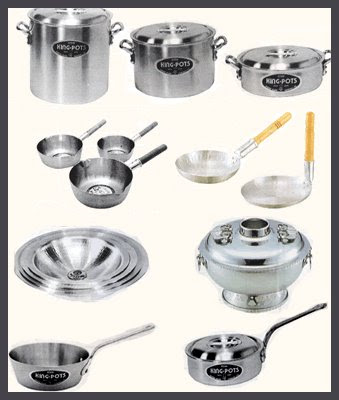
PHOTO : www.doguyasuji.or.jp
Different nabe from aluminium
:::::::::::::::::::::::::::::::::::::::::::::::::::::::::::::::::::::::::::::::::::::::::::::::::::
atsuryoku nabe 圧力鍋 high pressure cooker
:::::::::::::::::::::::::::::::::::::::::::::::::::::::::::::::::::::::::::::::::::::::::::::::::::
Chukanabe, chuuka nabe 中華鍋, 中華なべ.
Pan for Chinese cooking. The name is Kantonese.

There is also the VOK, WOK with two handles.
. . . CLICK here for Photos !
WASHOKU : Chinese Food, Chuka Ryori
quote
The casting of iron woks in Guangdong, China, in 1840
Donald B. Wagner
One of the marvels of the traditional Chinese foundry industry was the cast-iron wok - the round-bottomed cooking pan used for stir-frying and a thousand other purposes in Chinese cooking. It can be a metre or more in diameter and only a few millimetres thick, and was in early times cast in iron with only about 0.2% silicon - yet it was generally grey-cast.
With many photos, read here:
source : www.staff.hum.ku.dk
:::::::::::::::::::::::::::::::::::::::::::::::::::::::::::::::::::::::::::::::::::::::::::::::::::
Furaipan, フライパン, pan for frying, frypan
Bratpfanne
:::::::::::::::::::::::::::::::::::::::::::::::::::::::::::::::::::::::::::::::::::::::::::::::::::
Irori nabe いろり鍋, 囲炉裏鍋
pot to hang over open fire

the most important item in a farmhouse with an open fireplace to keep warm and eat.
. . . CLICK here for Photos !
The nabe comes with a round handle and wooden lid. Many are made of Nanbutetsu 南部鉄, Iron from Nanbu, now Iwate.
Nanbutetsu iron is also used for pots to heat tea water.
:::::::::::::::::::::::::::::::::::::::::::::::::::::::::::::::::::::::::::::::::::::::::::::::::::
Ishinabe 石なべ、/ 石鍋 stone pan
for special food preparations and local dishes
石焼ビビンバ・チッケ鍋
:::::::::::::::::::::::::::::::::::::::::::::::::::::::::::::::::::::::::::::::::::::::::::::::::::
Jingisu kan nabeジンギスカン鍋 Genghis Khan pot, to fry meat on the table with all around.
Comes with an iron plate to fry the meat on.
. . . CLICK here for Photos !
Jingisukaan nabe 成吉思汗鍋 (じんぎすかんなべ)
"Genghis Khan Stew"
kigo for all winter

This is a type where the food is boiled in hot broth. The middle is hollow and open.
Dschingis Khan Eintopf. Dschingis Kahn Barbeque.
:::::::::::::::::::::::::::::::::::::::::::::::::::::::::::::::::::::::::::::::::::::::::::::::::::
Makiyakinabe 巻き焼き鍋 (まきやきなべ)
square omelete pan
Makiyakinabe (Japanese: 巻き焼き鍋; まきやきなべ, literally: roll-bake-pan) is a square or rectangular cooking pan used to make Japanese style rolled omelettes. It is also known as tamagoyakiki (玉子焼き器; たまごやきき, literally: tool to make omelettes).
 In Japanese cuisine rolled omelettes are made as rectangular thin omelettes and then rolled into a cylindrical or elongated cube shape using Japanese kitchen chopsticks. To obtain a roll with a constant diameter over the entire lengths, the thin omelette should be of rectangular shape. To obtain this shape a special rectangular frying pan is used.
Dimensions
The pans usually have a width of 10 to 35 cm, and are made of as for example aluminium or cast iron. The best type is considered to be heavy copper coated with tin, although care has to be taken to avoid damage to the pan due to the low melting point of tin. A cheaper, Teflon coated pan is available in many stores. The depth of the pans are usually from 3 cm to 4 cm. Their weights are usually from 0.5 kg to 2.5 kg.
There are three types of makiyakinabe: Kantō-type, Kansai-type and Nagoya-type. The Kantō-type pans are squared. The Kansai-type pans are tall-and-thin rectangles. The Nagoya-type pans are short-and-wide rectangles.
. . . . . Kantō-type (Kanto-type)
Width: 10 cm to 30 cm; usually 15 to 25 cm
. . . . . Kansai-type
Width: 10 cm to 30 cm; usually 15 to 25 cm
Length: 15 cm to 35 cm; usually less than 1.5 x of the width
. . . . . Nagoya-type
Width: 15 cm to 35 cm
Length: 10 cm to 30 cm; usually 15 to 25 cm
The makiyakinabe is usually used with a thick wooden lid which is used to help people flip the omelette. No one says you cannot use a platter instead though the task is said to be much easier with the lid.
... More in the WIKIPEDIA !
:::::::::::::::::::::::::::::::::::::::::::::::::::::::::::::::::::::::::::::::::::::::::::::::::::
Misoshiru nabe 味噌汁鍋 pot for the daily miso soup
:::::::::::::::::::::::::::::::::::::::::::::::::::::::::::::::::::::::::::::::::::::::::::::::::::
Nabemono (鍋物, なべ物)
Food eaten from the cooking pot
The pots are traditionally made of clay (土鍋, donabe) which can keep warm for a while after being taken off the fire or cast thick iron (鉄鍋, tetsunabe) which evenly distributes heat and is preferable for sukiyaki. The pots are usually placed in the center of dining tables, shared by multiple people.
Eating together from a shared pot is considered as an important feature of nabemono; East Asian people believe that eating from one pot makes for closer relationships.
© More in the WIKIPEDIA !
. . . CLICK here for Photos !
donabe 土鍋 earthen pot
kainabe, kai nabe 貝鍋 "shell pot"
The large shell of a clam (hotate) is used as a container to boil some broth and then fish or seafood right on the beach. Often with hotaru ika in Toyama.
kayunabe 粥鍋 , okayu nabe, pot for rice gruel
. . . CLICK here for Photos !

:::::::::::::::::::::::::::::::::::::::::::::::::::::::::::::::::::::::::::::::::::::::::::::::::::
nabeshigi なべしぎ (鍋鴫) Sauteed eggplant with miso
all made in one pan
:::::::::::::::::::::::::::::::::::::::::::::::::::::::::::::::::::::::::::::::::::::::::::::::::::
odennabe, oden nabe おでん鍋
in various forms, for making Oden.
. . . CLICK here for Photos !
:::::::::::::::::::::::::::::::::::::::::::::::::::::::::::::::::::::::::::::::::::::::::::::::::::
Oonabe 大鍋 BIG nabe
Often with a round handle and wooden lid, to be placed over an open fireplace (irori) for communal cooking.
Also Ishigaki Nabe イシガキ大鍋
. . . CLICK here for Photos !
also tetsunabe 鉄鍋, iron pan
. . . CLICK here for Photos !
:::::::::::::::::::::::::::::::::::::::::::::::::::::::::::::::::::::::::::::::::::::::::::::::::::
Oyakodon nabe 親子鍋 for special egg dishes
The handle is in a right angle position.
. . . CLICK here for Photos !
food
:::::::::::::::::::::::::::::::::::::::::::::::::::::::::::::::::::::::::::::::::::::::::::::::::::
Sukiyaki nabe すきやき鍋
pot for preparing sukiyaki food
usually made from iron.
. . . CLICK here for Photos !
sliced beef and vegetables cooked at the table in a shallow pan
Sukiyaki (鋤焼 / すき焼き meat hot pot "Japanese steamboat"
:::::::::::::::::::::::::::::::::::::::::::::::::::::::::::::::::::::::::::::::::::::::::::::::::::
suppon nabe 鼈鍋 (すっぽんなべ) suppon turtle stew
kigo for all winter
this denotes not only the food but also the special flat clay pot.
Suppon is a special kind of soft-shelled turtle with a long neck and feroucious bite. It is eaten to enhance male stamina.
The pot itself is heated up to 1000 degrees in a strong fire to cook the meat fast. To endure such a temperature day in day out in the restaurants the pot must be made of special clay to last.
its red blood is also served in a glas mixed with sake.
. . . CLICK here for Photos !
snapping turtle, Pelodiscus sinensis
Alligatorschildkröte
© More in the Japanese WIKIPEDIA !

すつぽんも羽ほしげ也帰る雁
suppon mo hane hoshige nari kaeru kari
even the turtle
wants feathers...
the geese depart
Tr. David Lanoue
. Kobayashi Issa 小林一茶 .
:::::::::::::::::::::::::::::::::::::::::::::::::::::::::::::::::::::::::::::::::::::::::::::::::::
tenpura nabe てんぷら鍋, 天ぷら鍋
pot for preparing Tenpura
Tempura pot
comes with a special net-like contraption (tenpura ami) to let the fat drip off the food.
. . . CLICK here for Photos !
agenabe 揚鍋 nabe for deep-frying
often with a thermometer to check the heated oil temperature
:::::::::::::::::::::::::::::::::::::::::::::::::::::::::::::::::::::::::::::::::::::::::::::::::::
うchidashi nabe 打ち出し鍋
made from hammered metal, mostly bronze. Through the hammering, the surface of the inside is large and food is cooked faster than in flat-walled pots.
. . . CLICK here for Photos !
:::::::::::::::::::::::::::::::::::::::::::::::::::::::::::::::::::::::::::::::::::::::::::::::::::
yattokonabe, yattoko nabe やっとこなべ
pot without a handle. Held with a pair of pincers called "yattoko". They can be stacked easily.
. . . CLICK here for Photos !
:::::::::::::::::::::::::::::::::::::::::::::::::::::::::::::::::::::::::::::::::::::::::::::::::::
yukihiranabe, yukihira nabe 雪平鍋
Lightweight hammered pot, made of stainless steel, with wooden handle
. . . CLICK here for Photos !
::::::::::::::::::::::::::::::::::::::::::::::::::::::::::::::::::::::::::::::::::::::::::::::::::::::::::::::::::::::::::::::::::::::::::::::::::::::::::::::::::::::::::::::::::::::::::::::::::::::::::
Food called NABE
dotenabe 土手鍋 "embankment hodgepodge"
oyster miso hodgepodge from Matsushima, Sendai. also from Hiroshima, another oyster area.
The miso is layered around the inner rim of the pot, hence the name "embankment".
made with oysters and vegetables, tofu can also be used.
. . . CLICK here for Photos !
More reference
nabe ryoori なべ料理 Hodgepodge dishes
. . . CLICK here for Photos !
A lot of them get a better taste at home, if you fry some vegetable pickles (hakusai tsukemono) in a pan with sesame oil first. Put them into the cold water of the nabe, add the meat and last the vegetables.
For seafood and fish nabe, try to fry some takanazuke 高菜漬 hot pickles.
*****************************
Worldwide use
*****************************
Things found on the way
jooyanabe (常夜鍋) じょうやなべ with pork
豚肉・ほうれんそうなどをさっとだしで煮て、酢じょうゆで食べる鍋物。毎晩食べても飽きないことから付けられた名。
.................................................................................
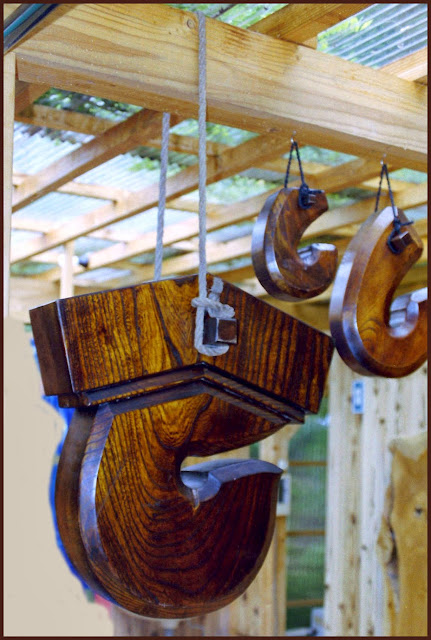
jizaikagi 自在鉤 pot hook, Kesselhaken
to hang a pot above the open fire of a hearth (irori 囲炉裏).
::::::::::::::::::::::::::::::::::::::::::::::::::::::::::::::::::::::::::::::::::::::::::::::::::::
Nabe – Warmes aus einem Topf
Im kalten Winter geht nichts über einen heißen Eintopf – nabemono – kurz Nabe genannt. Die Familie sitzt gemeinsam um einen dampfenden Topf, aus dem sich jeder nach Belieben bedienen kann. So unterschiedlich wie Landschaft und Menschen in Japan sind, so vielfältig ist auch die Nabe-Küche. Jede Gegend hat ihre eigenen Lieblingszutaten, die wiederum in jeder Familie ganz individuell abgewandelt und in einer Brühe nach Familientradition gegart werden. Am bekanntesten ist das Eintopfgericht Yosenabe. In dieser Suppe werden Zutaten verkocht, die nicht mehr lange haltbar sind. Die meisten Wintergemüse-Sorten werden als Zutaten im Eintopf sehr geschätzt. Das Gefäß selbst heißt Nabe, ebenso wie das Gericht. Wenn Nabe auf dem Speiseplan steht, braucht die Hausfrau nicht viel Zeit in der Küche zu verbringen, denn die Zubereitung erfolgt direkt am Tisch. Etwas Mühe macht lediglich die Vorbereitung: Gemüse, Fisch, Fleisch, Tofu und weitere Zutaten müssen in mundgerechte Stücke geschnitten und auf Servierplatten neben dem Topf appetitlich angerichtet werden. Die einzelnen Zutaten werden allmählich nacheinander in die köchelnde Brühe gegeben, sodass alles gleichzeitig gar ist. Gemüse mit langer Garzeit wie Rettich und Karotten gelangen zuerst in die Brühe, Chinakohl hingegen erst kurz vor dem Essen. Dies ist mitunter eine recht schwierige Angelegenheit und erfordert Übung. Aufgrund dessen gibt es stets einen Verantwortlichen für diesen Bereich, den sogenannten Kochtopf-Kommissar (nabe bugyo).
Wenn das Gemüse fast verzehrt ist, wird eine Portion Nudeln in die mittlerweile sehr schmackhafte Brühe gegeben. Auf diese Weise wird gewährleistet, dass auch tatsächlich jeder satt wird. Mitunter wird die Brühe auch mit Reis versetzt. Die heißbegehrte Reissuppe kann direkt mit Miso-Paste und Sojasauce nachgewürzt werden. Serviert wird Nabe meist aus einem Keramikkochtopf, der auf einem kleinen Gasbrenner in der Mitte des Esstisches steht. Diese Töpfe gibt es in vielen Größen und mit zahlreichen traditionellen Mustern. Sie alle haben einen Keramikdeckel mit einem hervorstehenden oberen Griff, der nicht heiß wird. Jeder Gast bekommt eine zum Topf passende kleine Schale, in die er die gewünschte Portion füllen kann. Es folgen mehrere Portionen, denn ein Nabe-Essen ist oft ein abendfüllendes Programm. Warmer Reiswein oder kühles Bier schmecken hervorragend zu diesem Gericht.
- - - Beliebte japanische Eintöpfe - - -
Shottsuru nabe
Dieser Eintopf ist eine Spezialität aus der Gegend Tohoku. Shottsuru bedeutet »salzige Sauce«. In diesem Fall handelt es sich um eine Fischsauce vom eingelegten Sägebarsch, dessen Hauptsaison von November bis Dezember ist. Sägebarsch diente im Winter lange Zeit als Haupteiweißquelle und wurde auf verschiedene Weisen haltbar gemacht. Unter anderem durch Fermentierung mit Salz. Während der Fangsaison kommt der Sägebarsch auch als Sushi auf den Tisch.
Anko-nabe
Im Seeteufel-Eintopf wird fast jeder Teil des Fisches verwendet, vom Rogen bis zur Haut und der Schwanzflosse, der Leber, dem Magensack und den Kiemen. Es ist eine Spezialität von Ibaragi.
Fugu-nabe
Der Kugelfisch-Eintopf ist eine Art russisches Roulette. Wenn die giftige Galle und Leber des Kugelfisches nicht vorsichtig entfernt werden, kann es schon einmal zu Unfällen kommen. Deshalb benötigen Köche, die Kugelfisch zubereiten, eine spezielle Lizenz.
Kujira-nabe
Auch Walfisch-Eintopf ist in vielen Küstengebieten nach wie vor beliebt. In diesem Eintopf wird frisches Walfleisch verkocht.
Hama-nabe
Der Eintopf mit Venusmuscheln ist indes wesentlich harmloser: Venusmuscheln, etwas Bauchspeck vom Schwein, viel Weißkohl und ein wenig Reiswein werden in die Brühe gegeben – und schon kann gespeist werden.
Chiri-nabe
Kabeljau und Seebrasse sind die Hauptzutaten dieses Fischeintopfs. Er wurde zu Beginn der Meiji-Zeit von Ausländern erdacht, ihnen war roher Fisch suspekt und daher kochten sie ihr Sashimi in heißer Brühe. Wenn weißes Fischfleisch in heißes Wasser geworfen wird, schrumpft es zusehends: chiri-chiri - daher stammt der Name.
Sukiyaki
Der bekannteste Fleischeintopf mit Rindfleisch ist Sukiyaki.
Jōya-nabe
Darüber hinaus gibt es einen Eintopf mit Schweinefleisch und Spinatblättern. Letztere werden vor dem Essen kurz in Ponzu-Sauce getaucht. Dieser Eintopf bedeutet übersetzt »Eintopf für jeden Abend« und soll somit die große Beliebtheit dieser Speise zum Ausdruck bringen.
*****************************
HAIKU
橋守の鍋蓋ふんで鳴千鳥
hashimori no nabebuta funde naku chidori
plovers cry out
walk on the bridge guard's
cooking pot lid
Tr. Chris Drake
Kobayashi Issa 小林一茶
This winter hokku is from the 10th month (November) of 1818, when Issa was traveling around the area near his hometown. Large bridges were considered strategically important and usually had at least one armed guard stationed by them. In addition to taking care of security and looking out for wanted people, the guard (or guards), often from the outcast class, was in charge of upkeep and cleaning as well as collecting tolls if it was a toll bridge. One special duty was constantly watching the bridge to prevent would-be suicides from jumping off it.
In this hokku, the guard seems to have left the newly washed wooden lid of his metal cooking pot outside to dry on a mat or some other object at one end of the bridge. Some plovers from the riverbank drop by, and they cry out as if chatting with each other as they discover and walk on the lid. In waka and haikai plovers are usually portrayed as group birds, and the first syllable of their name (chidori) may come from their continual high cries to each other, which are heard as chii, chii (chee, chee in English). Issa may follow this theory, since he writes chi- here with a phonetic symbol instead of a character. Another theory is that the chi comes from the chi meaning 'thousand,' since the birds are so sociable. The juxtaposition of the open mouths of the excited plovers and the implicitly lidless cooking pot has an expansive resonance.
Chris Drake
. WKD : Plover (chidori) .
. WKD : Bridges and Haiku .
*****************************
Related words
***** WASHOKU ... Tableware and Tools
[ . BACK to DARUMA MUSEUM TOP . ]
[ . BACK to WORLDKIGO . TOP . ]
- #nabe #pot #pan -
:::::::::::::::::::::::::::::::::::::::::::::::::::::::::::::::::::::::::::::::::::::::::::::::::::::
::::::::::::::::::::::::::::::::::::::::::::::::::::::::::::::::::::::::::::::::::::::::::::::::::::
Pots and pans (nabe)
***** Location: Japan
***** Season: Topic
***** Category: Humanity
*****************************
Explanation
Different types of NABE pots are used for boiling, simmering, frying or otherwise preparing and serving food.
They come in many materials and forms.

PHOTO : www.doguyasuji.or.jp
Different nabe from aluminium
:::::::::::::::::::::::::::::::::::::::::::::::::::::::::::::::::::::::::::::::::::::::::::::::::::
atsuryoku nabe 圧力鍋 high pressure cooker
:::::::::::::::::::::::::::::::::::::::::::::::::::::::::::::::::::::::::::::::::::::::::::::::::::
Chukanabe, chuuka nabe 中華鍋, 中華なべ.
Pan for Chinese cooking. The name is Kantonese.
There is also the VOK, WOK with two handles.
. . . CLICK here for Photos !
WASHOKU : Chinese Food, Chuka Ryori
quote
The casting of iron woks in Guangdong, China, in 1840
Donald B. Wagner
One of the marvels of the traditional Chinese foundry industry was the cast-iron wok - the round-bottomed cooking pan used for stir-frying and a thousand other purposes in Chinese cooking. It can be a metre or more in diameter and only a few millimetres thick, and was in early times cast in iron with only about 0.2% silicon - yet it was generally grey-cast.
With many photos, read here:
source : www.staff.hum.ku.dk
:::::::::::::::::::::::::::::::::::::::::::::::::::::::::::::::::::::::::::::::::::::::::::::::::::
Furaipan, フライパン, pan for frying, frypan
Bratpfanne
:::::::::::::::::::::::::::::::::::::::::::::::::::::::::::::::::::::::::::::::::::::::::::::::::::
Irori nabe いろり鍋, 囲炉裏鍋
pot to hang over open fire
the most important item in a farmhouse with an open fireplace to keep warm and eat.
. . . CLICK here for Photos !
The nabe comes with a round handle and wooden lid. Many are made of Nanbutetsu 南部鉄, Iron from Nanbu, now Iwate.
Nanbutetsu iron is also used for pots to heat tea water.
:::::::::::::::::::::::::::::::::::::::::::::::::::::::::::::::::::::::::::::::::::::::::::::::::::
Ishinabe 石なべ、/ 石鍋 stone pan
for special food preparations and local dishes
石焼ビビンバ・チッケ鍋
:::::::::::::::::::::::::::::::::::::::::::::::::::::::::::::::::::::::::::::::::::::::::::::::::::
Jingisu kan nabeジンギスカン鍋 Genghis Khan pot, to fry meat on the table with all around.
Comes with an iron plate to fry the meat on.
. . . CLICK here for Photos !
Jingisukaan nabe 成吉思汗鍋 (じんぎすかんなべ)
"Genghis Khan Stew"
kigo for all winter
This is a type where the food is boiled in hot broth. The middle is hollow and open.
Dschingis Khan Eintopf. Dschingis Kahn Barbeque.
:::::::::::::::::::::::::::::::::::::::::::::::::::::::::::::::::::::::::::::::::::::::::::::::::::
Makiyakinabe 巻き焼き鍋 (まきやきなべ)
square omelete pan
Makiyakinabe (Japanese: 巻き焼き鍋; まきやきなべ, literally: roll-bake-pan) is a square or rectangular cooking pan used to make Japanese style rolled omelettes. It is also known as tamagoyakiki (玉子焼き器; たまごやきき, literally: tool to make omelettes).
In Japanese cuisine rolled omelettes are made as rectangular thin omelettes and then rolled into a cylindrical or elongated cube shape using Japanese kitchen chopsticks. To obtain a roll with a constant diameter over the entire lengths, the thin omelette should be of rectangular shape. To obtain this shape a special rectangular frying pan is used.Dimensions
The pans usually have a width of 10 to 35 cm, and are made of as for example aluminium or cast iron. The best type is considered to be heavy copper coated with tin, although care has to be taken to avoid damage to the pan due to the low melting point of tin. A cheaper, Teflon coated pan is available in many stores. The depth of the pans are usually from 3 cm to 4 cm. Their weights are usually from 0.5 kg to 2.5 kg.
There are three types of makiyakinabe: Kantō-type, Kansai-type and Nagoya-type. The Kantō-type pans are squared. The Kansai-type pans are tall-and-thin rectangles. The Nagoya-type pans are short-and-wide rectangles.
. . . . . Kantō-type (Kanto-type)
Width: 10 cm to 30 cm; usually 15 to 25 cm
. . . . . Kansai-type
Width: 10 cm to 30 cm; usually 15 to 25 cm
Length: 15 cm to 35 cm; usually less than 1.5 x of the width
. . . . . Nagoya-type
Width: 15 cm to 35 cm
Length: 10 cm to 30 cm; usually 15 to 25 cm
The makiyakinabe is usually used with a thick wooden lid which is used to help people flip the omelette. No one says you cannot use a platter instead though the task is said to be much easier with the lid.
... More in the WIKIPEDIA !
:::::::::::::::::::::::::::::::::::::::::::::::::::::::::::::::::::::::::::::::::::::::::::::::::::
Misoshiru nabe 味噌汁鍋 pot for the daily miso soup
:::::::::::::::::::::::::::::::::::::::::::::::::::::::::::::::::::::::::::::::::::::::::::::::::::
Nabemono (鍋物, なべ物)
Food eaten from the cooking pot
The pots are traditionally made of clay (土鍋, donabe) which can keep warm for a while after being taken off the fire or cast thick iron (鉄鍋, tetsunabe) which evenly distributes heat and is preferable for sukiyaki. The pots are usually placed in the center of dining tables, shared by multiple people.
Eating together from a shared pot is considered as an important feature of nabemono; East Asian people believe that eating from one pot makes for closer relationships.
© More in the WIKIPEDIA !
. . . CLICK here for Photos !
donabe 土鍋 earthen pot
kainabe, kai nabe 貝鍋 "shell pot"
The large shell of a clam (hotate) is used as a container to boil some broth and then fish or seafood right on the beach. Often with hotaru ika in Toyama.
kayunabe 粥鍋 , okayu nabe, pot for rice gruel
. . . CLICK here for Photos !
:::::::::::::::::::::::::::::::::::::::::::::::::::::::::::::::::::::::::::::::::::::::::::::::::::
nabeshigi なべしぎ (鍋鴫) Sauteed eggplant with miso
all made in one pan
:::::::::::::::::::::::::::::::::::::::::::::::::::::::::::::::::::::::::::::::::::::::::::::::::::
odennabe, oden nabe おでん鍋
in various forms, for making Oden.
. . . CLICK here for Photos !
:::::::::::::::::::::::::::::::::::::::::::::::::::::::::::::::::::::::::::::::::::::::::::::::::::
Oonabe 大鍋 BIG nabe
Often with a round handle and wooden lid, to be placed over an open fireplace (irori) for communal cooking.
Also Ishigaki Nabe イシガキ大鍋
. . . CLICK here for Photos !
also tetsunabe 鉄鍋, iron pan
. . . CLICK here for Photos !
:::::::::::::::::::::::::::::::::::::::::::::::::::::::::::::::::::::::::::::::::::::::::::::::::::
Oyakodon nabe 親子鍋 for special egg dishes
The handle is in a right angle position.
. . . CLICK here for Photos !
food
:::::::::::::::::::::::::::::::::::::::::::::::::::::::::::::::::::::::::::::::::::::::::::::::::::
Sukiyaki nabe すきやき鍋
pot for preparing sukiyaki food
usually made from iron.
. . . CLICK here for Photos !
sliced beef and vegetables cooked at the table in a shallow pan
Sukiyaki (鋤焼 / すき焼き meat hot pot "Japanese steamboat"
:::::::::::::::::::::::::::::::::::::::::::::::::::::::::::::::::::::::::::::::::::::::::::::::::::
suppon nabe 鼈鍋 (すっぽんなべ) suppon turtle stew
kigo for all winter
this denotes not only the food but also the special flat clay pot.
Suppon is a special kind of soft-shelled turtle with a long neck and feroucious bite. It is eaten to enhance male stamina.
The pot itself is heated up to 1000 degrees in a strong fire to cook the meat fast. To endure such a temperature day in day out in the restaurants the pot must be made of special clay to last.
its red blood is also served in a glas mixed with sake.
. . . CLICK here for Photos !
snapping turtle, Pelodiscus sinensis
Alligatorschildkröte
© More in the Japanese WIKIPEDIA !
すつぽんも羽ほしげ也帰る雁
suppon mo hane hoshige nari kaeru kari
even the turtle
wants feathers...
the geese depart
Tr. David Lanoue
. Kobayashi Issa 小林一茶 .
:::::::::::::::::::::::::::::::::::::::::::::::::::::::::::::::::::::::::::::::::::::::::::::::::::
tenpura nabe てんぷら鍋, 天ぷら鍋
pot for preparing Tenpura
Tempura pot
comes with a special net-like contraption (tenpura ami) to let the fat drip off the food.
. . . CLICK here for Photos !
agenabe 揚鍋 nabe for deep-frying
often with a thermometer to check the heated oil temperature
:::::::::::::::::::::::::::::::::::::::::::::::::::::::::::::::::::::::::::::::::::::::::::::::::::
うchidashi nabe 打ち出し鍋
made from hammered metal, mostly bronze. Through the hammering, the surface of the inside is large and food is cooked faster than in flat-walled pots.
. . . CLICK here for Photos !
:::::::::::::::::::::::::::::::::::::::::::::::::::::::::::::::::::::::::::::::::::::::::::::::::::
yattokonabe, yattoko nabe やっとこなべ
pot without a handle. Held with a pair of pincers called "yattoko". They can be stacked easily.
. . . CLICK here for Photos !
:::::::::::::::::::::::::::::::::::::::::::::::::::::::::::::::::::::::::::::::::::::::::::::::::::
yukihiranabe, yukihira nabe 雪平鍋
Lightweight hammered pot, made of stainless steel, with wooden handle
. . . CLICK here for Photos !
::::::::::::::::::::::::::::::::::::::::::::::::::::::::::::::::::::::::::::::::::::::::::::::::::::::::::::::::::::::::::::::::::::::::::::::::::::::::::::::::::::::::::::::::::::::::::::::::::::::::::
Food called NABE
dotenabe 土手鍋 "embankment hodgepodge"
oyster miso hodgepodge from Matsushima, Sendai. also from Hiroshima, another oyster area.
The miso is layered around the inner rim of the pot, hence the name "embankment".
made with oysters and vegetables, tofu can also be used.
. . . CLICK here for Photos !
More reference
nabe ryoori なべ料理 Hodgepodge dishes
. . . CLICK here for Photos !
A lot of them get a better taste at home, if you fry some vegetable pickles (hakusai tsukemono) in a pan with sesame oil first. Put them into the cold water of the nabe, add the meat and last the vegetables.
For seafood and fish nabe, try to fry some takanazuke 高菜漬 hot pickles.
*****************************
Worldwide use
*****************************
Things found on the way
jooyanabe (常夜鍋) じょうやなべ with pork
豚肉・ほうれんそうなどをさっとだしで煮て、酢じょうゆで食べる鍋物。毎晩食べても飽きないことから付けられた名。
.................................................................................

jizaikagi 自在鉤 pot hook, Kesselhaken
to hang a pot above the open fire of a hearth (irori 囲炉裏).
::::::::::::::::::::::::::::::::::::::::::::::::::::::::::::::::::::::::::::::::::::::::::::::::::::
Nabe – Warmes aus einem Topf
Im kalten Winter geht nichts über einen heißen Eintopf – nabemono – kurz Nabe genannt. Die Familie sitzt gemeinsam um einen dampfenden Topf, aus dem sich jeder nach Belieben bedienen kann. So unterschiedlich wie Landschaft und Menschen in Japan sind, so vielfältig ist auch die Nabe-Küche. Jede Gegend hat ihre eigenen Lieblingszutaten, die wiederum in jeder Familie ganz individuell abgewandelt und in einer Brühe nach Familientradition gegart werden. Am bekanntesten ist das Eintopfgericht Yosenabe. In dieser Suppe werden Zutaten verkocht, die nicht mehr lange haltbar sind. Die meisten Wintergemüse-Sorten werden als Zutaten im Eintopf sehr geschätzt. Das Gefäß selbst heißt Nabe, ebenso wie das Gericht. Wenn Nabe auf dem Speiseplan steht, braucht die Hausfrau nicht viel Zeit in der Küche zu verbringen, denn die Zubereitung erfolgt direkt am Tisch. Etwas Mühe macht lediglich die Vorbereitung: Gemüse, Fisch, Fleisch, Tofu und weitere Zutaten müssen in mundgerechte Stücke geschnitten und auf Servierplatten neben dem Topf appetitlich angerichtet werden. Die einzelnen Zutaten werden allmählich nacheinander in die köchelnde Brühe gegeben, sodass alles gleichzeitig gar ist. Gemüse mit langer Garzeit wie Rettich und Karotten gelangen zuerst in die Brühe, Chinakohl hingegen erst kurz vor dem Essen. Dies ist mitunter eine recht schwierige Angelegenheit und erfordert Übung. Aufgrund dessen gibt es stets einen Verantwortlichen für diesen Bereich, den sogenannten Kochtopf-Kommissar (nabe bugyo).
Wenn das Gemüse fast verzehrt ist, wird eine Portion Nudeln in die mittlerweile sehr schmackhafte Brühe gegeben. Auf diese Weise wird gewährleistet, dass auch tatsächlich jeder satt wird. Mitunter wird die Brühe auch mit Reis versetzt. Die heißbegehrte Reissuppe kann direkt mit Miso-Paste und Sojasauce nachgewürzt werden. Serviert wird Nabe meist aus einem Keramikkochtopf, der auf einem kleinen Gasbrenner in der Mitte des Esstisches steht. Diese Töpfe gibt es in vielen Größen und mit zahlreichen traditionellen Mustern. Sie alle haben einen Keramikdeckel mit einem hervorstehenden oberen Griff, der nicht heiß wird. Jeder Gast bekommt eine zum Topf passende kleine Schale, in die er die gewünschte Portion füllen kann. Es folgen mehrere Portionen, denn ein Nabe-Essen ist oft ein abendfüllendes Programm. Warmer Reiswein oder kühles Bier schmecken hervorragend zu diesem Gericht.
- - - Beliebte japanische Eintöpfe - - -
Shottsuru nabe
Dieser Eintopf ist eine Spezialität aus der Gegend Tohoku. Shottsuru bedeutet »salzige Sauce«. In diesem Fall handelt es sich um eine Fischsauce vom eingelegten Sägebarsch, dessen Hauptsaison von November bis Dezember ist. Sägebarsch diente im Winter lange Zeit als Haupteiweißquelle und wurde auf verschiedene Weisen haltbar gemacht. Unter anderem durch Fermentierung mit Salz. Während der Fangsaison kommt der Sägebarsch auch als Sushi auf den Tisch.
Anko-nabe
Im Seeteufel-Eintopf wird fast jeder Teil des Fisches verwendet, vom Rogen bis zur Haut und der Schwanzflosse, der Leber, dem Magensack und den Kiemen. Es ist eine Spezialität von Ibaragi.
Fugu-nabe
Der Kugelfisch-Eintopf ist eine Art russisches Roulette. Wenn die giftige Galle und Leber des Kugelfisches nicht vorsichtig entfernt werden, kann es schon einmal zu Unfällen kommen. Deshalb benötigen Köche, die Kugelfisch zubereiten, eine spezielle Lizenz.
Kujira-nabe
Auch Walfisch-Eintopf ist in vielen Küstengebieten nach wie vor beliebt. In diesem Eintopf wird frisches Walfleisch verkocht.
Hama-nabe
Der Eintopf mit Venusmuscheln ist indes wesentlich harmloser: Venusmuscheln, etwas Bauchspeck vom Schwein, viel Weißkohl und ein wenig Reiswein werden in die Brühe gegeben – und schon kann gespeist werden.
Chiri-nabe
Kabeljau und Seebrasse sind die Hauptzutaten dieses Fischeintopfs. Er wurde zu Beginn der Meiji-Zeit von Ausländern erdacht, ihnen war roher Fisch suspekt und daher kochten sie ihr Sashimi in heißer Brühe. Wenn weißes Fischfleisch in heißes Wasser geworfen wird, schrumpft es zusehends: chiri-chiri - daher stammt der Name.
Sukiyaki
Der bekannteste Fleischeintopf mit Rindfleisch ist Sukiyaki.
Jōya-nabe
Darüber hinaus gibt es einen Eintopf mit Schweinefleisch und Spinatblättern. Letztere werden vor dem Essen kurz in Ponzu-Sauce getaucht. Dieser Eintopf bedeutet übersetzt »Eintopf für jeden Abend« und soll somit die große Beliebtheit dieser Speise zum Ausdruck bringen.
*****************************
HAIKU
橋守の鍋蓋ふんで鳴千鳥
hashimori no nabebuta funde naku chidori
plovers cry out
walk on the bridge guard's
cooking pot lid
Tr. Chris Drake
Kobayashi Issa 小林一茶
This winter hokku is from the 10th month (November) of 1818, when Issa was traveling around the area near his hometown. Large bridges were considered strategically important and usually had at least one armed guard stationed by them. In addition to taking care of security and looking out for wanted people, the guard (or guards), often from the outcast class, was in charge of upkeep and cleaning as well as collecting tolls if it was a toll bridge. One special duty was constantly watching the bridge to prevent would-be suicides from jumping off it.
In this hokku, the guard seems to have left the newly washed wooden lid of his metal cooking pot outside to dry on a mat or some other object at one end of the bridge. Some plovers from the riverbank drop by, and they cry out as if chatting with each other as they discover and walk on the lid. In waka and haikai plovers are usually portrayed as group birds, and the first syllable of their name (chidori) may come from their continual high cries to each other, which are heard as chii, chii (chee, chee in English). Issa may follow this theory, since he writes chi- here with a phonetic symbol instead of a character. Another theory is that the chi comes from the chi meaning 'thousand,' since the birds are so sociable. The juxtaposition of the open mouths of the excited plovers and the implicitly lidless cooking pot has an expansive resonance.
Chris Drake
. WKD : Plover (chidori) .
. WKD : Bridges and Haiku .
*****************************
Related words
***** WASHOKU ... Tableware and Tools
[ . BACK to DARUMA MUSEUM TOP . ]
[ . BACK to WORLDKIGO . TOP . ]
- #nabe #pot #pan -
:::::::::::::::::::::::::::::::::::::::::::::::::::::::::::::::::::::::::::::::::::::::::::::::::::::
5/01/2008
Akita
[ . BACK to WORLDKIGO TOP . ]
::::::::::::::::::::::::::::::::::::::::::::::::::::::::::::::::::::::::::::::::::::::::::::::::::::
Akita Prefecture
 Akita Prefecture (秋田県, Akita-ken) is a prefecture of Japan located in the Tōhoku Region of northern Honshū, the main island of Japan. The capital is the city of Akita.
Separated from the principal Japanese centres of commerce, politics, and population by several hundred kilometres and the Ōu and Dewa mountain ranges to the east, Akita remained largely isolated from Japanese society until after the year 600. Akita was a region of hunter-gatherers and principally nomadic tribes.
Like much of the Tōhoku Region, Akita's economy remains dominated by traditional industries, such as agriculture, fishing, and forestry.
© More in the WIKIPEDIA !
. WASHOKU
The town of Uga and sketches of pretty girls advertisements
秋田県羽後町, Aoi Nishimata 西又葵
Akita Komachi あきたこまち (the belle of Akita) Rice Brand
. The Kanto Matsuri 竿燈 "pole lantern festival"
beginning of August
::::::::::::::::::::::::::::::::::::::::::::::::::::::::::::::::::::::::::::::::::::::::::::::::::::
Regional Dishes from Akita 秋田の郷土料理
. . . CLICK here for Photos !
akebi no karakkozuke アケビの殻っこづけ akebia skin stuffed with meat and vegetables
akebi no nikuzume
CLICK here for photos
also eaten in Yamagata
akebi no tenpura from the skin of the plant.
asazuke あさづけ vinegared rice, a summer dish
:::::::::::::::::::::::::::::::::::::::::::::::::::::::::::::::::::::::::::::::::::::::::::::::::::::
damakko nabe だまっこ鍋
In Akita one of their most famous nabe is Damakko Nabe (だまっこ鍋).
The little balls in the pot are actually made from rice, they’re supposed to look like snowballs to give it a winter theme. The broth for the hot pot is made from soy sauce, chicken stock, and Japanese burdock and then a variety of vegetables and chicken are added. Damakko nabe is considered to be Akita’s soul food. Warm up around a Japanese hot pot in Akita.
- source : facebook -
:::::::::::::::::::::::::::::::::::::::::::::::::::::::::::::::::::::::::::::::::::::::::::::::::::::
hatahata ハタハタ
hatahata sushi ハタハタ寿し hatahata fish sushi
hatahata, Sandfisch, Arctoscopus japonicus
Its season is winter.
It is essential for the people to survive in the winter months.
Beliebt als Sushi oder mit Salz gegrillt (shioyaki) in Akita.
Er hat keine Schuppen und wenig kleine Gräten und die Wirbelsäule lässt sich leicht vom Fleisch ablösen. Wenn man den gegrillten Fisch fest am Schwanzende anfasst, lässt sich die Wirbelsäule einfach vom Kopfende her herausziehen.
Der weibliche Hatahata trägt die Eier, die als „Eiersack“-Snack beliebt sind (burikko ぶりっこ). The egg sack can be the size of a man's fist.
buriko ブリコ
. . . CLICK here for burikko Photos !
quote
Hata-hata is really sticky and strange-looking fish because it doesn’t have any scales. What the most famous about Hata-hata is its egg, Buriko. It is really big about to explode, and the taste is chewy and jelly like. It is cooked as Shotsuru nabe, Hata-hata pot, Hata-hata sushi, and broiled fish. Many old Akita people love it because of its history.
According to my parents, people in my grandparents and my parents generation ate Hata-hata almost every day in winter instead of sweets since fishermen had a big catch of Hata-hata, and it was really cheep like 500 yen per one box which contained about 50 Hata-hata. However, the number of Hata-hata decreased because of too mach catch, and Hata-hata costs 500 yen for 3 at present. Therefore, old Akita people miss Hata-hata in their memory, and want to eat it even if it costs high.
鰰、 魚雷
In Japanese, Hata-hata is expressed in Kanji as Fish plus God, or Fish plus Thunder. Since Hata-hata gather close to beach when it thunders, people might think Hata-hata is God of fish.
source : discover-jp.blogspot.com : kayanon
. . . CLICK here for Photos !
hatahata ハタハタ is the name of the fish, but its roe is called "roe from buri" (buriko). During the Edo period, the lord of Satake (former name for Akita) forbid to eat the roe of hatahata. So the fishermen caught it nevertheless and called it "roe from buri" (buriko).
Another story tells of the lord of Mito, Satake Yoshinobu 佐竹義宣, who was transferred to live in Akita. Since yellowtail (buri) was not served for the New Year food, he called the other roe BURIKO and enjoyed it as such as a nostalgic food.
buriko are the round sacks of eggs that float in the sea. The roe taken from the fish after cutting it up is much softer.
buriko is seldom eaten raw, because the egg membrane is very hard. It is put in vinegar and soysauce and sometimes fried just a little.
The semem sacks of the male are called shirako 白子.
It is a deep-sea fish that comes to shallow wates along some areas, where rivers flow into the sea and there is plenty of kelp to shelter the young fish. The buriko is said to be in various colors, according to what the fish eat most.
Grilled hatahata was one of the fish arranged on a tray as offering for the Namahage Demons during the New Year celebrations of the Oga peninsula.
Namahage Demons
Daruma Museum
The fish was caught in such numbers, that it was fermented in large barrels into a salty liquid called "shotsuru" or "shottsuru しょっつる【塩汁】
". This process laste for three years, until the fish was almost completely discomposed. This shotsuru liquid is used to flavor many dishes in Akita, best known is a hodgepodge with hatahata and this sauce, shotsuru nabe しょっつるなべ【塩汁鍋】 (kigo for winter).
. . . CLICK here for shottsuru Photos !
This is a kind of fish sauce, gyoshoo 魚醤(ぎょしょう).
shottsuru was also used to make a special sushi of cooked rice and pieces of hatahata.
This kind of sushi is very ancient, called "cooked rice sushi" (izushi, iizushi いずし)。
Izushi 飯寿司, Summer Food
hatahata sushi ハタハタ寿
:::::::::::::::::::::::::::::::::::::::::::::::::::::::::::::::::::::::::::::::::::::::::::::::::::::
hikiwari nattoo ひきわり納豆 fermented soy beans, hacked small
eaten with sugar
. . . CLICK here for Photos !
Hinaidori 比内鶏(ひないどり)/ Hinai jidori 比内地鶏 Chicken from Hinai, Odate. Kiritanpo with these chicken
WASHOKU : Kiritanpo (kiritampo) きりたんぽ skewers of mashed rice
iburi gakko, iburigakko いぶりがっこ smoked pickles with radish
smoked radish pickles
from Yokote town
. . . CLICK here for Photos !
imo no ko jiru, imonokojiru いもの子汁 with satoimo yam
Inaniwa udon 稲庭うどん noodles from Inaniwa town. With a long tradition.
. . . CLICK here for Photos !
Reference
.......................................................................
ishiyaki ryoori 石焼料理 prepared with hot stones
from the Hunters of Oga Peninsula to keep warm. Stones from Oga are especially strong when thrown in water. Nowadays it is prepared in barrels of cedar wood
Ishiyaki – Kochen mit heißen Steinen
Es zischt und brodelt – plötzlich steigt Dampf auf. Geschickt lässt der Koch einen heißen Stein in den kleinen hölzernen Bottich gleiten. Im Nu wird alles gegart!
Beim nur in dieser Gegend typischen Ishiyaki werden Steine im Feuer erhitzt und dann in die Suppe gelegt, um sie zu erwärmen. Diese Zubereitungsart entdeckten die Fischer entlang der Halbinsel Oga, die oft den ganzen Tag auf dem Meer unterwegs waren. Mittags kam ein hölzerner Bottich mit frischen Fischen und Meeresfrüchten auf die Planken, die Würze brachte das salzige Meerwasser.
Auch am Strand wurde oft auf diese Art gekocht. Wenn sich dort kein Holzbottich fand, wurden die Fische einfach mit Wasser in eine Felsvertiefung gelegt und die Vulkansteine dazugegeben, die auf einem Feuer erhitzt worden waren. Das lokale Vulkangestein Ignimbrit oder Schmelztuff erwies sich in Japan als besonders geeignet, da dieses Gestein enorm temperaturfest ist.
Heute ist die Brühe meistens eine gesalzene Suppe, es wird aber auch Miso-Paste verwendet. Die Würze der Brühe basiert in jedem Restaurant traditionell auf einem Familiengeheimnis. Im großen Bottich aus Zedernholz werden die tagesfrischen Fische und das Gemüse der Saison in mundgerechten Bissen in der Brühe angerichtet. Anschließend wird der Bottich auf den Tisch gestellt und die Zutaten werden mit heißen Steinen gekocht. Jeder kann sich nach Belieben aus dem Bottich bedienen. Dazu werden Reis und kleine Teller mit eingelegtem Gemüse und Häppchen gereicht.
.......................................................................
junsai nabe じゅんさい鍋 junsai vegetable hodgepodge
kasube no karagya ni かすべのからぎゃ煮
. . . CLICK here for Photos !
kasupei is dried manta fish. Boiled with soy sauce it is a dish for a celebration in the Akita region.
There is also a kasube matsuri festival
keiran けいらん
kiritanpo nabe きりたんぽ鍋 hodgepodge with kiritanpo
kiritanpo is also a speciality of Aomori.
koi no amani 鯉の甘煮
kujira くじらかやき whale meat soup
kujirajiru くじら汁
salted whale meat in miso soup
matsukawa mochi 松皮餅

orandayaki, oranda yaki オランダ焼き "Holland waffles"
a kind of Imagawa yaki waffle, but filled with ham and mayonaise.
The dough is sweetened with honey.
.......................................................................
shottsuru, shotsuru nabe しょっつる鍋
sauce from salted, fermented hatahata fish, when this fish was caught in large quantities.
. . . . . dadami nabe だだみ鍋
- quote
Shottsuru (しょっつる) is a type of fish sauce from Akita Prefecture, which is one of the 3 major fish sauces of Japan along with Ishiru from Ishikawa Prefecture and Ikanago-shoyu from Kagawa Prefecture.
Akita’s fish sauce is distinctive in its ingredients. It is made from Hatahata (sandfish) caught off the coast of Oga Peninsula.
Shottsuru (塩汁、塩魚汁) (lit. salt fish broth)
can be dated back to the early Edo period, and was traditionally made solely with the fish and salt. Now it has been produced in modern technique with additional ingredients, but there is a brewery who still produces it in the traditional method
Hatahata is a sandfish. Akita Prefecture has the largest catch of Sandfish in Japan. The fish has been an important protein sauce for Akita people in the old days, which was even sung in a famous folksong (“Akita-Ondo”). Today even designated as the prefectural fish!
How does Shottsuru taste like?
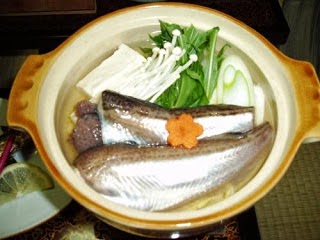
Despite how fishy it may sound, it is surprisingly mild and rich in flavor. Shottsuru is the main ingredient in Akita’s signature winter dish, Shottsuru-nabe, a hot pot with Hatahata and tofu and other ingredients. Also, in recent years, contemporary chefs are adopting some innovative ideas and recipes: the most popular style is the Italian style as in the picture !
- source : ohtazawako.blogspot.jp
.......................................................................
tamago mochi だまこもち
tamakko nabe だまっこ鍋
.......................................................................
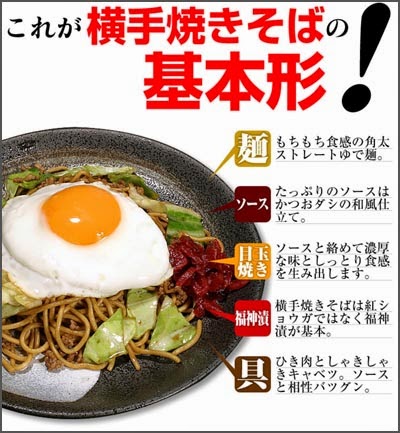
Yokote yakisoba 横手やきそば fried noodles from Yokote
Thick wheat noodles with a fried egg on top, and fukujinzuke pickles.
It was served to children after WWII as a snack in the afternoon.
In 2009 the fourth B-1 Grand Prix was held in Yokote City in Akita Prefecture
A total of 26 dishes competed in the 2009 contest. The winner was a dish called Yokote yakisoba (fried noodles) from the host city itself. Yakisoba is eaten throughout Japan, but the Yokote variety is different in that it features noodles that are straight, thick, and boiled (rather than steamed), has cabbage and ground pork as its main other ingredients, is topped with a fried egg, and comes with sweet, crunchy pickles called fukujin-zuke on the side. The sauce used to flavor the noodles is a combination of Worcestershire sauce with a fish or other broth. Many established restaurants in Yokote have their own secret sauce recipes that have been handed down from generation to generation.
Yokote yakisoba was first produced in 1953, the creation of a local restaurant that specialized in okonomiyaki (thick, savory cabbage pancakes). Though originally designed to be a children's snack, the noodles caught on and soon came to be served as a regular main dish. Four restaurants were chosen as the Yokote yakisoba champions for 2009 in a competition in which the judges considered such criteria as how the noodles were fried and the balance between the noodles and sauce. Two of the four, Kuidoraku Yokote Ekimae Shiten and Idehaya, are conveniently located near Yokote Station.
- source : web-japan.org/trends
.......................................................................
yoochuu chokoreeto 幼虫チョコレート chocolate in the form of insect larvae
mostly like little beetle larvae from kabutomushi カブトムシの幼虫
They are covered with white sugar and the face is dark.
. . . CLICK here for Photos !
from Yokote town
More
Akita 郷土料理 レシピー
*****************************
Things found on the way
Dämonen von der Halbinsel Oga
»Whoooooohoho! War einer nicht brav? Weint etwa jemand? Hat die Schwiegertochter auch alle ihre Aufgaben im Haushalt ordentlich erledigt? Whoooooohoho!«
Mit großen hölzernen Messern und Wassereimern erscheinen gespenstisch aussehende Dämonenpaare am Neujahrstag, brüllend und wild umherspringend toben sie von Haus zu Haus. Manchmal dringen sie bis in die Wohnküche vor und erschrecken die Kinder.
Die Namahage-Dämonen sind mit riesigen Holzmasken und langen Strohmänteln kostümiert und kommen jedes Jahr zu Neujahr in die Häuser. Der Mann trägt eine rote, die Frau eine blaue Maske. Der Ursprung des Wortes Namahage erklärt auch gleich den Grund für das Erscheinen der Dämonen. Namahage stammt von namomi o hagu und bedeutet »kleine Brandwunden abkratzen«. Dabei handelt es sich um kleine Brandverletzungen an Händen und Beinen, die man sich schnell an der offenen Feuerstelle in der Küche zuziehen kann. Wer viele Brandstellen hat, zeigt damit, dass er im Winter faul am Herd gelegen hat. Die Namahage-Dämonen kommen mit ihren riesigen Messern ins Haus, um die faulen Kinder und Schwiegertöchter zu strafen, indem sie ihnen »die Brandstellen abkratzen«. Zur Besänftigung erhalten die Dämonen vom Hausherrn Reiswein und Mochi-Reiskuchen. Als Boten der Götter segnen die Namahage sowohl den Haushalt als auch alle Bewohner und versprechen Gesundheit, eine gute Ernte sowie gute Fischfangerträge im neuen Jahr.
Die Halbinsel Oga reicht wie eine spitze Zunge ins wilde Japanische Meer. Bezeichnenderweise heißt der höchste Berg in dieser Region »Berg des kalten Windes« (Kanpūsan). Neben dem Leuchtturm, der hoch oben auf diesem Berg in die Luft ragt, kann man mit Maiskorn-Softeis die Aussicht auf die Vulkanseen und das Gebiet Hachirōgata genießen. Hachirōgata war ursprünglich einer der größten Seen Japans, bevor er 1964 trockengelegt und in Ackerflächen umgewandelt wurde. Das Gelände liegt vier Meter unter dem Meeresspiegel und ist damit der tiefste Punkt Japans.
Am Ende der Halbinsel, dem Kap Nyūdō, befinden sich neben einem großen Parkplatz einige Souvenirläden. In den Hinterzimmern hocken die Namahage und trinken Tee. Sie warten nur darauf, dass der nächste Touristenbus eintrudelt. Dann laufen sie brüllend los und erfüllen vor den Läden ihre Pflicht als groteske, monströse Fotomodelle.
*****************************
HAIKU
*****************************
Related words
***** WASHOKU : Regional Japanese Dishes
:::::::::::::::::::::::::::::::::::::::::::::::::::::::::::::::::::::::::::::::::::::::::::::::::::
::::::::::::::::::::::::::::::::::::::::::::::::::::::::::::::::::::::::::::::::::::::::::::::::::::
Akita Prefecture
 Akita Prefecture (秋田県, Akita-ken) is a prefecture of Japan located in the Tōhoku Region of northern Honshū, the main island of Japan. The capital is the city of Akita.
Separated from the principal Japanese centres of commerce, politics, and population by several hundred kilometres and the Ōu and Dewa mountain ranges to the east, Akita remained largely isolated from Japanese society until after the year 600. Akita was a region of hunter-gatherers and principally nomadic tribes.
Like much of the Tōhoku Region, Akita's economy remains dominated by traditional industries, such as agriculture, fishing, and forestry.
© More in the WIKIPEDIA !
. WASHOKU
The town of Uga and sketches of pretty girls advertisements
秋田県羽後町, Aoi Nishimata 西又葵
Akita Komachi あきたこまち (the belle of Akita) Rice Brand
. The Kanto Matsuri 竿燈 "pole lantern festival"
beginning of August
::::::::::::::::::::::::::::::::::::::::::::::::::::::::::::::::::::::::::::::::::::::::::::::::::::
Regional Dishes from Akita 秋田の郷土料理
. . . CLICK here for Photos !
akebi no karakkozuke アケビの殻っこづけ akebia skin stuffed with meat and vegetables
akebi no nikuzume
CLICK here for photos
also eaten in Yamagata
akebi no tenpura from the skin of the plant.
asazuke あさづけ vinegared rice, a summer dish
:::::::::::::::::::::::::::::::::::::::::::::::::::::::::::::::::::::::::::::::::::::::::::::::::::::
damakko nabe だまっこ鍋
In Akita one of their most famous nabe is Damakko Nabe (だまっこ鍋).
The little balls in the pot are actually made from rice, they’re supposed to look like snowballs to give it a winter theme. The broth for the hot pot is made from soy sauce, chicken stock, and Japanese burdock and then a variety of vegetables and chicken are added. Damakko nabe is considered to be Akita’s soul food. Warm up around a Japanese hot pot in Akita.
- source : facebook -
:::::::::::::::::::::::::::::::::::::::::::::::::::::::::::::::::::::::::::::::::::::::::::::::::::::
hatahata ハタハタ
hatahata sushi ハタハタ寿し hatahata fish sushi
hatahata, Sandfisch, Arctoscopus japonicus
Its season is winter.
It is essential for the people to survive in the winter months.
Beliebt als Sushi oder mit Salz gegrillt (shioyaki) in Akita.
Er hat keine Schuppen und wenig kleine Gräten und die Wirbelsäule lässt sich leicht vom Fleisch ablösen. Wenn man den gegrillten Fisch fest am Schwanzende anfasst, lässt sich die Wirbelsäule einfach vom Kopfende her herausziehen.
Der weibliche Hatahata trägt die Eier, die als „Eiersack“-Snack beliebt sind (burikko ぶりっこ). The egg sack can be the size of a man's fist.
buriko ブリコ
. . . CLICK here for burikko Photos !
quote
Hata-hata is really sticky and strange-looking fish because it doesn’t have any scales. What the most famous about Hata-hata is its egg, Buriko. It is really big about to explode, and the taste is chewy and jelly like. It is cooked as Shotsuru nabe, Hata-hata pot, Hata-hata sushi, and broiled fish. Many old Akita people love it because of its history.
According to my parents, people in my grandparents and my parents generation ate Hata-hata almost every day in winter instead of sweets since fishermen had a big catch of Hata-hata, and it was really cheep like 500 yen per one box which contained about 50 Hata-hata. However, the number of Hata-hata decreased because of too mach catch, and Hata-hata costs 500 yen for 3 at present. Therefore, old Akita people miss Hata-hata in their memory, and want to eat it even if it costs high.
鰰、 魚雷
In Japanese, Hata-hata is expressed in Kanji as Fish plus God, or Fish plus Thunder. Since Hata-hata gather close to beach when it thunders, people might think Hata-hata is God of fish.
source : discover-jp.blogspot.com : kayanon
. . . CLICK here for Photos !
hatahata ハタハタ is the name of the fish, but its roe is called "roe from buri" (buriko). During the Edo period, the lord of Satake (former name for Akita) forbid to eat the roe of hatahata. So the fishermen caught it nevertheless and called it "roe from buri" (buriko).
Another story tells of the lord of Mito, Satake Yoshinobu 佐竹義宣, who was transferred to live in Akita. Since yellowtail (buri) was not served for the New Year food, he called the other roe BURIKO and enjoyed it as such as a nostalgic food.
buriko are the round sacks of eggs that float in the sea. The roe taken from the fish after cutting it up is much softer.
buriko is seldom eaten raw, because the egg membrane is very hard. It is put in vinegar and soysauce and sometimes fried just a little.
The semem sacks of the male are called shirako 白子.
It is a deep-sea fish that comes to shallow wates along some areas, where rivers flow into the sea and there is plenty of kelp to shelter the young fish. The buriko is said to be in various colors, according to what the fish eat most.
Grilled hatahata was one of the fish arranged on a tray as offering for the Namahage Demons during the New Year celebrations of the Oga peninsula.
Namahage Demons
Daruma Museum
The fish was caught in such numbers, that it was fermented in large barrels into a salty liquid called "shotsuru" or "shottsuru しょっつる【塩汁】
". This process laste for three years, until the fish was almost completely discomposed. This shotsuru liquid is used to flavor many dishes in Akita, best known is a hodgepodge with hatahata and this sauce, shotsuru nabe しょっつるなべ【塩汁鍋】 (kigo for winter).
. . . CLICK here for shottsuru Photos !
This is a kind of fish sauce, gyoshoo 魚醤(ぎょしょう).
shottsuru was also used to make a special sushi of cooked rice and pieces of hatahata.
This kind of sushi is very ancient, called "cooked rice sushi" (izushi, iizushi いずし)。
Izushi 飯寿司, Summer Food
hatahata sushi ハタハタ寿
:::::::::::::::::::::::::::::::::::::::::::::::::::::::::::::::::::::::::::::::::::::::::::::::::::::
hikiwari nattoo ひきわり納豆 fermented soy beans, hacked small
eaten with sugar
. . . CLICK here for Photos !
Hinaidori 比内鶏(ひないどり)/ Hinai jidori 比内地鶏 Chicken from Hinai, Odate. Kiritanpo with these chicken
WASHOKU : Kiritanpo (kiritampo) きりたんぽ skewers of mashed rice
iburi gakko, iburigakko いぶりがっこ smoked pickles with radish
smoked radish pickles
from Yokote town
. . . CLICK here for Photos !
imo no ko jiru, imonokojiru いもの子汁 with satoimo yam
Inaniwa udon 稲庭うどん noodles from Inaniwa town. With a long tradition.
. . . CLICK here for Photos !
Reference
.......................................................................
ishiyaki ryoori 石焼料理 prepared with hot stones
from the Hunters of Oga Peninsula to keep warm. Stones from Oga are especially strong when thrown in water. Nowadays it is prepared in barrels of cedar wood
Ishiyaki – Kochen mit heißen Steinen
Es zischt und brodelt – plötzlich steigt Dampf auf. Geschickt lässt der Koch einen heißen Stein in den kleinen hölzernen Bottich gleiten. Im Nu wird alles gegart!
Beim nur in dieser Gegend typischen Ishiyaki werden Steine im Feuer erhitzt und dann in die Suppe gelegt, um sie zu erwärmen. Diese Zubereitungsart entdeckten die Fischer entlang der Halbinsel Oga, die oft den ganzen Tag auf dem Meer unterwegs waren. Mittags kam ein hölzerner Bottich mit frischen Fischen und Meeresfrüchten auf die Planken, die Würze brachte das salzige Meerwasser.
Auch am Strand wurde oft auf diese Art gekocht. Wenn sich dort kein Holzbottich fand, wurden die Fische einfach mit Wasser in eine Felsvertiefung gelegt und die Vulkansteine dazugegeben, die auf einem Feuer erhitzt worden waren. Das lokale Vulkangestein Ignimbrit oder Schmelztuff erwies sich in Japan als besonders geeignet, da dieses Gestein enorm temperaturfest ist.
Heute ist die Brühe meistens eine gesalzene Suppe, es wird aber auch Miso-Paste verwendet. Die Würze der Brühe basiert in jedem Restaurant traditionell auf einem Familiengeheimnis. Im großen Bottich aus Zedernholz werden die tagesfrischen Fische und das Gemüse der Saison in mundgerechten Bissen in der Brühe angerichtet. Anschließend wird der Bottich auf den Tisch gestellt und die Zutaten werden mit heißen Steinen gekocht. Jeder kann sich nach Belieben aus dem Bottich bedienen. Dazu werden Reis und kleine Teller mit eingelegtem Gemüse und Häppchen gereicht.
.......................................................................
junsai nabe じゅんさい鍋 junsai vegetable hodgepodge
kasube no karagya ni かすべのからぎゃ煮
. . . CLICK here for Photos !
kasupei is dried manta fish. Boiled with soy sauce it is a dish for a celebration in the Akita region.
There is also a kasube matsuri festival
keiran けいらん
kiritanpo nabe きりたんぽ鍋 hodgepodge with kiritanpo
kiritanpo is also a speciality of Aomori.
koi no amani 鯉の甘煮
kujira くじらかやき whale meat soup
kujirajiru くじら汁
salted whale meat in miso soup
matsukawa mochi 松皮餅

orandayaki, oranda yaki オランダ焼き "Holland waffles"
a kind of Imagawa yaki waffle, but filled with ham and mayonaise.
The dough is sweetened with honey.
.......................................................................
shottsuru, shotsuru nabe しょっつる鍋
sauce from salted, fermented hatahata fish, when this fish was caught in large quantities.
. . . . . dadami nabe だだみ鍋
- quote
Shottsuru (しょっつる) is a type of fish sauce from Akita Prefecture, which is one of the 3 major fish sauces of Japan along with Ishiru from Ishikawa Prefecture and Ikanago-shoyu from Kagawa Prefecture.
Akita’s fish sauce is distinctive in its ingredients. It is made from Hatahata (sandfish) caught off the coast of Oga Peninsula.
Shottsuru (塩汁、塩魚汁) (lit. salt fish broth)
can be dated back to the early Edo period, and was traditionally made solely with the fish and salt. Now it has been produced in modern technique with additional ingredients, but there is a brewery who still produces it in the traditional method
Hatahata is a sandfish. Akita Prefecture has the largest catch of Sandfish in Japan. The fish has been an important protein sauce for Akita people in the old days, which was even sung in a famous folksong (“Akita-Ondo”). Today even designated as the prefectural fish!
How does Shottsuru taste like?
Despite how fishy it may sound, it is surprisingly mild and rich in flavor. Shottsuru is the main ingredient in Akita’s signature winter dish, Shottsuru-nabe, a hot pot with Hatahata and tofu and other ingredients. Also, in recent years, contemporary chefs are adopting some innovative ideas and recipes: the most popular style is the Italian style as in the picture !
- source : ohtazawako.blogspot.jp
.......................................................................
tamago mochi だまこもち
tamakko nabe だまっこ鍋
.......................................................................
Yokote yakisoba 横手やきそば fried noodles from Yokote
Thick wheat noodles with a fried egg on top, and fukujinzuke pickles.
It was served to children after WWII as a snack in the afternoon.
In 2009 the fourth B-1 Grand Prix was held in Yokote City in Akita Prefecture
A total of 26 dishes competed in the 2009 contest. The winner was a dish called Yokote yakisoba (fried noodles) from the host city itself. Yakisoba is eaten throughout Japan, but the Yokote variety is different in that it features noodles that are straight, thick, and boiled (rather than steamed), has cabbage and ground pork as its main other ingredients, is topped with a fried egg, and comes with sweet, crunchy pickles called fukujin-zuke on the side. The sauce used to flavor the noodles is a combination of Worcestershire sauce with a fish or other broth. Many established restaurants in Yokote have their own secret sauce recipes that have been handed down from generation to generation.
Yokote yakisoba was first produced in 1953, the creation of a local restaurant that specialized in okonomiyaki (thick, savory cabbage pancakes). Though originally designed to be a children's snack, the noodles caught on and soon came to be served as a regular main dish. Four restaurants were chosen as the Yokote yakisoba champions for 2009 in a competition in which the judges considered such criteria as how the noodles were fried and the balance between the noodles and sauce. Two of the four, Kuidoraku Yokote Ekimae Shiten and Idehaya, are conveniently located near Yokote Station.
- source : web-japan.org/trends
.......................................................................
yoochuu chokoreeto 幼虫チョコレート chocolate in the form of insect larvae
mostly like little beetle larvae from kabutomushi カブトムシの幼虫
They are covered with white sugar and the face is dark.
. . . CLICK here for Photos !
from Yokote town
More
Akita 郷土料理 レシピー
*****************************
Things found on the way
Dämonen von der Halbinsel Oga
»Whoooooohoho! War einer nicht brav? Weint etwa jemand? Hat die Schwiegertochter auch alle ihre Aufgaben im Haushalt ordentlich erledigt? Whoooooohoho!«
Mit großen hölzernen Messern und Wassereimern erscheinen gespenstisch aussehende Dämonenpaare am Neujahrstag, brüllend und wild umherspringend toben sie von Haus zu Haus. Manchmal dringen sie bis in die Wohnküche vor und erschrecken die Kinder.
Die Namahage-Dämonen sind mit riesigen Holzmasken und langen Strohmänteln kostümiert und kommen jedes Jahr zu Neujahr in die Häuser. Der Mann trägt eine rote, die Frau eine blaue Maske. Der Ursprung des Wortes Namahage erklärt auch gleich den Grund für das Erscheinen der Dämonen. Namahage stammt von namomi o hagu und bedeutet »kleine Brandwunden abkratzen«. Dabei handelt es sich um kleine Brandverletzungen an Händen und Beinen, die man sich schnell an der offenen Feuerstelle in der Küche zuziehen kann. Wer viele Brandstellen hat, zeigt damit, dass er im Winter faul am Herd gelegen hat. Die Namahage-Dämonen kommen mit ihren riesigen Messern ins Haus, um die faulen Kinder und Schwiegertöchter zu strafen, indem sie ihnen »die Brandstellen abkratzen«. Zur Besänftigung erhalten die Dämonen vom Hausherrn Reiswein und Mochi-Reiskuchen. Als Boten der Götter segnen die Namahage sowohl den Haushalt als auch alle Bewohner und versprechen Gesundheit, eine gute Ernte sowie gute Fischfangerträge im neuen Jahr.
Die Halbinsel Oga reicht wie eine spitze Zunge ins wilde Japanische Meer. Bezeichnenderweise heißt der höchste Berg in dieser Region »Berg des kalten Windes« (Kanpūsan). Neben dem Leuchtturm, der hoch oben auf diesem Berg in die Luft ragt, kann man mit Maiskorn-Softeis die Aussicht auf die Vulkanseen und das Gebiet Hachirōgata genießen. Hachirōgata war ursprünglich einer der größten Seen Japans, bevor er 1964 trockengelegt und in Ackerflächen umgewandelt wurde. Das Gelände liegt vier Meter unter dem Meeresspiegel und ist damit der tiefste Punkt Japans.
Am Ende der Halbinsel, dem Kap Nyūdō, befinden sich neben einem großen Parkplatz einige Souvenirläden. In den Hinterzimmern hocken die Namahage und trinken Tee. Sie warten nur darauf, dass der nächste Touristenbus eintrudelt. Dann laufen sie brüllend los und erfüllen vor den Läden ihre Pflicht als groteske, monströse Fotomodelle.
*****************************
HAIKU
*****************************
Related words
***** WASHOKU : Regional Japanese Dishes
:::::::::::::::::::::::::::::::::::::::::::::::::::::::::::::::::::::::::::::::::::::::::::::::::::
Subscribe to:
Posts (Atom)